Nvidia and other AI chip stocks kept sliding Thursday, dragging the Nasdaq lower and reinforcing a sharp rotation out of the market’s most crowded artificial-intelligence trades even as oil prices clawed back part of the prior day’s drop.
Nvidia Slides as AI Chip Stocks Sell Off
The move matters because AI hardware has been one of Wall Street’s biggest growth engines this year, and the latest selloff is raising fresh questions about how much investors are willing to pay for data-center expansion when interest rates stay high and policy risks rise. Nvidia fell 4.1%, its second straight heavy decline, while Advanced Micro Devices tumbled 10.7% and CoreWeave dropped 6.8%.
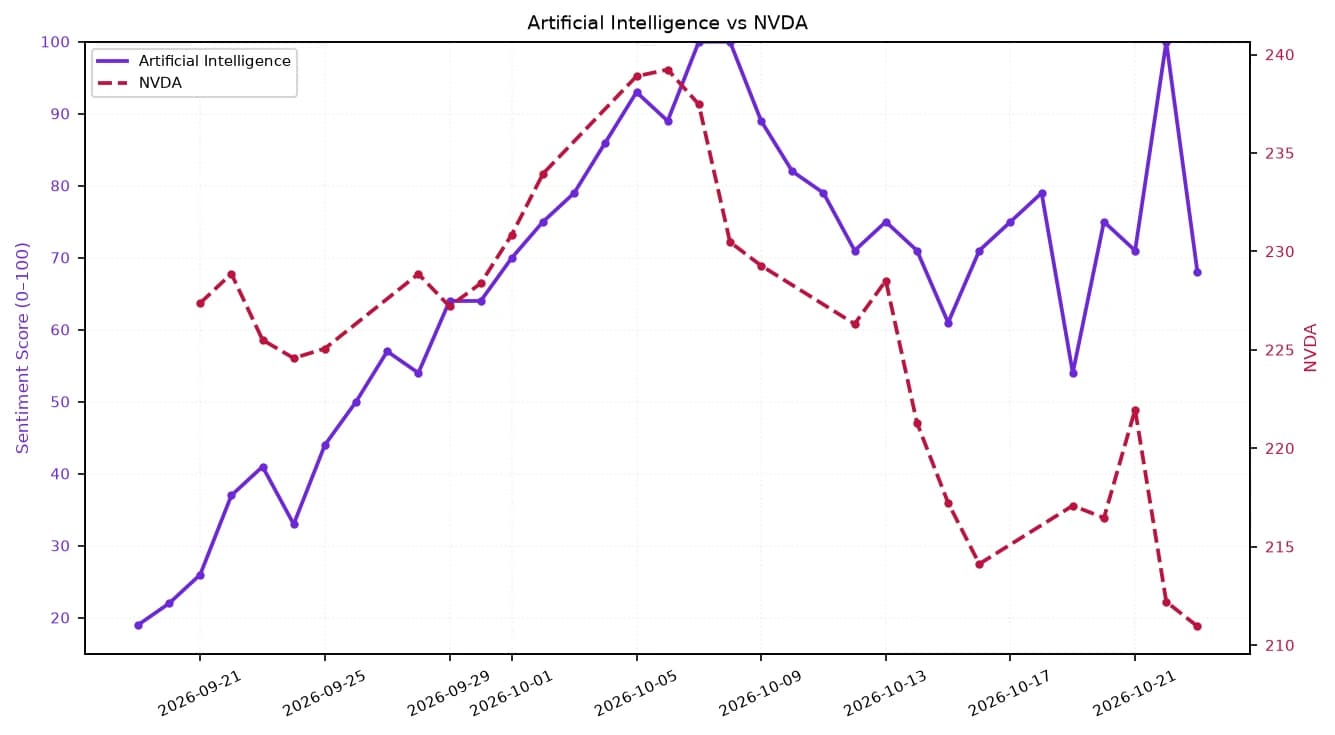
Sentiment Indicators

The weakness hit the broader market even though most S&P 500 stocks were rising on stronger-than-expected earnings from companies including AppLovin and Tapestry. The S&P 500 was down 1.2% in early trading and the Nasdaq composite fell 2.4%, with Nvidia the biggest drag on the benchmark.
Investors are being forced to weigh whether the AI boom can keep supporting sky-high valuations if borrowing costs remain elevated and construction of new data centers faces political and regulatory scrutiny. That concern is now showing up in the price action: Nvidia’s shares fell to $177.30 in latest trading, far below the $218.97 50-day moving average, with RSI readings at 26.5 and other conventional technical indicators pointing to a deeply oversold position.
Nvidia Corp
The pressure has also spread beyond chipmakers. Adalytica’s NVIDIA Earnings Sentiment snapshot showed “Extreme Fear,” while the broader AI sentiment gauge also sat at “Extreme Fear,” underscoring the extent of the pullback in the group.
Oil, meanwhile, staged a partial rebound after a sharp post-election drop. Brent crude rose 2.3% to $96.76 a barrel, recovering part of nearly 9% lost a day earlier as the market reassessed the outlook for the Iran war and global energy supply. That rebound helped Treasury yields hold steadier, with the 10-year yield at 4.89%, after falling sharply from above 5.30% last month.
The bond market was also supported by signs the U.S. economy is cooling without cracking: weekly jobless claims came in lower than expected and productivity improved more than economists forecast over the summer. That combination keeps pressure on the Federal Reserve to balance sticky inflation against still-resilient growth, even as the Bank of England lifted rates again and said its next moves depend heavily on the Middle East conflict and oil prices.
For investors, the key question is whether the AI trade is entering a longer de-rating phase or just another violent shakeout. Thursday’s action suggests portfolio managers are using any weakness in megacap AI names to reduce risk, while earnings winners and energy-linked assets are attracting the defensive money for now.
| Entity | Gains | Losses |
|---|---|---|
| Energy stocks | ▲Higher crude prices | ▼Less fear of an immediate demand shock |
| AI chip makers | ▲None | ▼Valuation pressure and heavy selling |
| Broad market winners | ▲Earnings-driven flows | ▼Tech-heavy indexes |
| Treasury bondholders | ▲Steadier yields | ▼Less flight-to-safety demand |