Nvidia’s latest pullback is a reminder that even the market’s strongest AI winner can’t outrun rising yields, stretched expectations and a nervous crowd forever.
Nvidia Pulls Back as Yields Rise
For long-term investors, that matters because the AI trade has become one of the market’s biggest sources of concentration risk. When the stocks leading the rally start to wobble, it can spill quickly into the broader Nasdaq and semiconductor complex, forcing investors to ask a simple question: how much of the future is already priced in?
Sentiment IndicatorsⓘProprietary · adalytica.com · October 12, 2026
This is a snapshot — live sentiment, awareness and momentum for 130+ markets update continuously in the dashboard.Open AlphaPulse
Nvidia slipped to $225.75 in the latest session, down from $230.48 the day before and well below its recent peak above $235. The stock is still far above its 200-day moving average at about $202, but the loss of momentum is visible. Relative strength has eased to 45.6, the MACD has rolled lower and the shares sit just above their 50-day moving average near $222.4. The iShares Semiconductor ETF, SOXX, also fell to $544.26 after touching the mid-560s, showing that this is not just an isolated Nvidia story but a broader cooling in chip enthusiasm.
The macro backdrop helps explain why. The 10-year Treasury yield remains elevated at about 5.23%, while the 10-year minus 2-year curve sits only slightly positive at 0.44 percentage point. Higher long-term rates reduce the present value of future earnings, which tends to hit the richly valued names that benefited most from the AI boom. In other words, investors are being reminded that even the best growth stories have to compete with bonds.
Jim Cramer’s warning after the selloff fits that shift in tone. The message to investors is not that AI is over, but that the easy money phase may be over. After a huge run, the market is demanding more than promises of trillion-dollar opportunity — it wants proof that spending on chips, clouds and AI infrastructure can keep translating into durable free cash flow.
Microsoft’s move higher to $542.29 shows the other side of the trade. Big platforms with cash-rich balance sheets and diversified revenue streams can keep attracting capital even as the market reassesses the pace of AI spending. That is one reason investors should separate the long-term AI winners from the stocks most vulnerable to valuation compression.
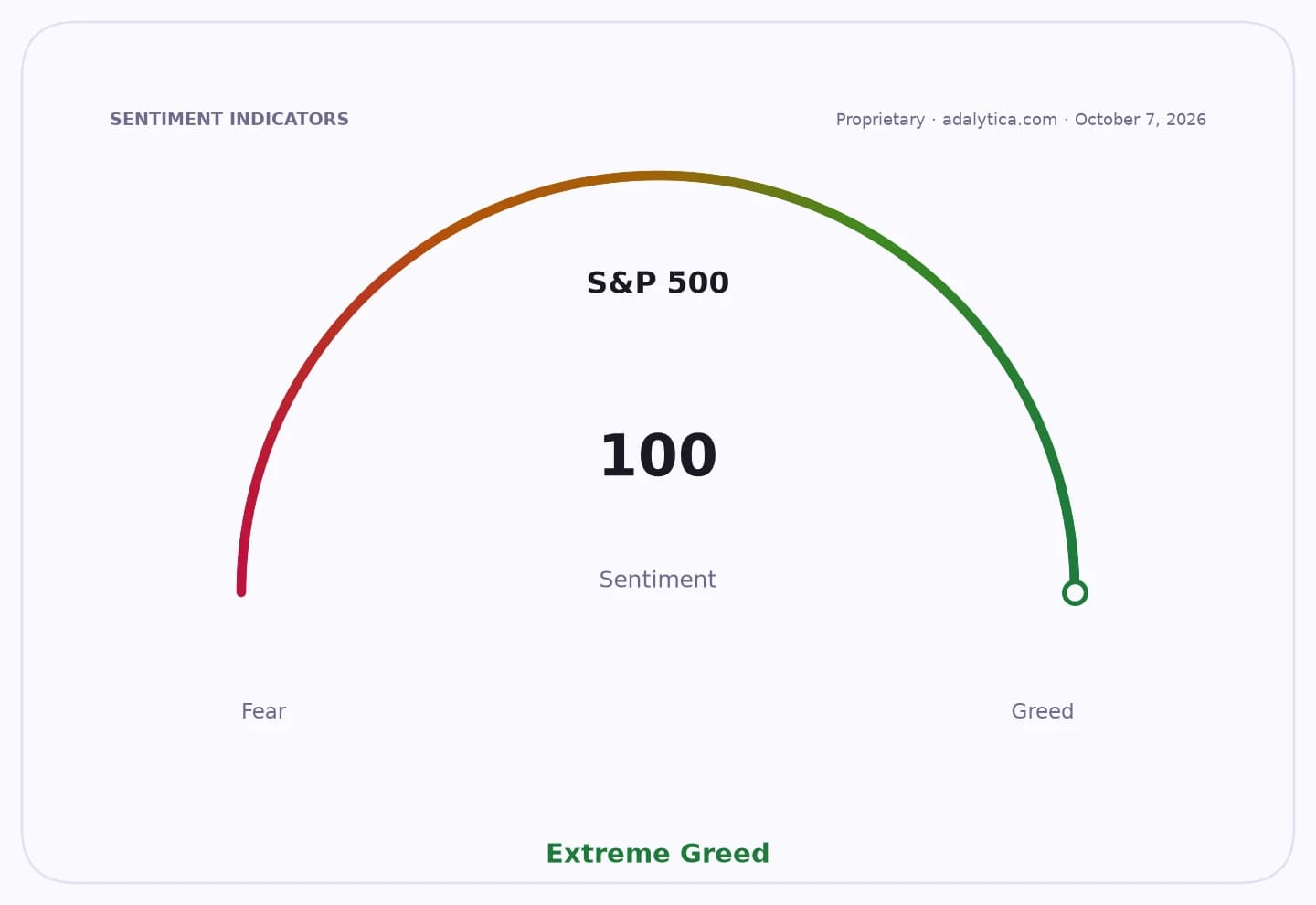
Sentiment data from Adalytica.com captures the split. Nvidia’s earnings sentiment is at “Extreme Greed,” but awareness sits in “Fear,” a classic sign of crowded enthusiasm meeting rising caution. The broader AI sentiment gauge is still in “Greed,” though it has slipped sharply over the past day, suggesting traders are less willing to chase every dip.
For investors, this kind of pullback is usually less important for what it says about one day’s price action and more important for what it says about the next several years. The AI buildout is still real, but the winners will be the companies that can turn capital spending into sustained margins, not just headlines. That argues for patience, diversification and a focus on quality.
If you already own Nvidia or other AI leaders, the selloff is a reason to size positions responsibly, not to abandon the theme. If you are building a long-term portfolio, this is exactly the kind of market that rewards discipline: buy the strongest businesses, spread risk across dozens of holdings and let compounding work over time. The AI story is still intact, but investors should expect more volatility along the way — and treat it as part of the opportunity.
| Entity | Gains | Losses |
|---|---|---|
| Long-term AI investors | ▲Better entry points | ▼Short-term paper gains |
| Nvidia | ▲Continued AI demand narrative | ▼Momentum traders |
| Semiconductors / SOXX | ▲Sector rotation opportunities | ▼Near-term multiple expansion |
| Treasury bond holders | ▲Higher yield appeal | ▼Growth-stock bulls |