The Nasdaq 100 has fallen into correction territory just as investors head into midterm week, and that matters because the market’s most important growth engine — the AI trade — is suddenly looking far less invincible.
Nasdaq 100 Falls Into Correction as AI Stocks Slide

The QQQ, which tracks the index, closed at 647.05 on Nov. 5 after plunging 6.5% on the day and roughly 10.7% from its Oct. 21 close of 725.20. That puts the benchmark in a textbook correction, with the selloff hitting hardest in the stocks that have driven the market higher for much of the year: Nvidia, Microsoft and other mega-cap tech names.
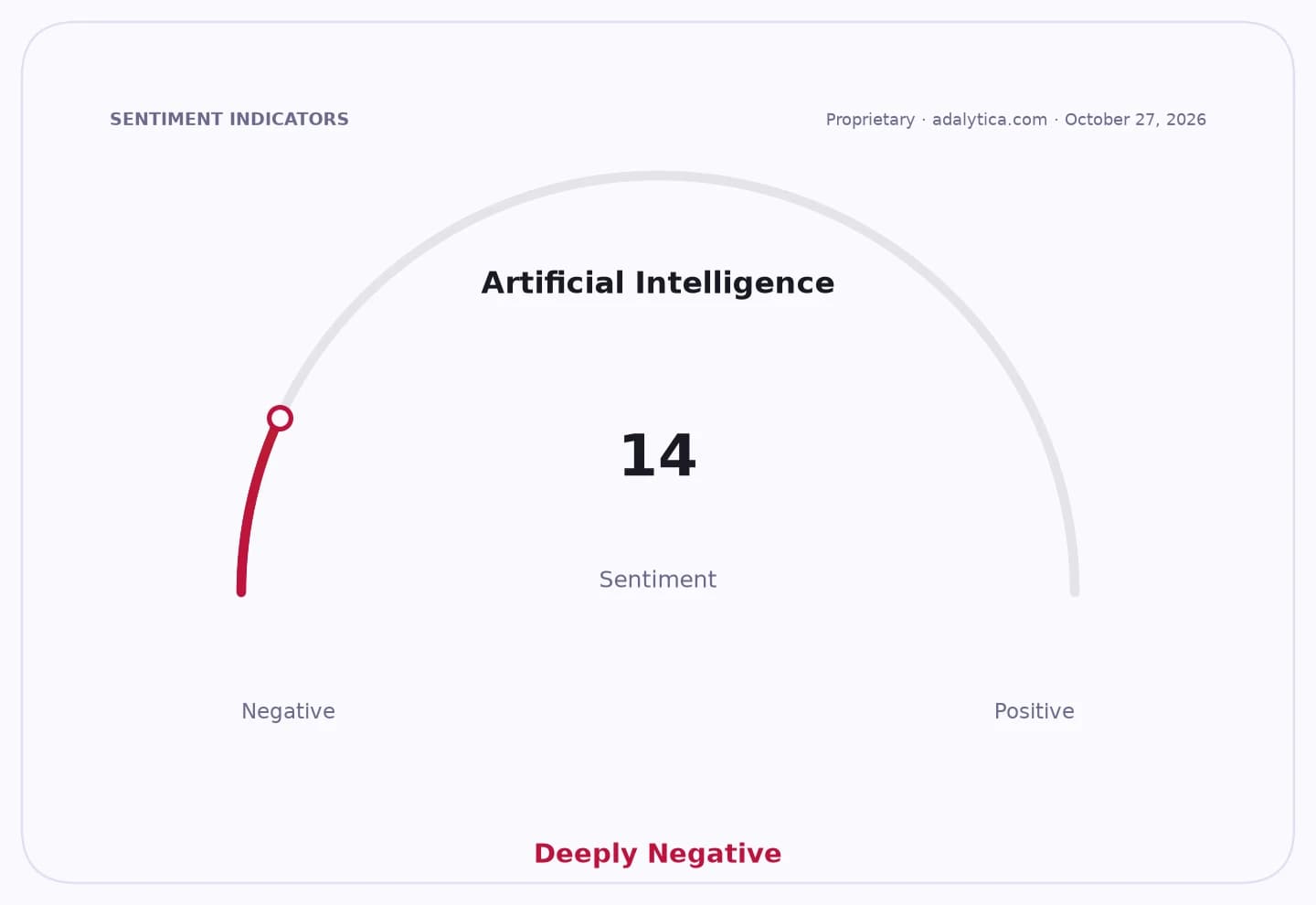
Sentiment Indicators
For investors, the timing is what makes this more than a routine pullback. Midterm elections often sharpen attention on fiscal policy, antitrust risk, trade rules and the pace of AI infrastructure spending. When a market is this concentrated, the political backdrop can quickly influence whether investors keep paying up for the companies building the next wave of cloud and artificial intelligence capacity.
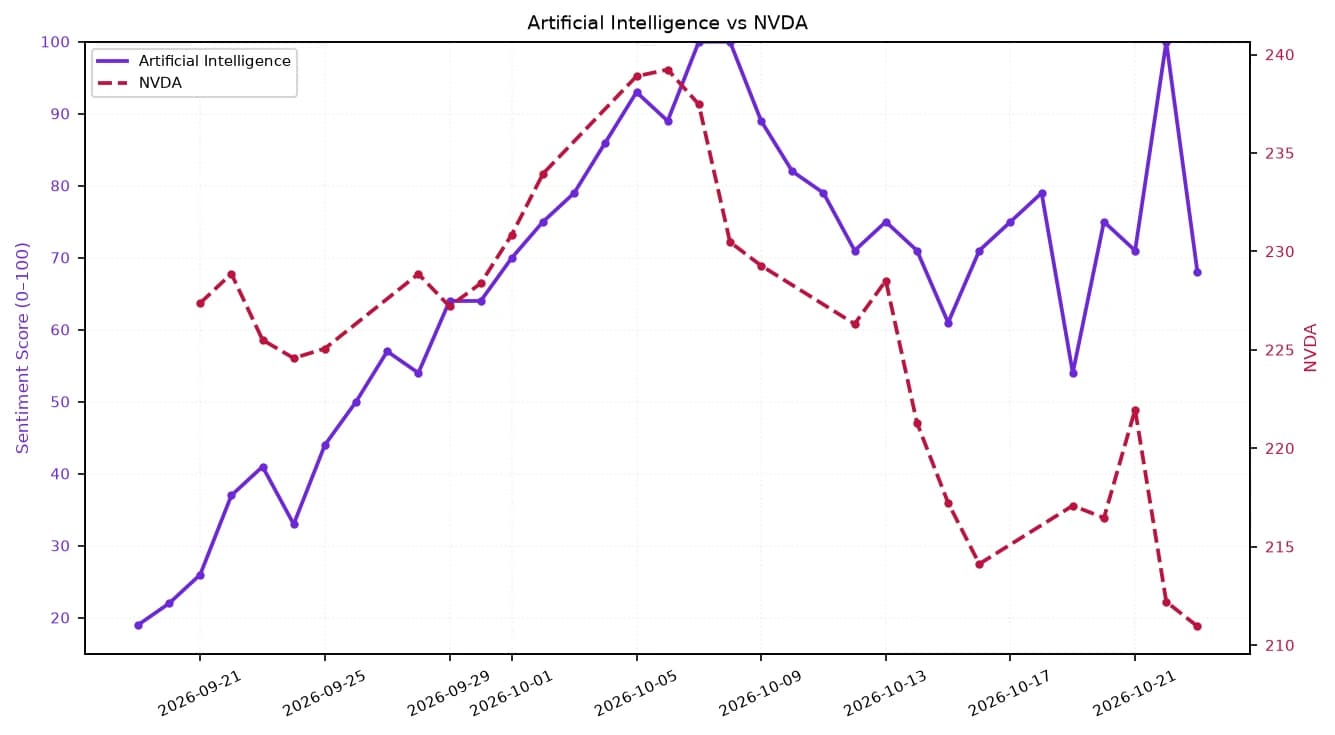
The damage is easy to see in the leaders. Nvidia, the face of the AI boom, dropped to 181.60 from 221.97 just two weeks earlier, a decline of more than 18%. Microsoft fell to 535.93 from 555.80 after touching 520.99 the day before, while QQQ’s own 50-day moving average has now slipped back over price, a sign that momentum has turned lower. Nvidia’s RSI sat at 27.6, deep in oversold territory, while the Nasdaq ETF’s RSI was 30.3 — close enough to the boundary that traders will be watching for stabilization, not a straight-line recovery.
Artificial Intelligence — 30-day sentimentadalytica.com
Explore this data interactively — full history, time series and cross-market comparisons.
That technical weakness lines up with a broader mood shift. Adalytica’s AI sentiment gauge showed “Extreme Fear,” with sentiment at 4 and awareness also at 4, after a sharp 30-day collapse. Nvidia’s earnings sentiment was also at 4, underscoring how quickly enthusiasm around the AI complex has given way to caution. Meanwhile, the S&P 500 trade signals remained more balanced, suggesting this is still a story about the market’s priciest leadership cohort rather than a full-blown collapse in equities overall.
Economically, the correction is a reminder that the market has been leaning heavily on a handful of companies to justify enormous capital spending, rapid earnings growth and stretched valuations. If investors begin to question the payoff from AI infrastructure outlays — or simply demand a better entry point — the multiples that powered the rally can compress fast. That is especially important because the Nasdaq 100 is not just a tech index; it is the market’s core expression of confidence in long-duration growth.
For long-term investors, corrections are uncomfortable but not unusual. The bigger question is whether this is a reset in valuation or the start of a deeper reassessment of the AI cycle. Nvidia still sits above its 200-day moving average, and Microsoft remains well above that longer-term trend, so the secular story has not been broken. But when leaders lose momentum this quickly, investors should expect volatility to persist until earnings growth, spending discipline and guidance can catch up with the hype.
If you own the AI trade, this is the moment to separate great businesses from expensive narratives. The long-term opportunity in cloud, chips and AI software remains enormous, but the market may now ask for proof rather than promise. For patient investors building diversified portfolios over years, not weeks, this kind of correction is worth watching — and possibly worth using, if valuations cool enough to make the next leg of growth more attractive.
| Entity | Gains | Losses |
|---|---|---|
| Cash buyers | ▲Better entry points | ▼Missed upside if rebound is fast |
| Long-term AI bulls | ▲Chance to add at lower valuations | ▼Short-term mark-to-market pain |
| Nvidia bears / shorts | ▲Momentum finally cracks | ▼Risk of violent oversold bounce |
| Microsoft and AI leaders | ▲Opportunity to reset expectations | ▼Pressure on premium multiples |