Samsung Electronics and SK Hynix are looking increasingly like classic long-term buying opportunities after one of the sharpest pullbacks in the semiconductor trade this year, but the next leg higher now depends on whether U.S. megacap tech can keep pouring cash into AI infrastructure.
Samsung and SK Hynix Slip on AI Spending Concerns
That is the real investment story here. Korea’s memory-chip leaders have been punished as investors priced in a worst-case scenario for demand and valuation, yet the latest selloff has pushed sentiment into what looks like capitulation territory rather than a fundamental breakdown. On Oct. 27, Samsung closed at 222,000 won, far below its 50-day moving average of 254,070 won and with its RSI at 27.3, while SK Hynix ended at 1.341 million won, also well under its 50-day average of 1.629 million won and with RSI at 24.4. Those are the kinds of levels that tend to attract patient investors, not short-term traders.
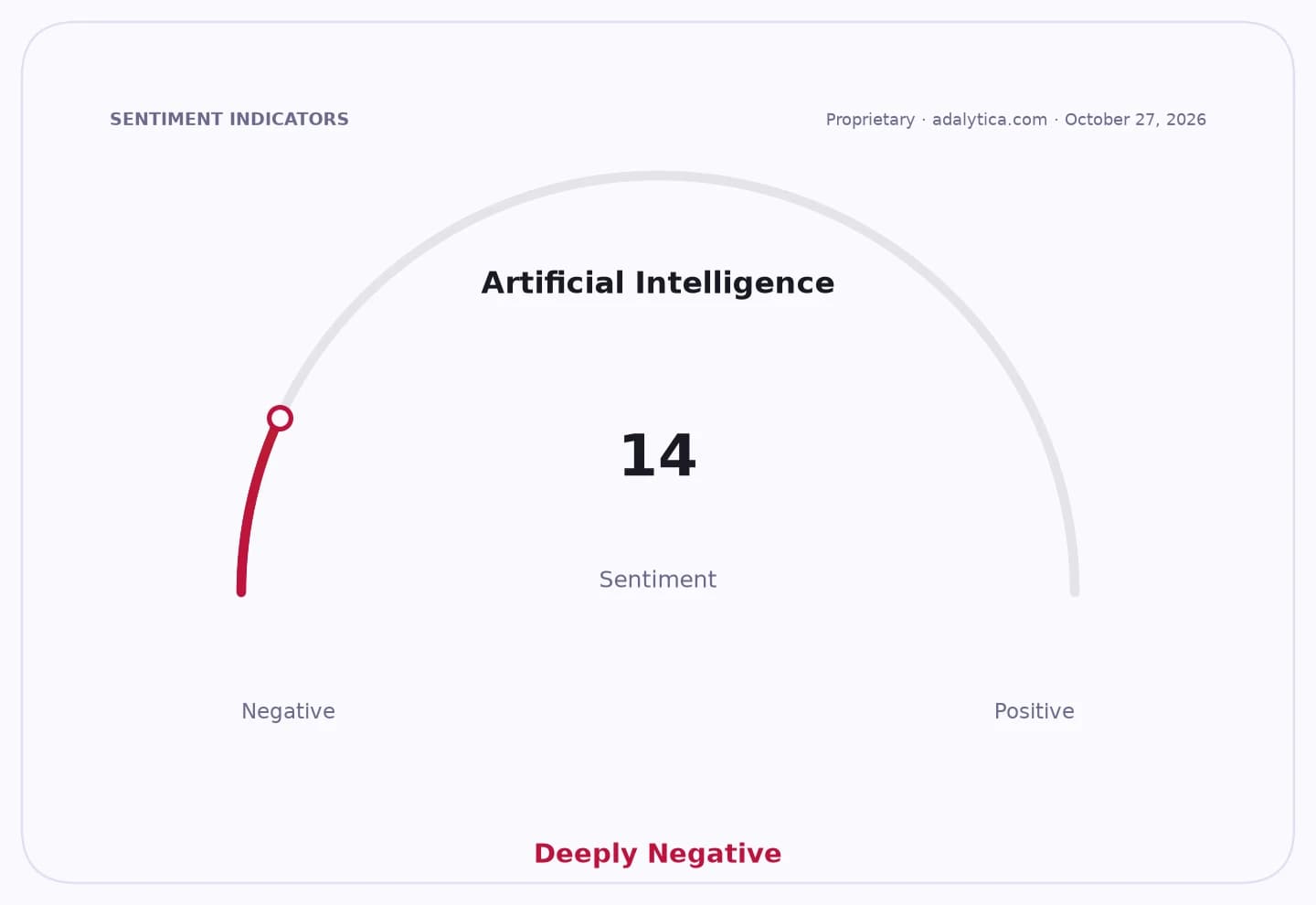
Sentiment IndicatorsⓘProprietary · adalytica.com · October 27, 2026
This is a snapshot — live sentiment, awareness and momentum for 130+ markets update continuously in the dashboard.Open AlphaPulse
The key reason this matters is that Samsung and SK Hynix are not being driven by abstract “AI theme” enthusiasm; they are tethered to the spending plans of the world’s biggest cloud and platform companies. Meta’s strong results eased some of the fear, but the bigger test comes next week with Alphabet and Amazon, which are among the companies actually funding the data-center buildout that supports memory demand. If those firms show healthy free cash flow and stay committed to capital spending, it would reinforce the view that the AI boom still has legs. If they back away, the rebound in Korean chipmakers could stall quickly.
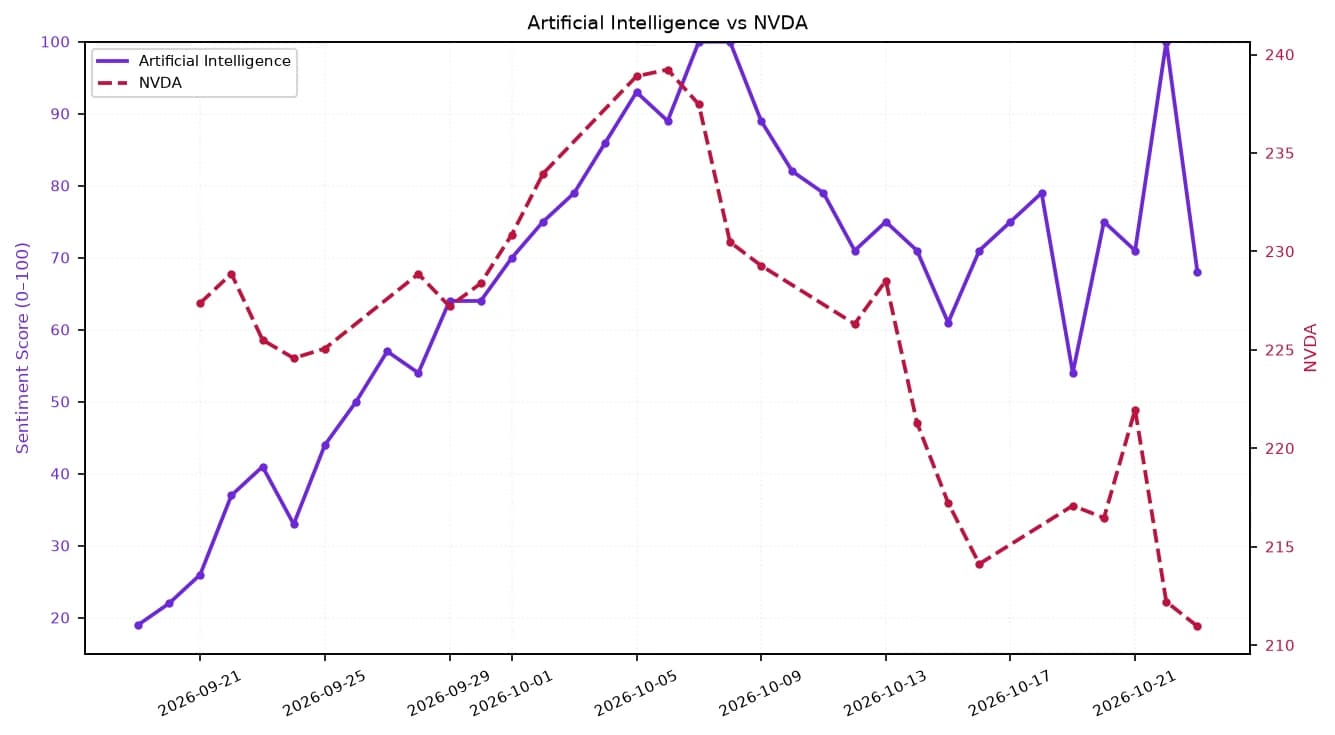
There is some evidence the market is already beginning to look through the panic. The U.S. semiconductor index has bounced after a nine-day slump, and NVIDIA shares, while still volatile, closed at $217.94 on Oct. 27 after dropping below recent levels earlier in the week. NVIDIA’s earnings sentiment on Adalytica.com remains in “Extreme Greed” territory at 86, even as broad AI market sentiment has collapsed to 14, or “Extreme Fear.” That split is important for investors: it suggests enthusiasm for the AI trade itself has not disappeared, but positioning has become far more cautious.
Artificial Intelligence — 30-day sentimentadalytica.com
Explore this data interactively — full history, time series and cross-market comparisons.Open AlphaPulse
The macro backdrop is also not working against the chips story. U.S. interest-rate expectations still point to a relatively stable policy path, with the fed funds rate forecast at 3.726% for October and the 10-year Treasury yield near 4.93%. That is hardly loose money, but it is not the kind of sudden rate shock that would typically blow up a capital-intensive AI investment cycle. In other words, the burden now falls back on earnings.
For investors, the lesson is simple: when a sector with structural growth gets hit this hard, the first question should not be “Is the trend over?” but “What would prove the trend is still intact?” Right now, that proof is likely to come from Alphabet and Amazon. If those results confirm that AI data-center spending remains durable, Samsung and SK Hynix could be setting up for a much better 2027 than the market is discounting today. For long-term buyers, this looks like a time to build positions in installments rather than chase a bottom.
| Entity | Gains | Losses |
|---|---|---|
| Samsung Electronics | ▲Long-term buyers | ▼Panic sellers |
| SK Hynix | ▲Dividend and growth investors | ▼Short-term bears |
| Alphabet and Amazon | ▲AI infrastructure buildout | ▼Chip-demand skeptics |
| NVIDIA | ▲AI trade optimism | ▼Broad market fear |