The United States has been investigating Nvidia partner Megaspeed since 2024, intensifying pressure on the chipmaker’s global sales network just as investors are already grappling with a sharp selloff in the stock and rising questions over the durability of AI demand.
Nvidia Megaspeed Probe Adds Export-Control Risk
US Commerce and Justice Department officials said in a joint statement that they have been examining the Singapore cloud-computing company over possible export-control violations. The disclosure matters because Nvidia’s business model depends not only on making advanced chips, but on controlling where they end up after sale. A probe into a partner raises the risk of tighter oversight, added compliance costs and possible curbs on channels that have helped Nvidia reach customers in fast-growing overseas markets.
Sentiment Indicators
According to Nvidia, investigators asked in May 2025 for records on direct and indirect sales to Megaspeed, and the company placed the partner on an internal block list a month later. That timeline suggests the issue has moved beyond a routine information request and into a broader enforcement and reputational risk for Nvidia’s distribution ecosystem. Any finding that chips were diverted or sold in breach of US rules could expose intermediaries to penalties and force Nvidia to harden screening of resellers, cloud providers and other third parties.
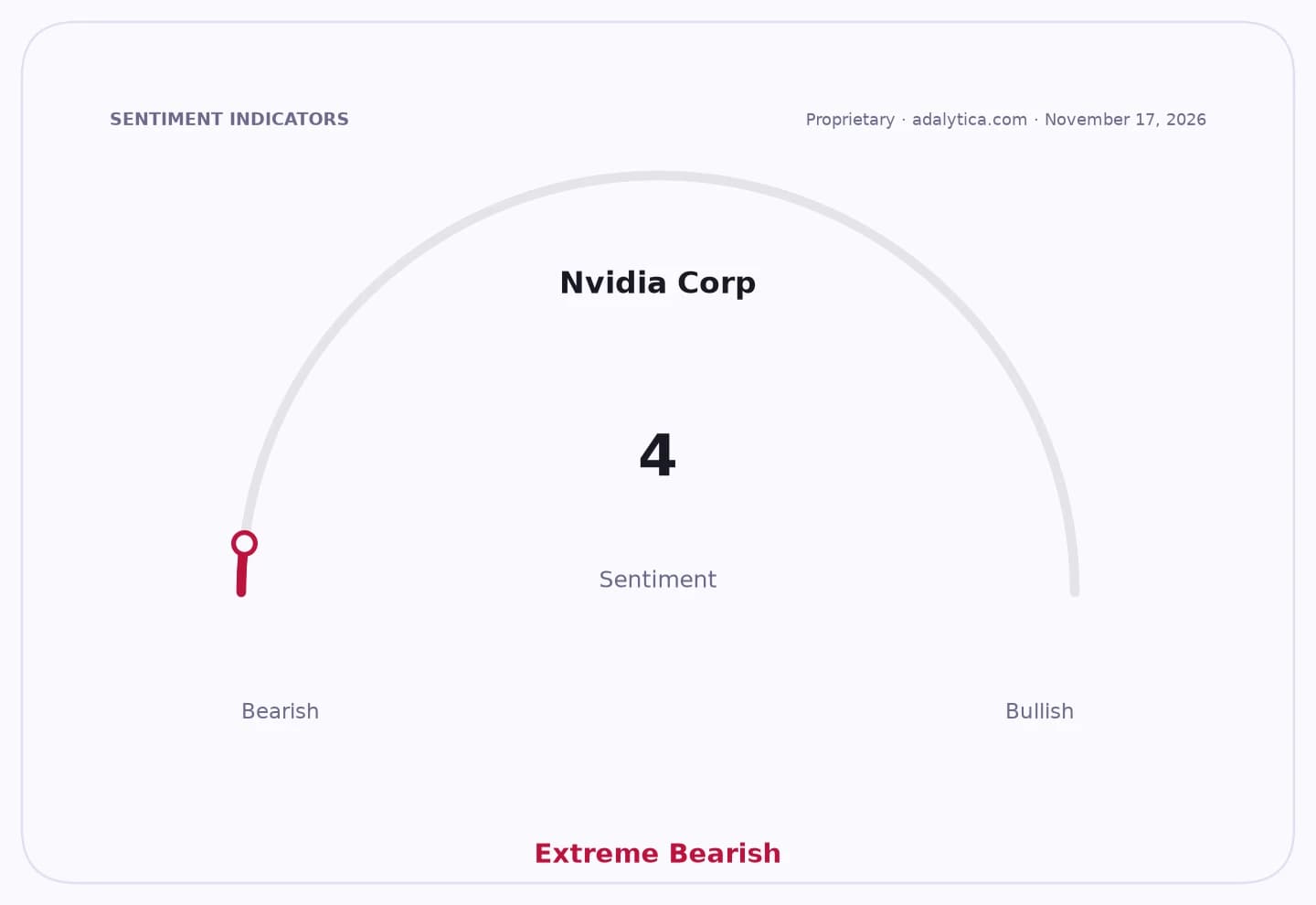
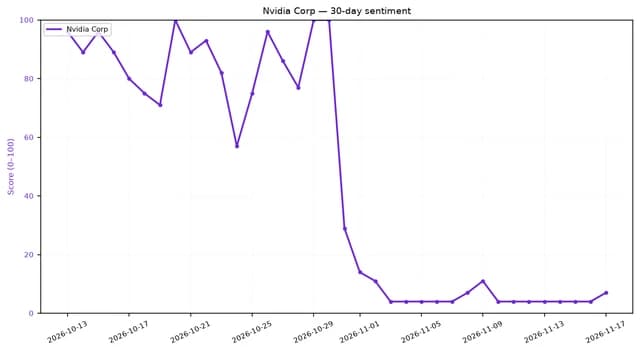
The timing is awkward for a company that remains central to the AI trade. Nvidia shares have fallen to $156.14 in recent trading from $221.97 on Oct. 21, with the stock’s 14-day relative strength index down to 16, a level typically associated with deeply oversold conditions. The decline has come alongside a deterioration in sentiment around the company, with Adalytica’s NVIDIA earnings sentiment gauge at 7, or “Extreme Fear,” even as awareness remains elevated. That combination points to a market that is still intensely focused on Nvidia, but increasingly anxious about near-term execution, regulation and valuation.
The Megaspeed investigation also reinforces a wider theme: export controls are no longer a background legal issue for the AI boom, but a structural constraint on the industry’s supply chain. Nvidia has already told investors in regulatory filings that compliance with increasingly complex export rules can be onerous, expensive and disruptive. For the company, the risk is not just fines or delays. It is that each enforcement case tightens the operating envelope for where AI hardware can be shipped, who can resell it and how quickly customers can be onboarded.
For investors, the main question is whether the probe remains a manageable compliance matter or becomes another example of how US restrictions complicate Nvidia’s international growth. Bulls will argue the company has already moved to cut off the partner and that demand for its chips remains strong enough to absorb localized disruptions. Bears will say the latest disclosure underscores how dependent Nvidia’s expansion has become on a fragile network of partners and how quickly regulatory risk can turn into margin pressure and slower sales recognition.
Nvidia is due to report quarterly results after the US market closes, putting the Megaspeed case directly into view as investors assess whether the company can keep expanding while Washington keeps tightening scrutiny of its customer base. The broader lesson for the AI sector is that the winners may still be defined by chip performance, but they will increasingly be priced on compliance resilience as much as on growth.
| Entity | Gains | Losses |
|---|---|---|
| US regulators | ▲More enforcement leverage | ▼None |
| Nvidia | ▲Cleanup of risky channel | ▼Added compliance burden |
| Megaspeed | ▲None | ▼Investigation risk |
| AI chip investors | ▲Clearer risk pricing | ▼Near-term uncertainty |