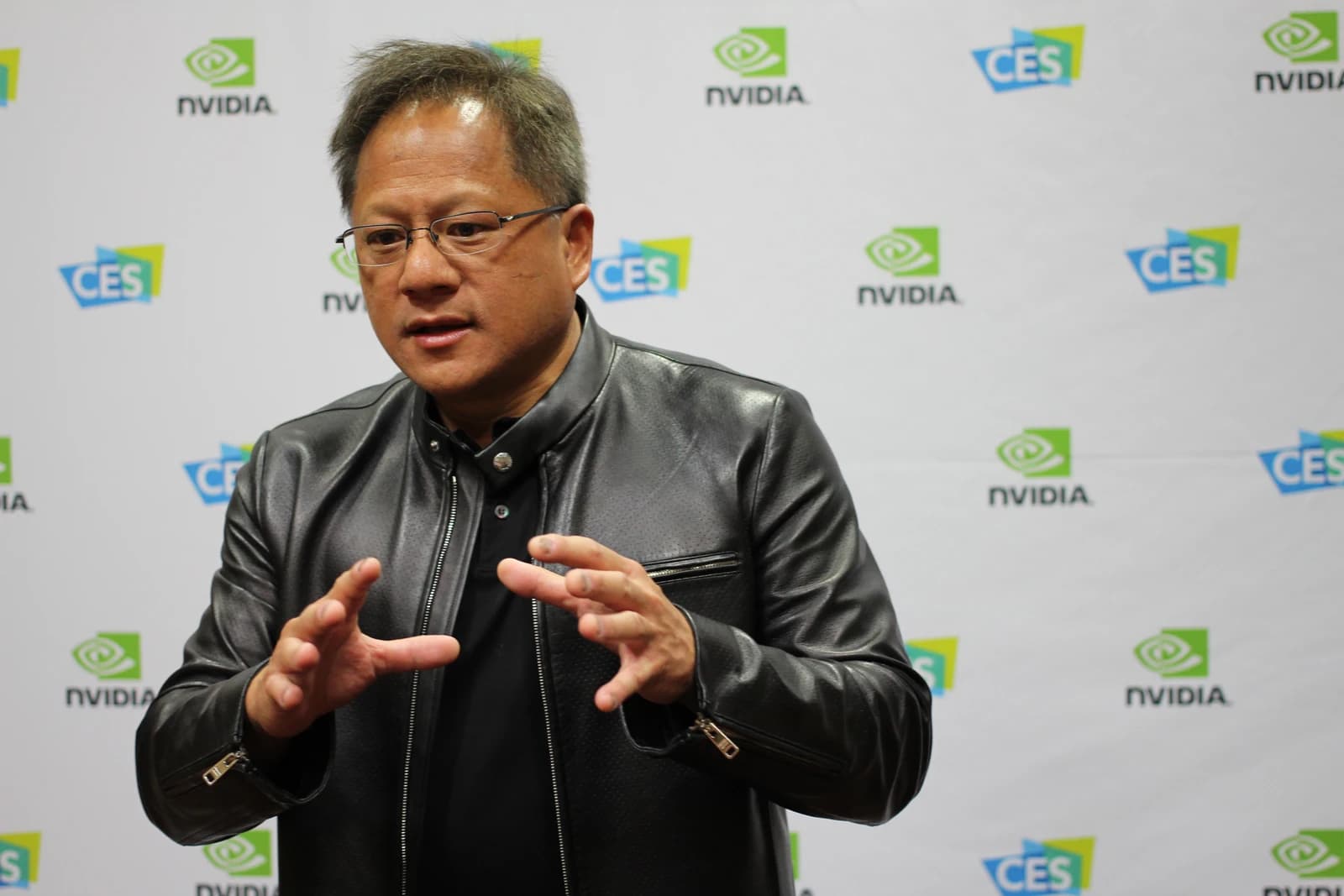
Nvidia has opened an independent investigation into reports that CEO Jensen Huang may have been targeted in a foreign espionage operation, but the bigger market question is whether the company’s leadership, data security and long-term growth story remain intact.
Nvidia opens probe into Jensen Huang report

That matters because Nvidia is not just another mega-cap tech stock. It sits at the center of the global AI buildout, and any hint that its chief executive, strategic relationships or sensitive information could be exposed raises the stakes far beyond one executive’s personal scandal. For investors, this is about governance risk at a company whose value depends heavily on execution, trust and access to customers, suppliers and governments around the world.
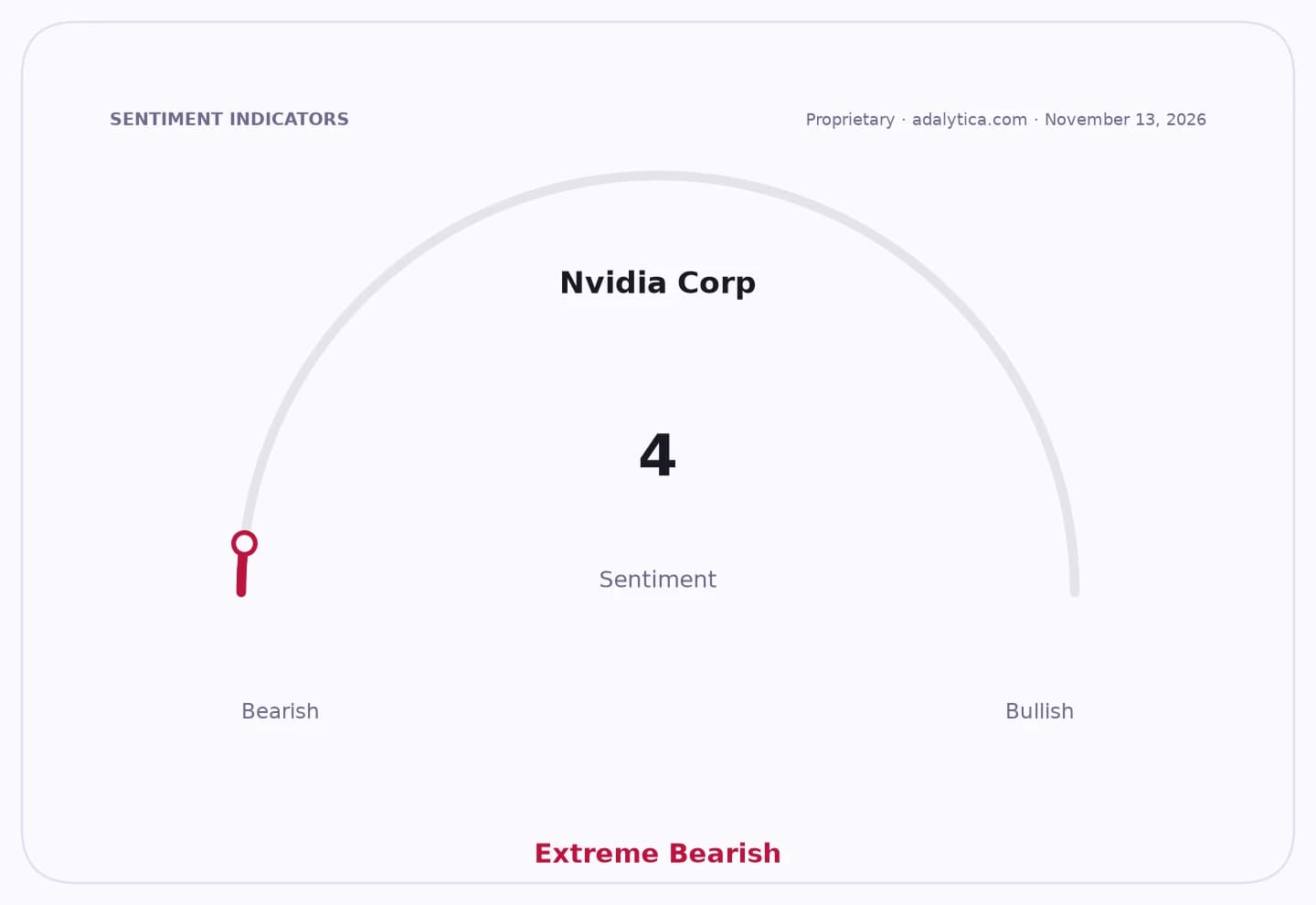
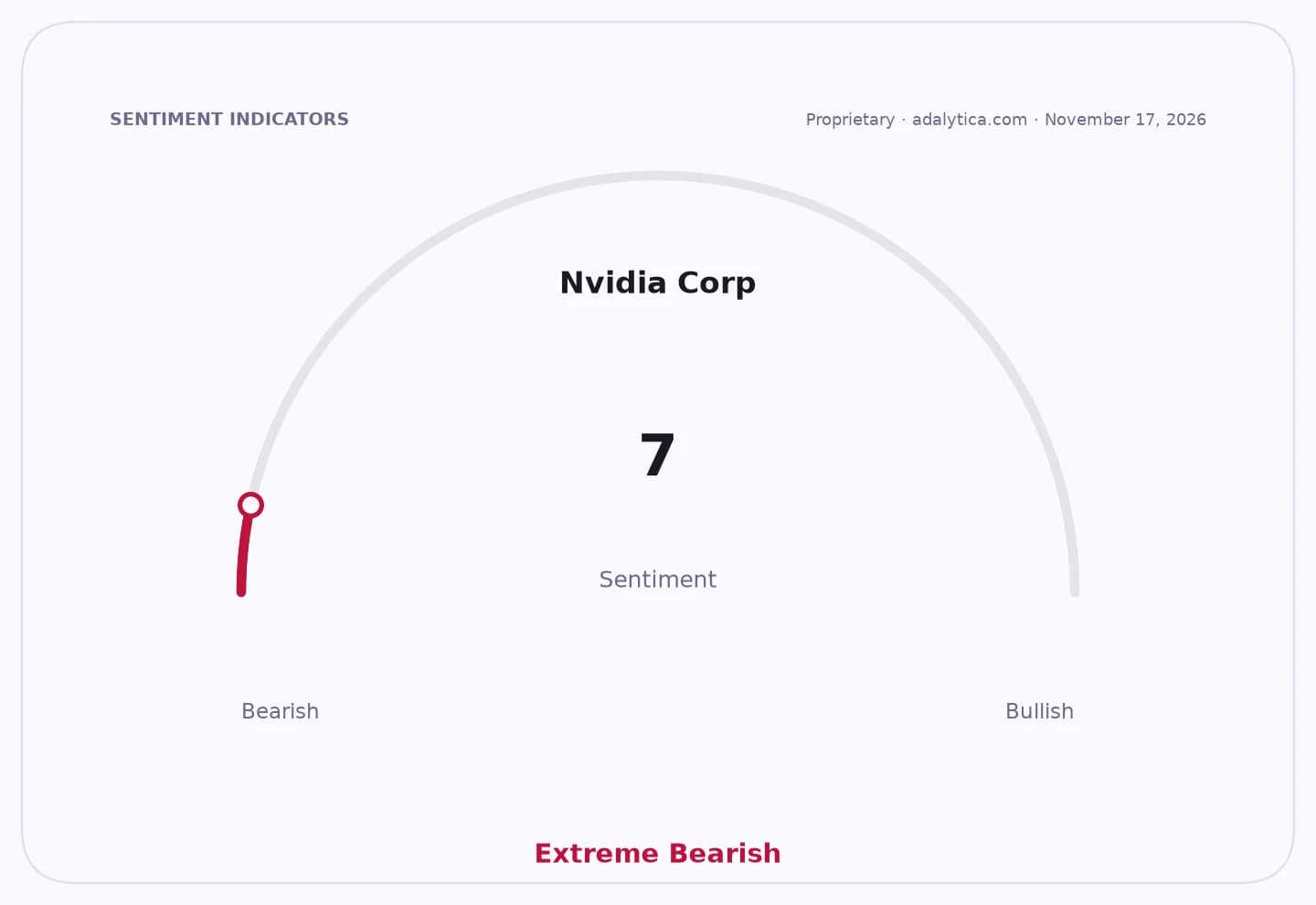
Sentiment Indicators
The board said it has no reason to believe national security or Nvidia trade secrets were compromised, but it will still review all available information through a committee of independent directors with outside legal counsel. Huang, who founded the company, said he supports the review and will cooperate fully. Nvidia also said it continues to trust Huang and his leadership team.
The company’s statement is important because it tries to separate personal conduct from corporate continuity. The New York Times reported in October that Huang had a close relationship with a Chinese businesswoman alleged by U.S. authorities to have passed information to Beijing. Huang later acknowledged in a message to employees that he had been unfaithful to his wife. Reuters also reported that the White House had been informed about the suspicions about a year ago but did not act, apparently worried about hurting Nvidia’s business and complicating ties with China.
Nvidia Corp — 30-day sentimentadalytica.com
Explore this data interactively — full history, time series and cross-market comparisons.
For investors, the issue is less about tabloid noise than about concentration risk. Nvidia’s business is built on a narrow set of extraordinary advantages — its chips, software ecosystem and leadership in AI infrastructure — but that concentration cuts both ways. The stock has already been punished sharply as fear has spread. Nvidia shares fell from 221.97 on Oct. 21 to 162.85 on Nov. 13, a slide that pushed the relative strength index to 19.1, a reading that reflects deeply oversold conditions in conventional technical analysis. The 50-day moving average has also rolled over above the price, a sign that momentum has deteriorated.
The broader semiconductor group has not been spared. The SOXX chip ETF dropped to 149.30 on Nov. 13 from 155.40 two days earlier, while Taiwan Semiconductor Manufacturing Co., Nvidia’s most important manufacturing partner, also weakened after its own disclosure about unauthorized access to employee data. That does not prove a direct operational problem at Nvidia, but it does underscore how sensitive the semiconductor supply chain has become to security issues at a time when AI demand and geopolitical tensions are already running hot.
The long-term case for Nvidia still rests on earnings power, not day-to-day headlines. If the investigation confirms the board’s view that no sensitive information was compromised, the episode may prove more reputational than financial. But if it broadens into questions about oversight, executive stability or geopolitical exposure, it could weigh on the premium investors have long assigned to Nvidia’s AI dominance.
For now, the takeaway is straightforward: the core business remains powerful, but the governance risk deserves attention. Long-term investors should watch whether Nvidia can move through the investigation without disturbing customer trust, execution or the company’s ability to keep compounding into the AI cycle.
| Entity | Gains | Losses |
|---|---|---|
| Nvidia board | ▲Clears uncertainty if probe stays contained | ▼Faces governance scrutiny |
| Jensen Huang | ▲Retains leadership backing | ▼Personal and reputational risk |
| Long-term shareholders | ▲Benefit if trust is restored | ▼Bear volatility and headline risk |
| Short-term traders | ▲Opportunity from volatility | ▼Risk of sharp reversals |