Nvidia’s latest surge in sales underscores how AI infrastructure spending remains the dominant force in semiconductors, even as its shares have been battered and sentiment has turned sharply negative.
Nvidia Revenue Growth Amid Sharp Stock Selloff

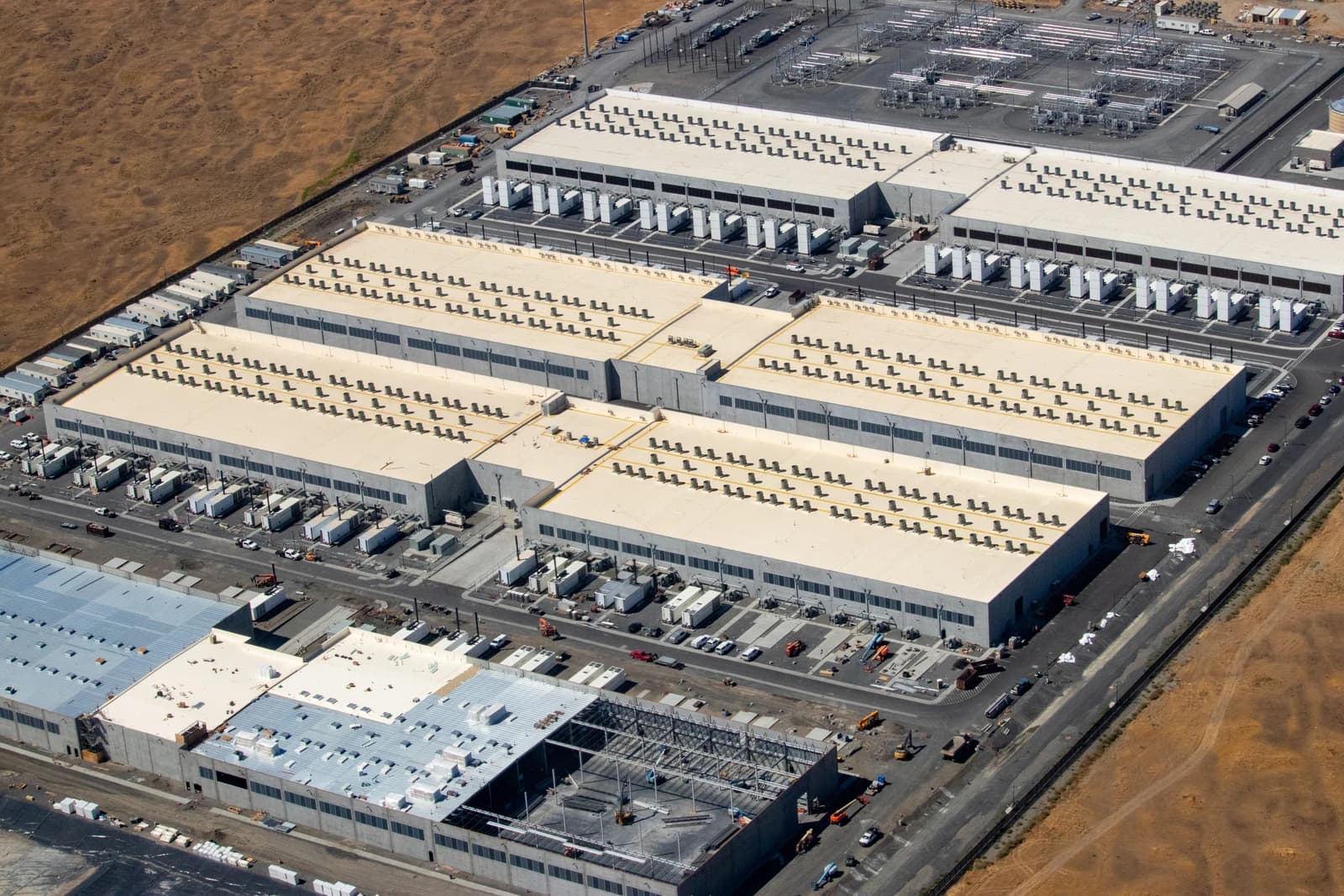
The company’s revenue increase of more than 60% points to demand that is still running ahead of supply across the AI hardware stack, from Nvidia’s accelerators to the packaging, foundry and memory ecosystem that supports them. That matters economically because AI capital spending is no longer just a speculative theme: it is a real source of industrial demand, earnings growth and supply-chain investment for a wider set of chipmakers and manufacturers.
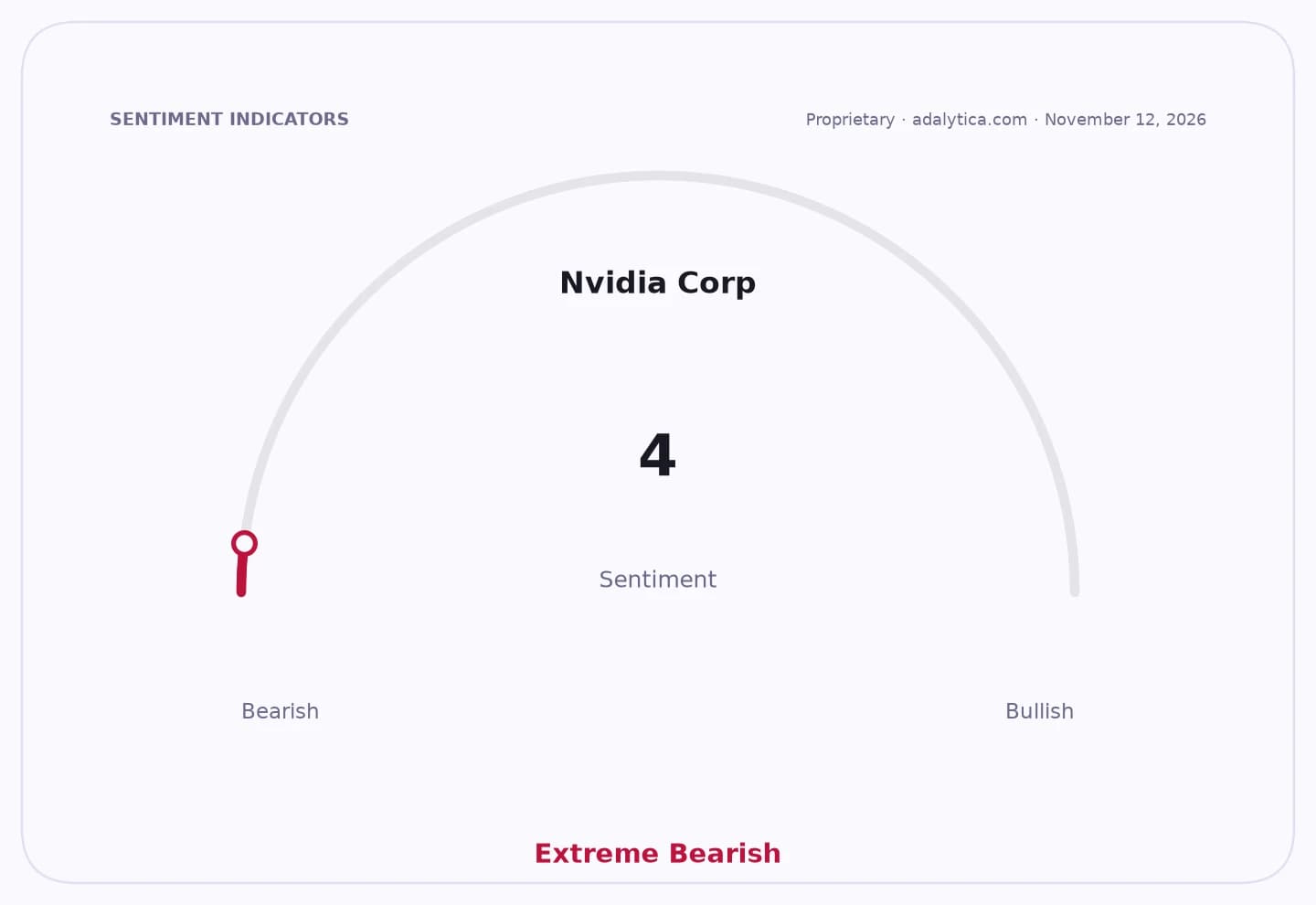
Sentiment Indicators

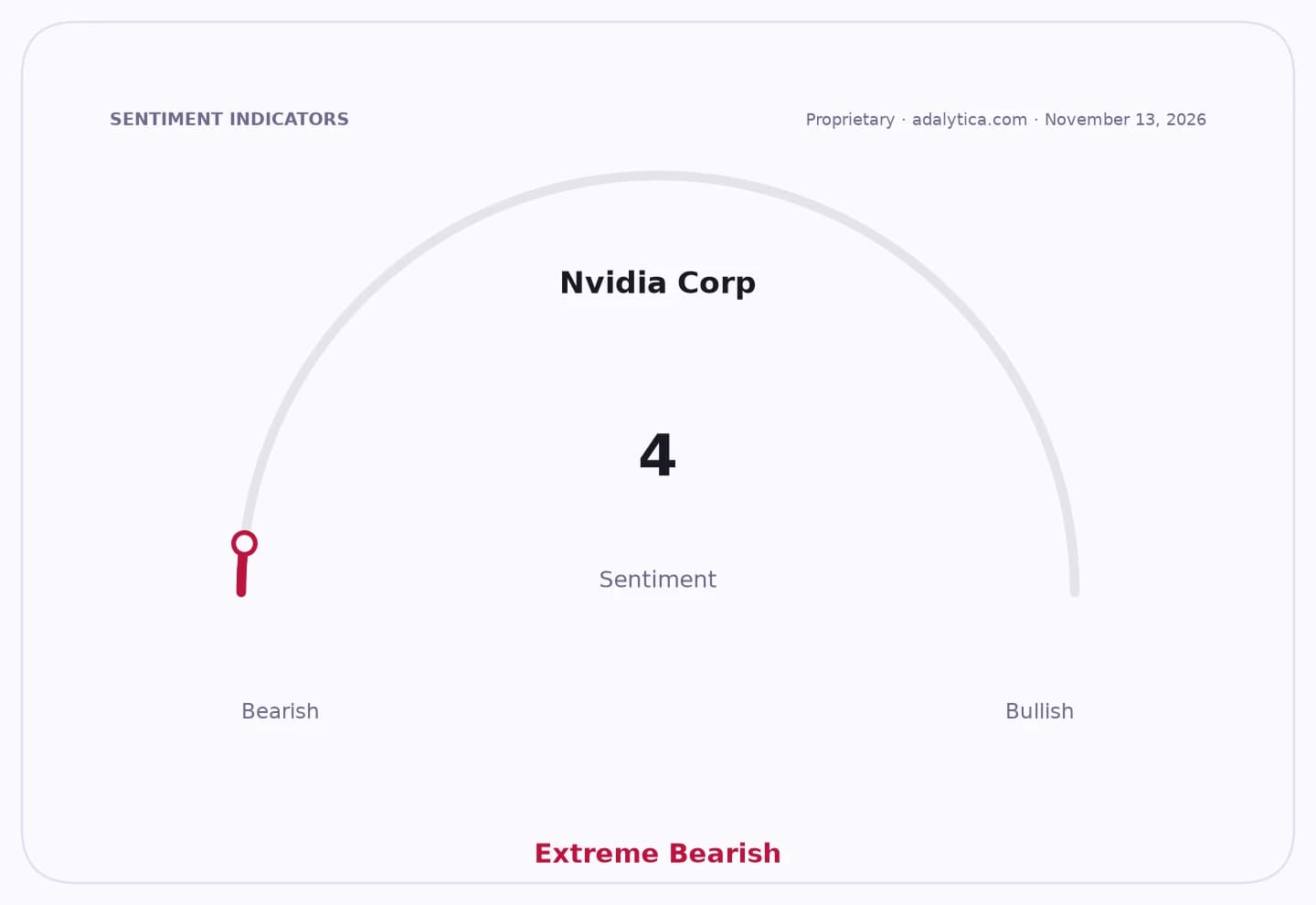
The backdrop in the stock tells a different story from the revenue line. Nvidia has fallen to 162.85 from 221.97 in late October, a drop of about 27%, after a violent November selloff that pushed the relative strength index down to 19.1, a level that signals deeply oversold conditions. The stock is also trading well below its 50-day moving average of 214.63, while the MACD remains negative, reflecting a market that is pricing in more than just routine volatility. Adalytica’s NVIDIA Earnings Sentiment gauge shows “Extreme Fear” at 4.0, even as awareness remains at 100, a combination that suggests investors are still intensely focused on the name but have sharply reduced conviction.
That disconnect between fundamentals and valuation is central to the investment debate. Bulls will argue that Nvidia’s sales growth, together with the company’s stated expansion in supply commitments, confirms that customers continue to buy ahead of need for AI training and inference. The company has previously said it lifted supply and capacity commitments to $279 billion as of late July from $119 billion a quarter earlier, a sign that demand visibility remains unusually strong. In that reading, the stock’s pullback reflects sentiment, position unwinds and policy risk rather than a collapse in end demand.

Bears, however, will point to the same set of facts and argue that the market is beginning to question how long spending at this pace can continue, especially if export restrictions tighten, customer concentration remains high or hyperscalers slow incremental orders. The recent sharp decline in Nvidia’s shares and the broader weakness in the AI complex show that investors are no longer paying only for growth; they want evidence that margins, supply execution and political risk can stay favorable as the cycle matures.
The ripple effects reach beyond Nvidia. AMD’s stock has also swung sharply, while TSMC’s shares have retreated from earlier highs, indicating that the market is reassessing the entire AI chip supply chain rather than one company alone. For investors, that means Nvidia’s sales growth is still the best evidence that AI infrastructure demand is real, but it also raises the stakes for the next few quarters: if growth stays above 60% while sentiment remains depressed, the stock could stabilize quickly. If demand cools or regulatory headwinds intensify, the recent selloff may prove to be the start of a more durable derating.
| Entity | Gains | Losses |
|---|---|---|
| Nvidia | ▲Revenue growth and demand visibility | ▼Market confidence and share price stability |
| AI infrastructure buyers | ▲Better access to cutting-edge chips | ▼Higher capital spending burden |
| AMD | ▲Relative-share opportunity if Nvidia stumbles | ▼Near-term sentiment spillover |
| TSMC and suppliers | ▲Strong AI manufacturing demand | ▼Exposure to export and cycle risk |