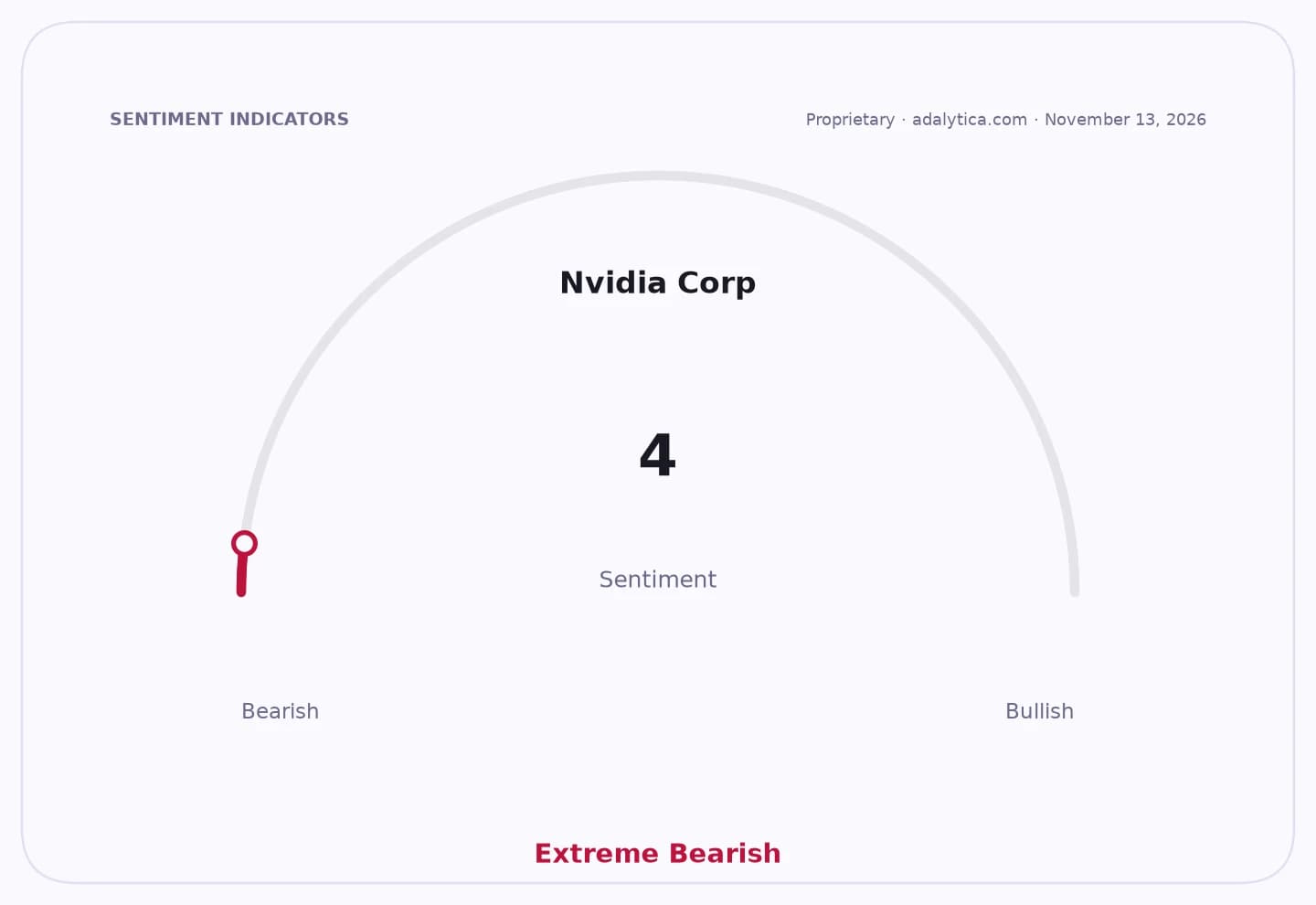
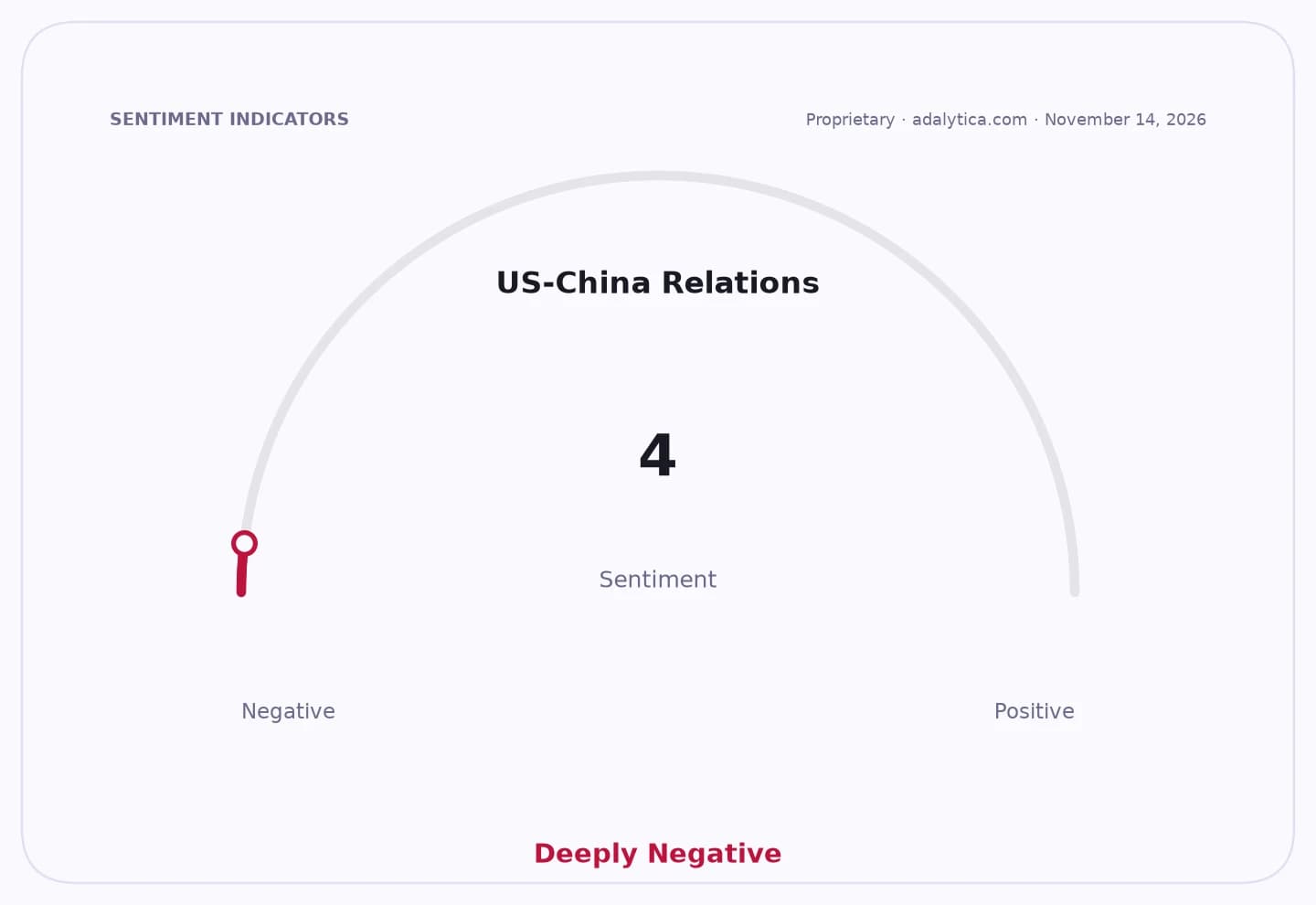
A widening political and legal fight over President Donald Trump’s administration is turning into a broader battle over national security, China policy and the limits of congressional oversight, with Democrats signaling more investigations even as the White House warns of criminal exposure if Trump and his allies are targeted.
Nvidia, Trump Fight Raises China and Oversight Risk
The stakes are economic as well as political. Allegations touching Nvidia’s China export approvals, questions around FBI scrutiny of chief executive Jensen Huang and a revived push to probe the Epstein matter have pulled technology supply chains, regulatory risk and White House accountability into the same frame. For investors, that raises the probability of more headline volatility around semiconductors, tighter scrutiny of China-linked revenue streams and a harder-to-price policy backdrop for companies reliant on export licenses or federal decisions.
Sentiment Indicators
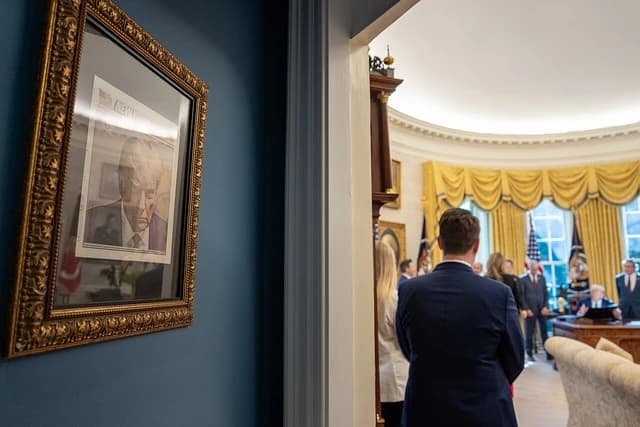
The immediate market read is not about one scandal but about the accumulation of them. Democrats, including Alexandria Ocasio-Cortez, are pressing for expanded inquiries into Trump-era conduct, while the administration has signaled that the counterattack could go to criminal territory. That suggests a prolonged “war of investigations” rather than a single discrete probe, with subpoenas, hearings and legal filings likely to compete for attention through the rest of the year.
The most market-sensitive thread runs through Nvidia and China. Semiconductor names have become a proxy for US-China tensions because export approvals, licensing delays and national-security reviews can quickly alter revenue assumptions. Any hint that scrutiny of Huang or Nvidia’s dealings could bleed into licensing decisions would matter to investors far beyond the political noise, because it could affect not just one company’s shipments but the broader logic of selling advanced chips into China.
White House Policy Direction
That is why the White House’s response matters. By warning of possible criminal consequences for Democrats pursuing the investigations, it is effectively raising the cost of escalation and increasing the odds that political confrontation spills into the courts. Such a dynamic tends to prolong uncertainty rather than resolve it, which is usually a negative for risk assets that depend on predictable policy and clean regulatory lines.
The political backdrop is also unfavorable for stabilization. Trump’s approval sentiment remains in deep fear territory in Adalytica’s gauge, while the S&P 500 trade signal is in extreme greed, a combination that can leave markets vulnerable if the probe cycle intensifies and investors are forced to reassess risk premia. Broadly, the story is less about immediate macro damage than about the erosion of policy clarity at a moment when markets have been rewarding momentum and assuming Washington risk can be contained.
For now, the bull case is that the investigations remain mostly political theater, with limited direct effect on corporate earnings or funding conditions. The bear case is that they broaden into a sustained institutional clash that slows decision-making on China exports, heightens legal risk for major companies and keeps geopolitics embedded in equity valuations.
Investors should watch whether the Nvidia line of inquiry deepens into formal regulatory action, whether House and Senate committees escalate their demands, and whether the White House turns its warnings into actual legal moves. If that happens, the “war of investigations” could become not just a Washington story but a recurring market input.
| Entity | Gains | Losses |
|---|---|---|
| Democrats | ▲Oversight leverage | ▼Risk of legal backlash |
| Trump White House | ▲Political base mobilization | ▼Policy distraction |
| Nvidia | ▲Potential sympathy rally if probes stall | ▼Export and regulatory scrutiny |
| Investors in megacap tech | ▲Event-driven trading opportunities | ▼Higher valuation uncertainty |