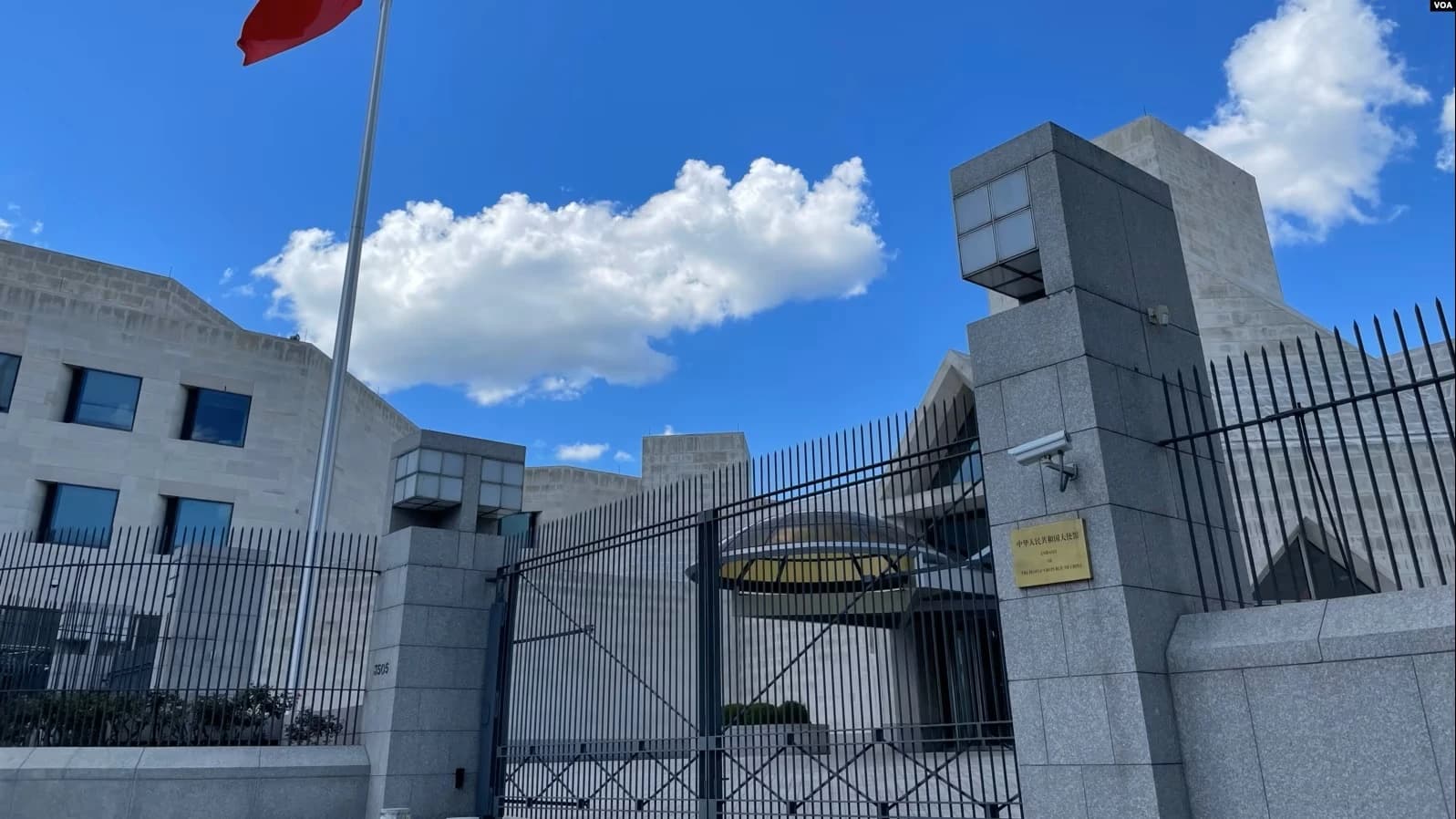
China has sharply condemned fresh US sanctions on two Chinese companies, saying Washington is using Cuba as a new legal pretext to escalate pressure on Chinese firms and further strain already fragile trade ties.
China condemns new US sanctions on firms
Beijing’s commerce ministry said the measures, announced by the US State Department on Nov. 5 local time, were the first imposed on Chinese companies under what it called “Cuba-related reasons.” China said the action violated international law and basic norms governing state-to-state relations, and warned it reserved the right to take “necessary measures” to defend the rights of its companies.
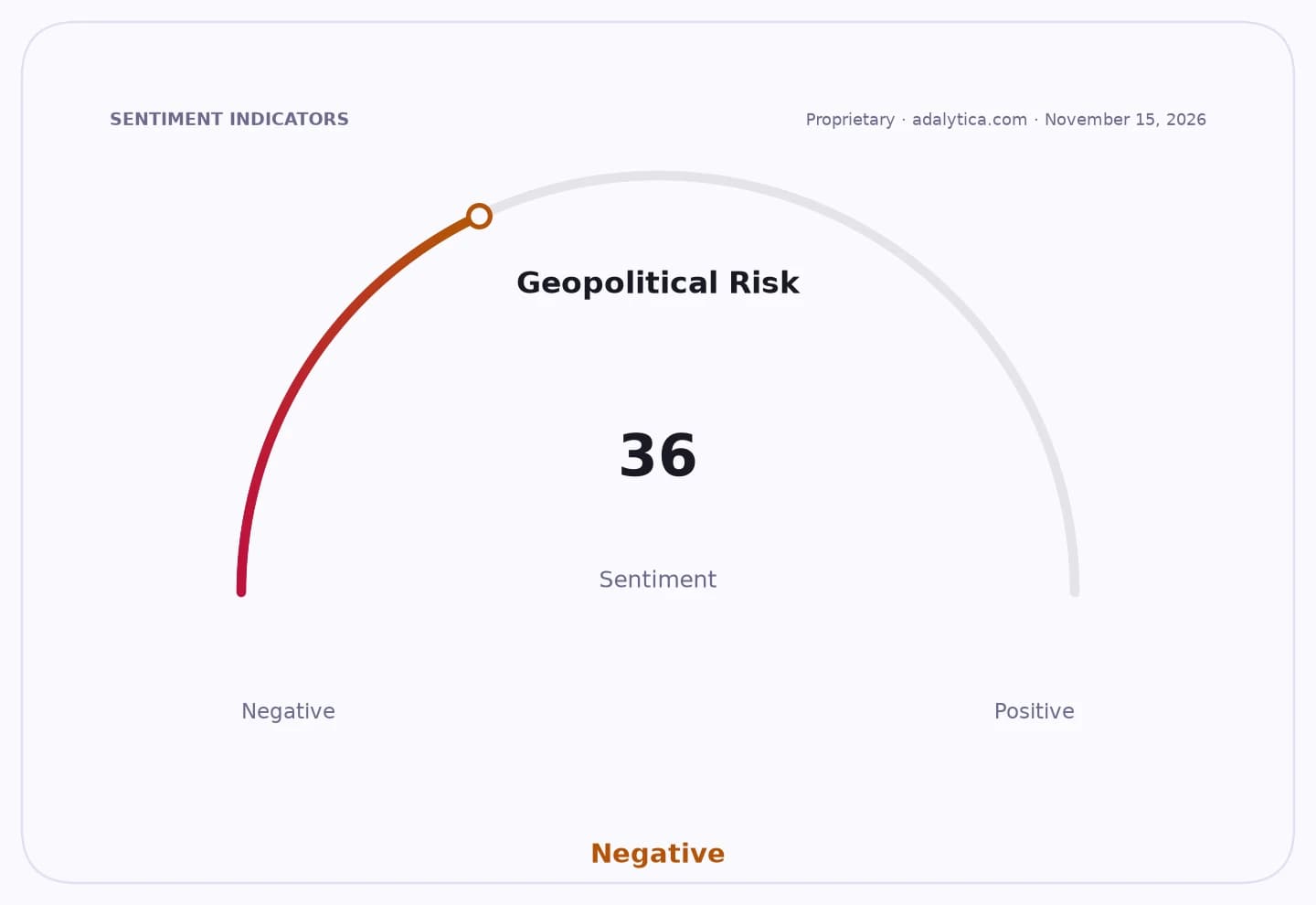
Sentiment Indicators
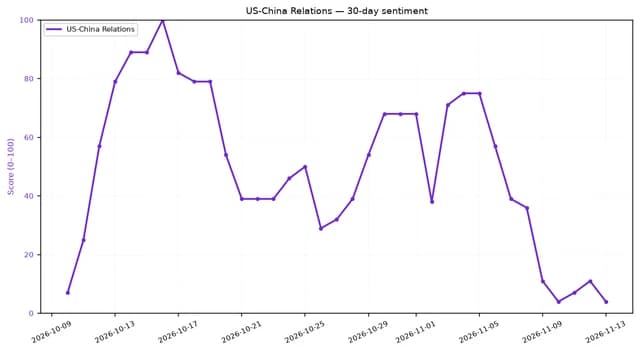
The dispute matters economically because it widens the perimeter of US-China friction beyond tariffs and technology controls into sanctions enforcement, raising the cost of doing business for Chinese firms with cross-border exposure and increasing the risk of retaliation. It also comes as the two countries are trying to stabilize commercial ties after months of disputes over semiconductors, rare earths and agricultural purchases, making any new sanctions episode a drag on the prospects for de-escalation.
For investors, the immediate issue is not the two companies alone but the signal that Washington is willing to broaden sanctions policy into new categories that can catch Chinese firms off guard. That tends to raise risk premia across China-linked assets, especially in technology and trade-sensitive sectors. US-listed Chinese equities have already shown sensitivity to the latest wave of tensions: the FXI China large-cap ETF was last at 33.48, below its 50-day moving average of 33.91 and its 200-day average of 35.26, while the KWEB internet ETF was trading at 22.93, well under its 50-day average of 24.23 and 200-day average of 27.39.
The market backdrop suggests investors are pricing in more policy risk. Adalytica’s US–China Relations Sentiment gauge fell to 4, labeled “Extreme Fear,” from 11 the day before and 38 a week earlier, indicating a sharp deterioration in perceived bilateral stability. That kind of move often shows up first in sentiment-sensitive names before it filters into broader trade, supply-chain and capital-flow assumptions.
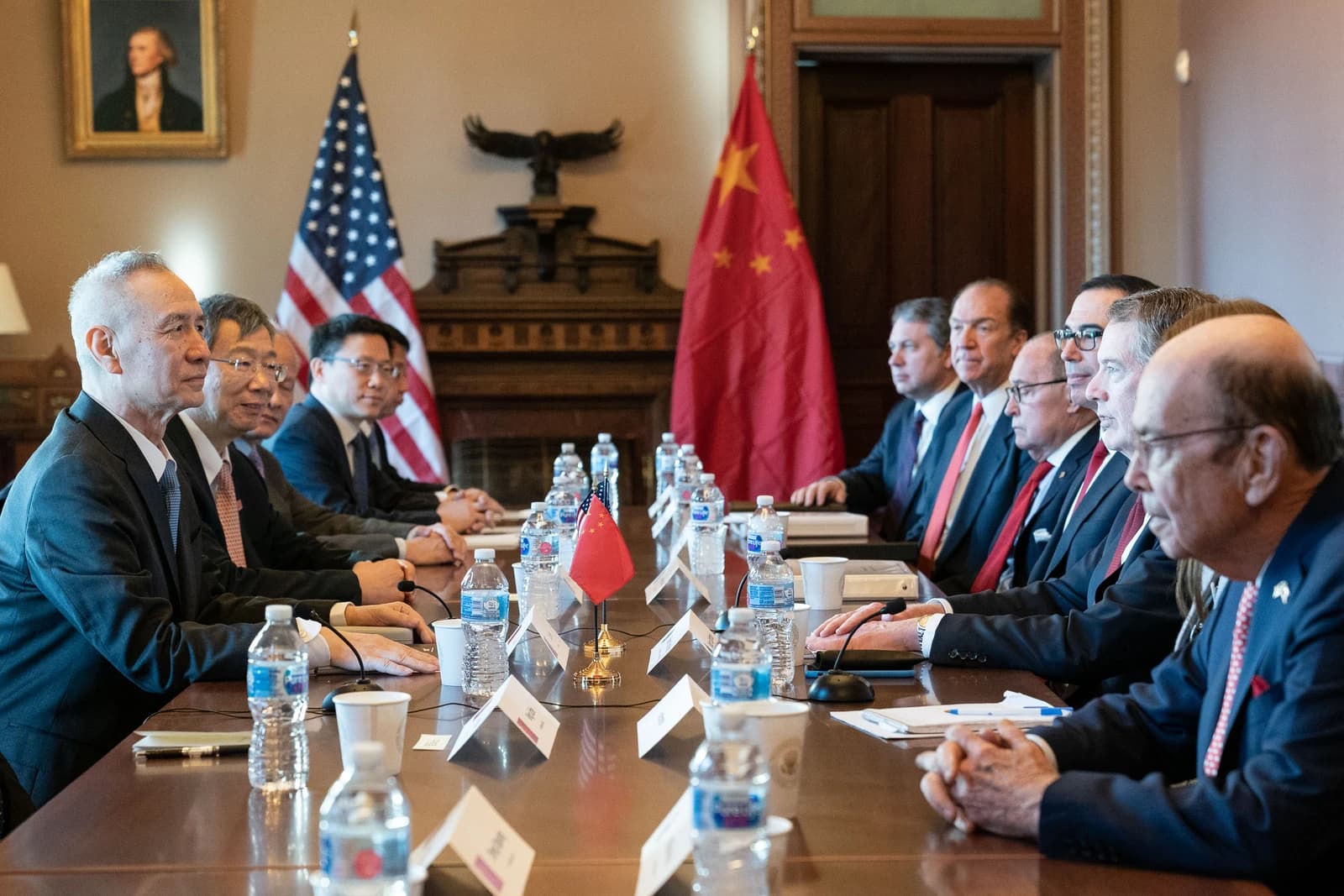
China’s response also fits a wider pattern of reciprocal escalation. Beijing has accused Washington of “suppression” and of undermining the consensus reached by the two presidents, while simultaneously stressing the need for mutual benefit and stable commercial relations. The mixed messaging reflects a familiar tension: both sides want to preserve channels for economic engagement, but each new sanctions round narrows the space for compromise and increases the risk that business ties become collateral damage.
The timing is particularly important because the dispute lands against a backdrop of broader negotiations over market access, agricultural buying and technology controls. If the sanctions dispute deepens, it could complicate talks on exports, chip supply and China’s purchases of US farm goods, while also raising the chance of Chinese countermeasures aimed at US companies or sectors with exposure to China.
For now, the biggest market implication is a higher volatility regime for China-sensitive assets and a renewed headwind for any rebound in US-China risk appetite. Investors will be watching whether the two governments contain the episode or let it bleed into a wider sanctions cycle that could disrupt trade, technology supply chains and cross-border earnings expectations.
| Entity | Gains | Losses |
|---|---|---|
| US policymakers | ▲More leverage on China | ▼Higher escalation risk |
| Chinese sanctioned firms | ▲Little immediate gain | ▼Compliance and financing pressure |
| US-China trade ties | ▲Potential bargaining chip | ▼Stability and predictability |
| China-sensitive investors | ▲Short-term volatility traders | ▼Long-only holders of FXI, KWEB |