The U.S. is moving to close a loophole that let foreign companies sidestep chip export controls by renting remote access to advanced Nvidia processors, a shift that could reshape who gets to use the most powerful AI hardware and where the next wave of model training takes place.
U.S. Tightens Nvidia AI Chip Export Access
That matters because advanced AI chips are becoming a strategic input for growth, productivity and national security all at once. If Washington limits not just direct sales but also cloud-style access to those chips, it raises the cost of building frontier AI systems outside the United States and makes the global race for computing power more lopsided.
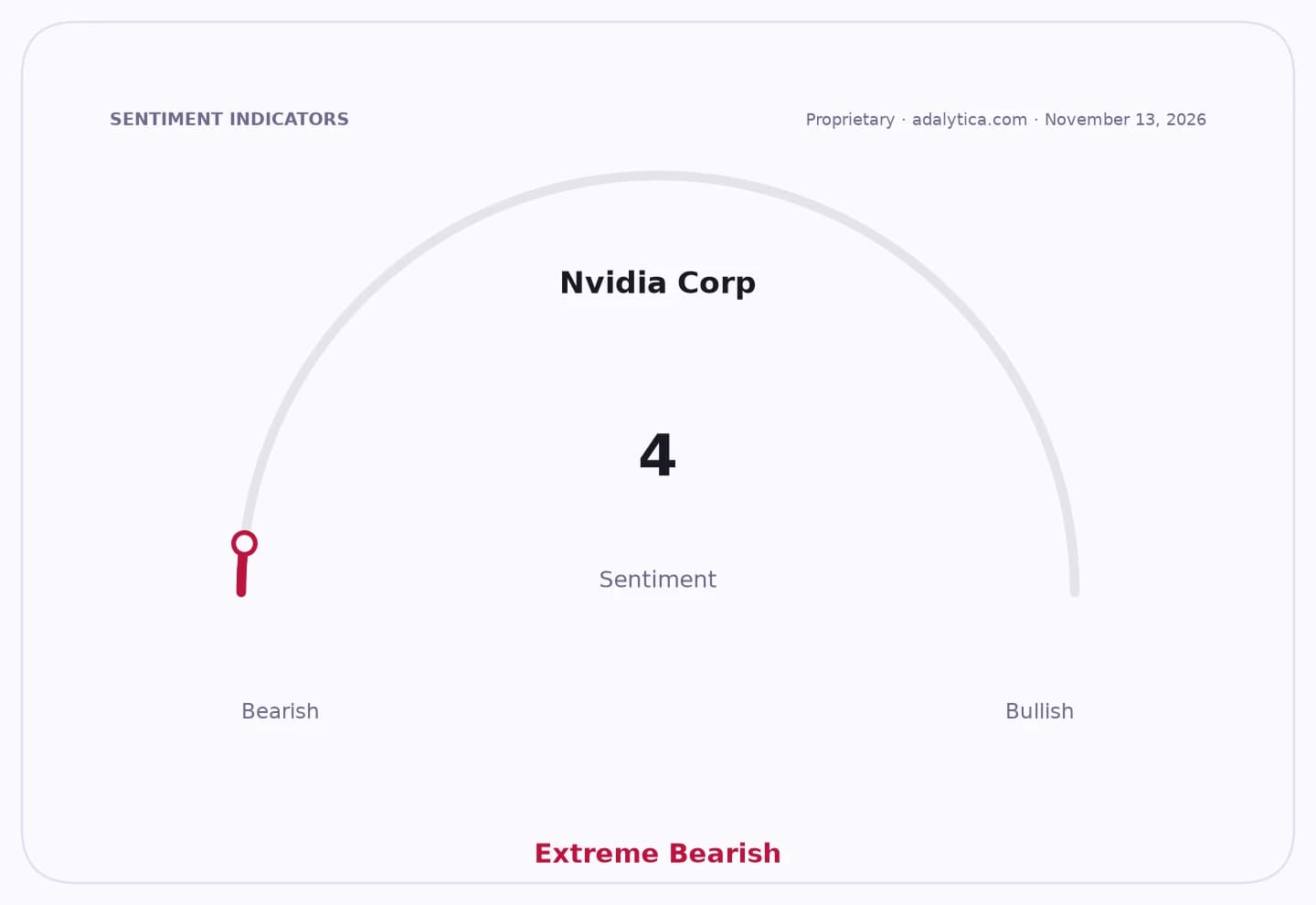
Sentiment Indicators
For investors, the immediate implication is not that demand disappears, but that it becomes more controlled, more politicized and potentially more concentrated among U.S.-based customers. Nvidia, the market’s bellwether for AI spending, has already been warning in filings that export controls can disrupt supply chains and hurt demand. AMD faces similar risks, while semiconductor ETFs such as the VanEck Semiconductor ETF have been whipsawed as policy headlines collide with enthusiasm for AI capex.
The rule, reported to take effect after 90 days, is aimed at companies abroad that have been able to avoid buying restricted chips directly by tapping data centers in other countries. Washington’s hard-liners on national security, including the Treasury Department and the National Security Council, appear to have won the latest round against officials more focused on preserving the AI boom that has become a pillar of U.S. growth.
That internal split is the real story here. The U.S. wants to keep its lead in AI while also denying rivals the hardware needed to train the most advanced systems. Those two goals can coexist only up to a point. The tighter the restrictions, the more likely it is that some overseas demand is delayed, rerouted or pushed toward domestic alternatives, whether those are U.S. cloud providers, local chip efforts or slower and less capable AI builds.
For Nvidia, the near-term market reaction may stay noisy, especially after the stock’s recent slide has left technical indicators deeply stretched to the downside. But the long-term investment case still rests on whether the company can keep converting global AI adoption into sales, even under heavier regulatory friction. For patient investors, the bigger lesson is that AI remains a secular opportunity, but the winners will be chosen not only by performance and scale — also by geopolitics.
| Entity | Gains | Losses |
|---|---|---|
| U.S. national security hawks | ▲tighter export enforcement | ▼less flexibility |
| Nvidia and AMD | ▲domestic market protection | ▼overseas demand access |
| U.S. cloud providers | ▲more controlled demand | ▼compliance burden |
| Foreign AI developers | ▲none | ▼higher chip costs |