Singapore is trying to preserve access to advanced U.S. AI chips even as Washington expands export controls aimed at stopping semiconductors from being diverted to China.
Singapore faces new U.S. AI chip export controls
That puts the city-state at the center of the latest U.S.-China technology crackdown, where regulators are now scrutinizing not only direct shipments to China but also the regional supply chains and data centers that can be used to route computing power around restrictions. For Singapore, the issue is economic as much as geopolitical: the country has built itself into a major hub for chip logistics, cloud infrastructure and data-center investment, and tighter licensing rules could slow expansion or complicate procurement for local firms.
Sentiment Indicators

The U.S. Commerce Department on Monday labeled Singapore a country with a higher-than-normal risk of diversion, alongside Indonesia, Malaysia, Thailand and Brazil. Under the new rules, exporters will need fresh approval before sending American semiconductors to those markets, and Washington is also moving to require approval for data centers worldwide that provide advanced computing capacity to companies based in China.
Singapore’s government said it is in talks with U.S. officials to understand the scope and implementation of the measure and is looking for ways to facilitate secure access to chips for domestic companies. It said it would not tolerate firms using links to Singapore to evade other countries’ laws.
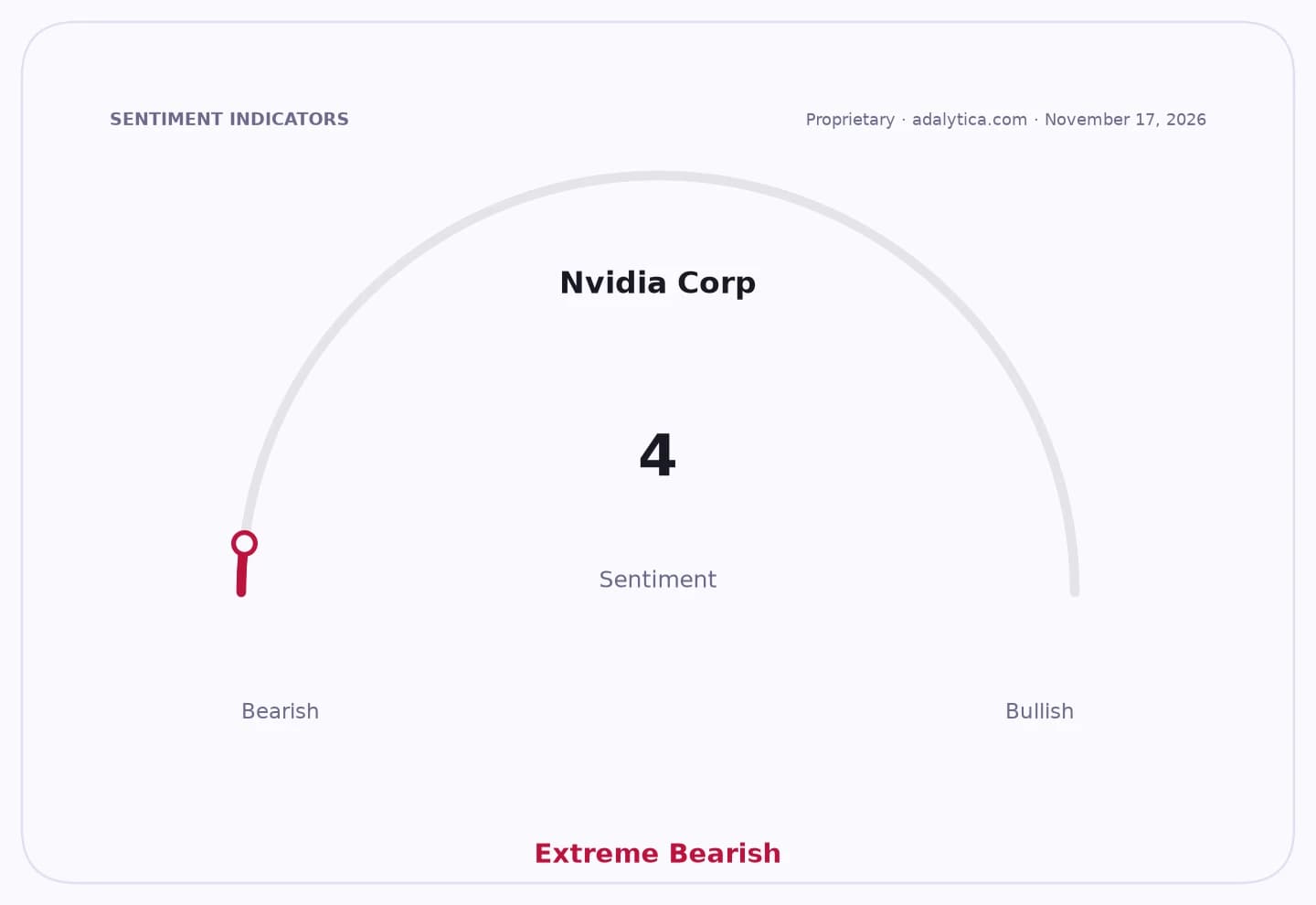
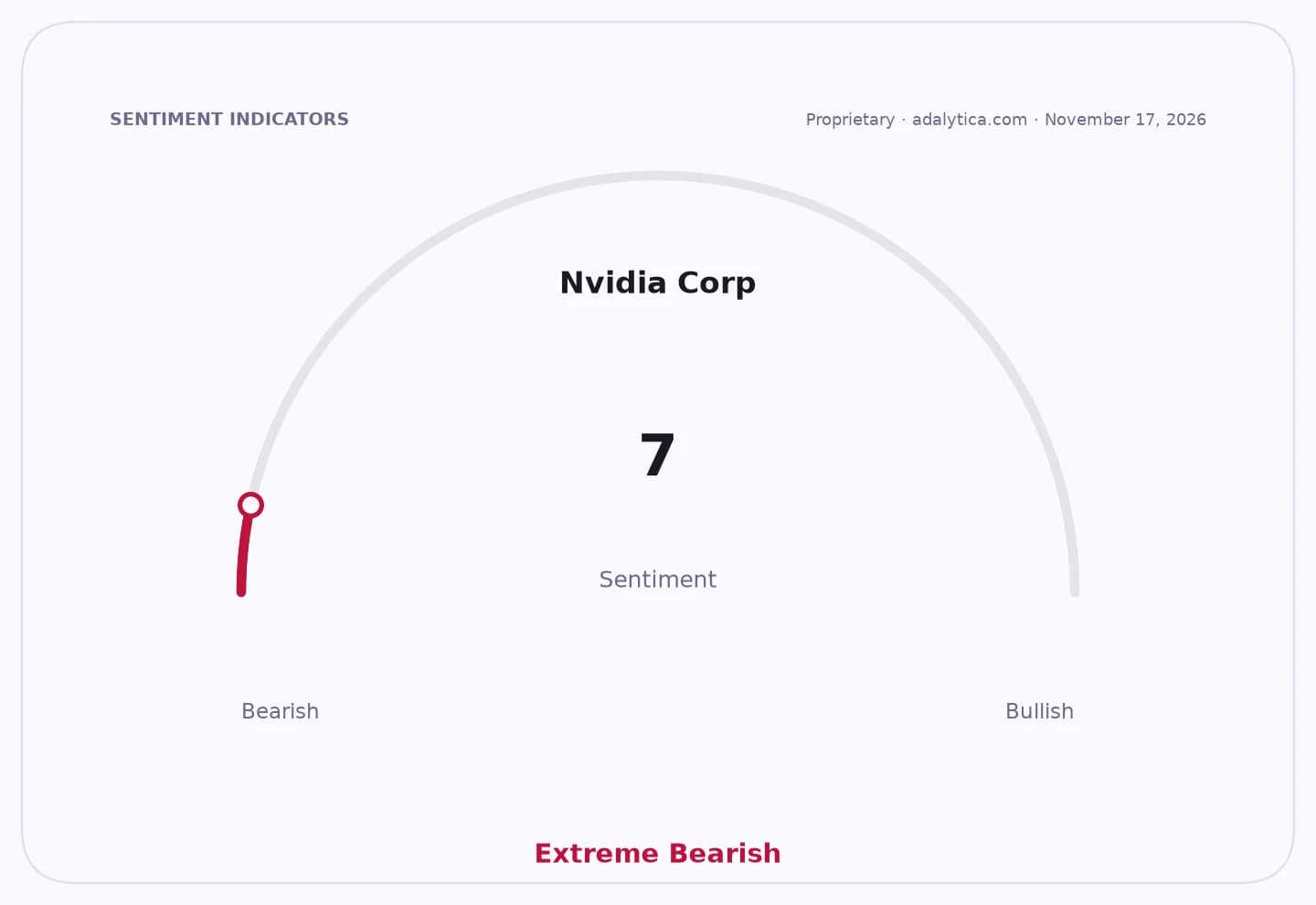
Nvidia Corp — 30-day sentimentadalytica.com
Explore this data interactively — full history, time series and cross-market comparisons.

The move follows U.S. concerns that advanced American processors have reached Chinese AI players through intermediaries in Asia, including through Singapore-based Megaspeed International, the company once run by Alice Huang, who has been linked in reports to the wider diversion investigation. The scandal has sharpened Washington’s focus on Southeast Asia as a possible transshipment route for Nvidia chips that are otherwise barred from sale to Chinese companies.
For investors, the stakes extend beyond Singapore. Nvidia, whose graphics processors sit at the heart of the restrictions, has already been hit by the broader export-control campaign, with its shares falling sharply in recent sessions and technical indicators showing the stock well below its 50-day moving average and near oversold territory. TSMC, which manufactures many of the world’s most advanced chips, has also seen pressure as the policy risk around AI demand and supply chains grows.
The next catalyst is whether Washington grants exemptions or narrow licensing paths for legitimate Singapore-based users, or whether the controls harden further across Southeast Asia’s fast-growing AI infrastructure market. Any sign of broader enforcement would likely keep pressure on chipmakers, data-center operators and the region’s investment plans.
| Entity | Gains | Losses |
|---|---|---|
| Singapore firms needing AI chips | ▲Potential exemption path | ▼Delays, higher compliance costs |
| U.S. regulators | ▲Tighter diversion control | ▼Pushback from allies and buyers |
| Nvidia | ▲Limited clarity on demand | ▼Pressure from export curbs |
| TSMC and chip supply chain | ▲Short-term policy visibility | ▼Slower AI infrastructure rollout |