Solana’s biggest consensus overhaul is now on the calendar, and if it works as designed it could give the blockchain a material edge in payments, trading and cross-chain settlement.
Solana Alpenglow mainnet activation set for Oct. 21
The network is set to activate Alpenglow on mainnet-beta on Oct. 21, replacing TowerBFT with a new voting system called Votor and aiming to cut transaction finality to about 150 milliseconds from roughly 12.8 seconds today — an improvement of about 85 times. That matters because finality, not just speed, is what determines when a payment becomes effectively irreversible. For merchants, bridges and trading applications, that is the difference between “fast” and “usable at scale.”
Sentiment IndicatorsⓘProprietary · adalytica.com · October 15, 2026
This is a snapshot — live sentiment, awareness and momentum for 130+ markets update continuously in the dashboard.Open AlphaPulse
The market should pay attention because this is not just a technical tune-up. Alpenglow is designed to free block space by removing validator vote transactions from blocks, while leaving user transaction execution and fees unchanged. In practical terms, that gives Solana more room for real economic activity and less overhead for consensus housekeeping. If the upgrade performs near target, it strengthens Solana’s pitch as a settlement layer for high-throughput consumer apps, stablecoin payments and latency-sensitive DeFi flows.
The upgrade also sharpens the competitive argument versus other smart-contract chains that have marketed speed, but not always the kind of finality merchants can underwrite. Solana has long been treated as the high-beta trade in crypto infrastructure: faster, cheaper, but historically viewed as more operationally fragile. Alpenglow is an attempt to turn that narrative into durable network architecture. That is why the date matters for investors — it is a catalyst for renewed confidence in SOL itself, but also for the ecosystem around it, including validators, infrastructure providers and exchanges with meaningful Solana activity.
The implementation details are ambitious. Anza said the migration will occur in a single slot, with an 82% stake threshold required to create the Alpenglow genesis certificate. Validator operators must run Agave 4.3.0 before activation, and Firedancer or Frankendancer setups will not support the first migration and must temporarily switch. Validation economics will also change, with a flat 0.8 SOL per-epoch admission fee replacing voting costs expected to run around 1 SOL per epoch. That should not materially alter the long-term economics of using the chain, but it does underscore that the upgrade is a network-wide reset, not a cosmetic patch.
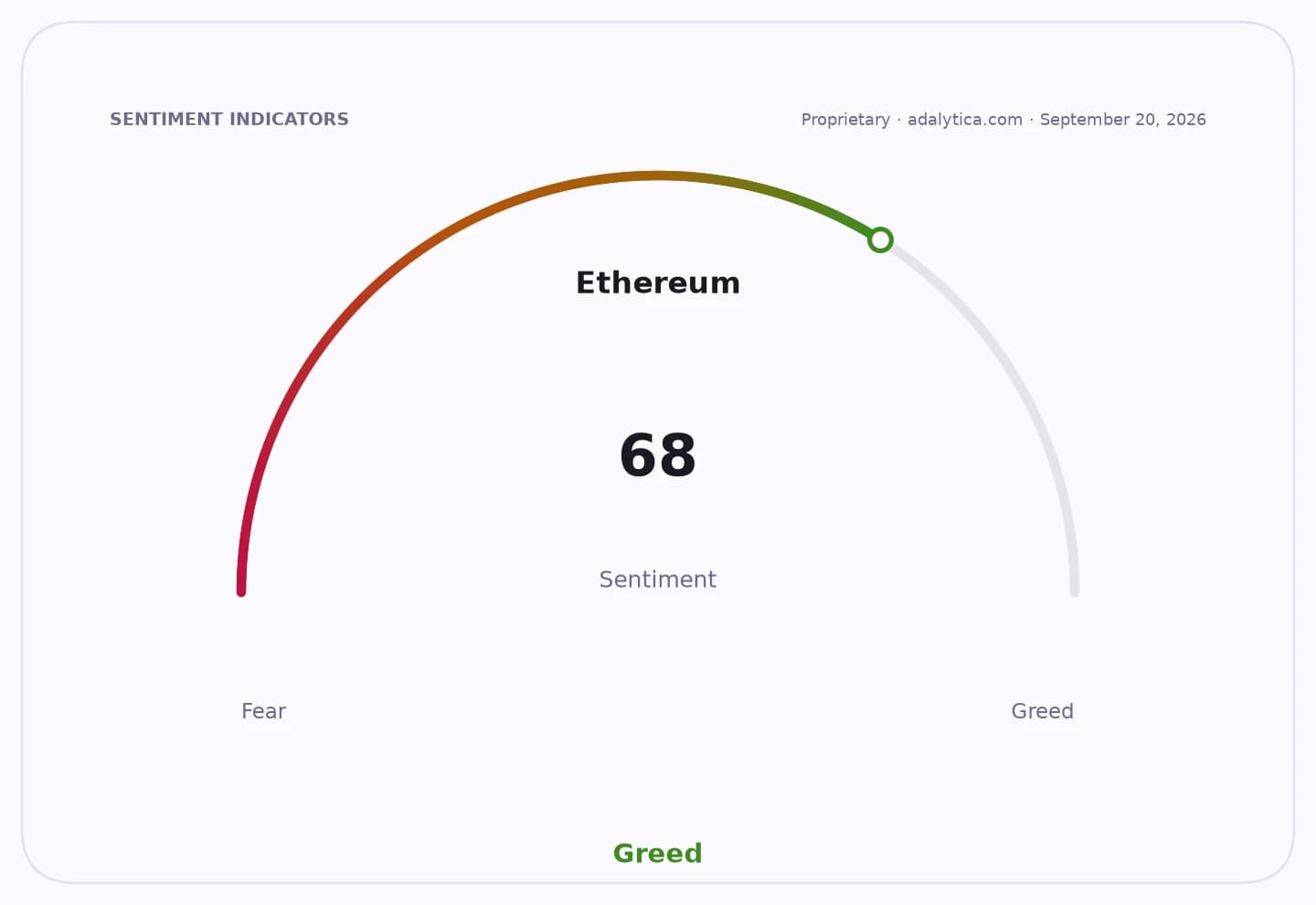
The near-term trade here is simple: the market may still be underestimating how much protocol-level performance improvements can feed into token demand when they expand the range of applications that can run on-chain. Adalytica’s Bitcoin Fear & Greed Index sits in extreme fear, while Ethereum sentiment is only in fear, a reminder that crypto investors remain cautious even as major chains compete for the next phase of adoption. In that environment, credible infrastructure upgrades can move capital quickly toward the strongest execution story.
For investors, the key is not to chase the announcement itself, but to position for the follow-through. If Alpenglow lands smoothly on Oct. 21 and real-world finality compresses toward the target, Solana can press its advantage in payments, trading and consumer finance. If execution stumbles, the market will quickly price in operational risk again. Either way, this is the kind of catalyst that can separate the durable winners from the rest of crypto’s infrastructure stack.
| Entity | Gains | Losses |
|---|---|---|
| Solana (SOL) | ▲Faster finality narrative | ▼TowerBFT legacy design |
| Merchants and bridges | ▲Stronger settlement assurance | ▼Delay-prone confirmations |
| Validators running Agave 4.3.0 | ▲Early migration advantage | ▼Operators needing temporary switches |
| Competing smart-contract chains | ▲— | ▼Solana’s performance gap narrows less |