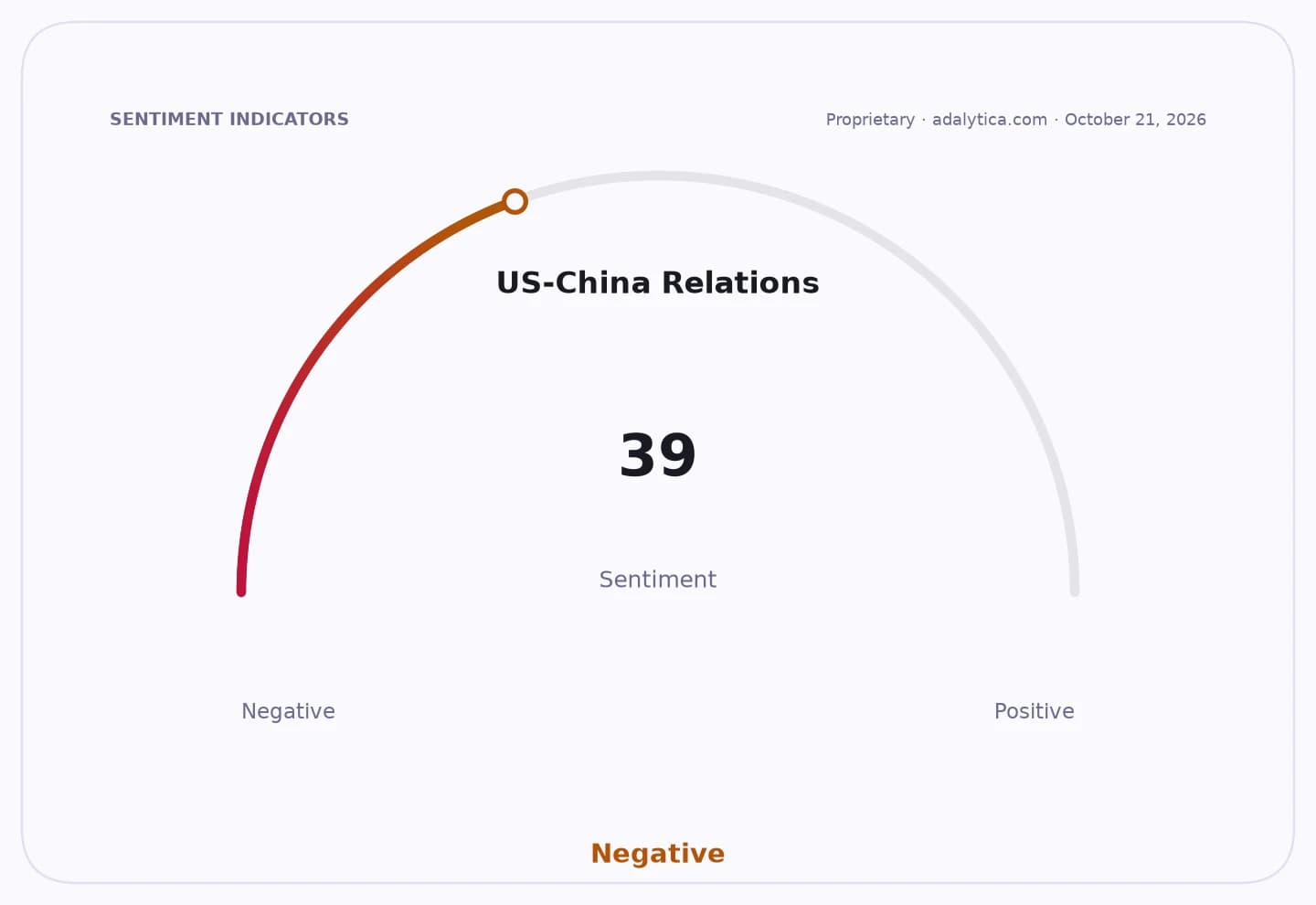
South African cherry growers are moving to China to reduce their reliance on the United States just as frictions with Washington deepen and the future of duty-free access under AGOA looks less certain.
South African Cherry Growers Seek China Market Access
For an export industry that depends on narrow harvest windows and premium access to foreign buyers, the shift is economically significant because it gives South Africa a way to preserve growth if US trade ties weaken further. Beijing has introduced a zero-tariff scheme for qualifying South African exports and, for the first time, is opening its market to South African cherries — a small crop in global terms, but one that could help set a template for broader agricultural diversification.
Sentiment IndicatorsⓘProprietary · adalytica.com · October 26, 2026
This is a snapshot — live sentiment, awareness and momentum for 130+ markets update continuously in the dashboard.Open AlphaPulse
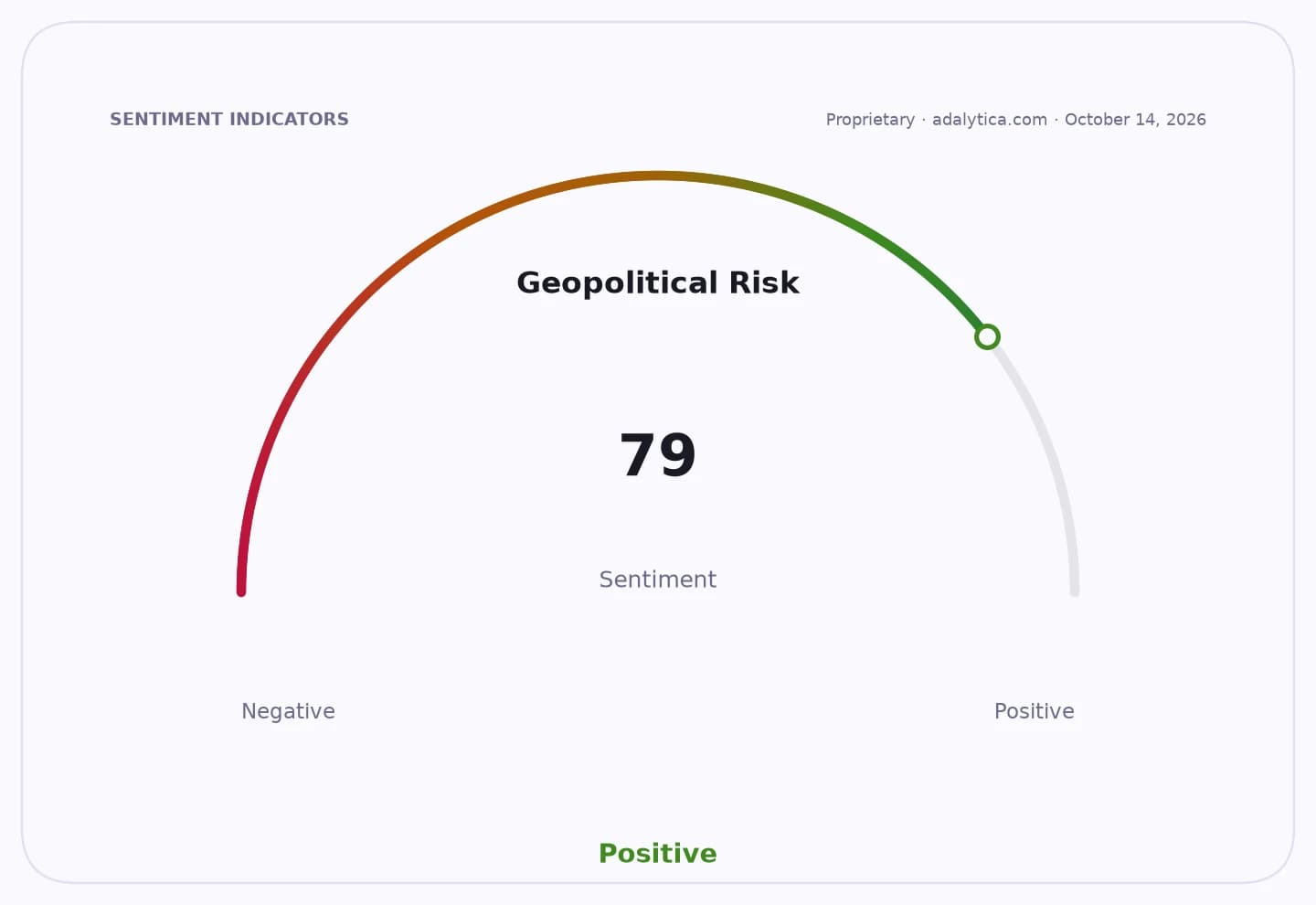
The timing matters. President Cyril Ramaphosa has warned that South Africa should prepare for the possibility of exclusion from the African Growth and Opportunity Act, the US trade programme that gives qualifying African countries broad duty-free access. Relations between Washington and Pretoria have deteriorated since Donald Trump returned to the White House, with the US criticising South African policy, imposing tariffs and threatening sanctions. For growers, that raises the risk that one of their most important export channels becomes politically vulnerable just as production costs and climate pressures remain elevated.
China is the obvious alternative. It is the world’s largest importer of cherries, buying nearly 600,000 metric tons a year, and South African producers are not trying to compete on volume. They are trying to exploit the early-season gap before Chilean supply dominates the market. Hortgro says South African growers aim to ship in September and early October, when Beijing’s appetite for fresh cherries is high and competition from the Southern Hemisphere remains limited.
That gives the industry a commercially plausible niche. Gert Eastes, chief executive of Ridge Cherry Farms, has spent 12 years preparing for access to China and is now refining production to hit an October export window. He wants to lift output from 600 tons to 2,000 tons and says shipping 1,000 tons to China would materially change the economics of his business. He is also preparing to quadruple his seasonal workforce to meet demand if approvals come through.
The broader economic logic extends beyond cherries. South Africa exports about $15 billion of agricultural goods a year, while China imports roughly $200 billion in food and farm products. Agriculture Minister Willie Aucamp said the push into China is not a rejection of the US but a hedge against policy risk, arguing South Africa cannot wait to be caught out if AGOA is not renewed. That is a message investors in the country’s farm sector will read as a warning that trade dependence on any single market now carries more political risk.
There are still real hurdles. Before South Africa can make its first shipment, China must confirm it has met all sanitary and technical requirements, and approval is not guaranteed. Even so, the signal is important for exporters, logistics providers and fruit packers: South Africa is trying to rewire its trade map toward Asia and the Middle East, where demand is deeper and politics may be more predictable than in the US.
For investors, the story is less about cherries than about optionality. A successful opening to China would support earnings resilience for growers and export-focused agribusinesses, while failure would leave South African agriculture more exposed to US policy shifts and the risk of a weakened AGOA framework. The near-term catalyst is Beijing’s final regulatory sign-off; the bigger one is whether South Africa can turn a single fruit category into a broader export strategy that outlasts the current diplomatic chill.
| Entity | Gains | Losses |
|---|---|---|
| South African cherry growers | ▲New market access | ▼US trade dependence |
| China importers | ▲More seasonal supply options | ▼Limited downside if approvals stall |
| South African government | ▲Export diversification | ▼Higher exposure to US policy risk |
| US exporters/AGOA beneficiaries | ▲— | ▼Potentially weaker South Africa trade ties |