President Lee Jae-myung’s approval rating has slipped to a new low of 37%, and that matters because a weakening mandate can quickly become an economic problem when households are already uneasy about housing and jobs.
South Korea Poll Shows Lee Approval Falls to 37%
The latest Gallup survey, taken Sept. 15-17, shows disapproval rising to 56%, with voters pointing most often to real estate policy and appointments as the reasons for their frustration. For investors, that is more than a political setback. It is a warning that the administration may find it harder to push through policies that influence consumer confidence, construction activity, lending conditions and the broader investment climate.
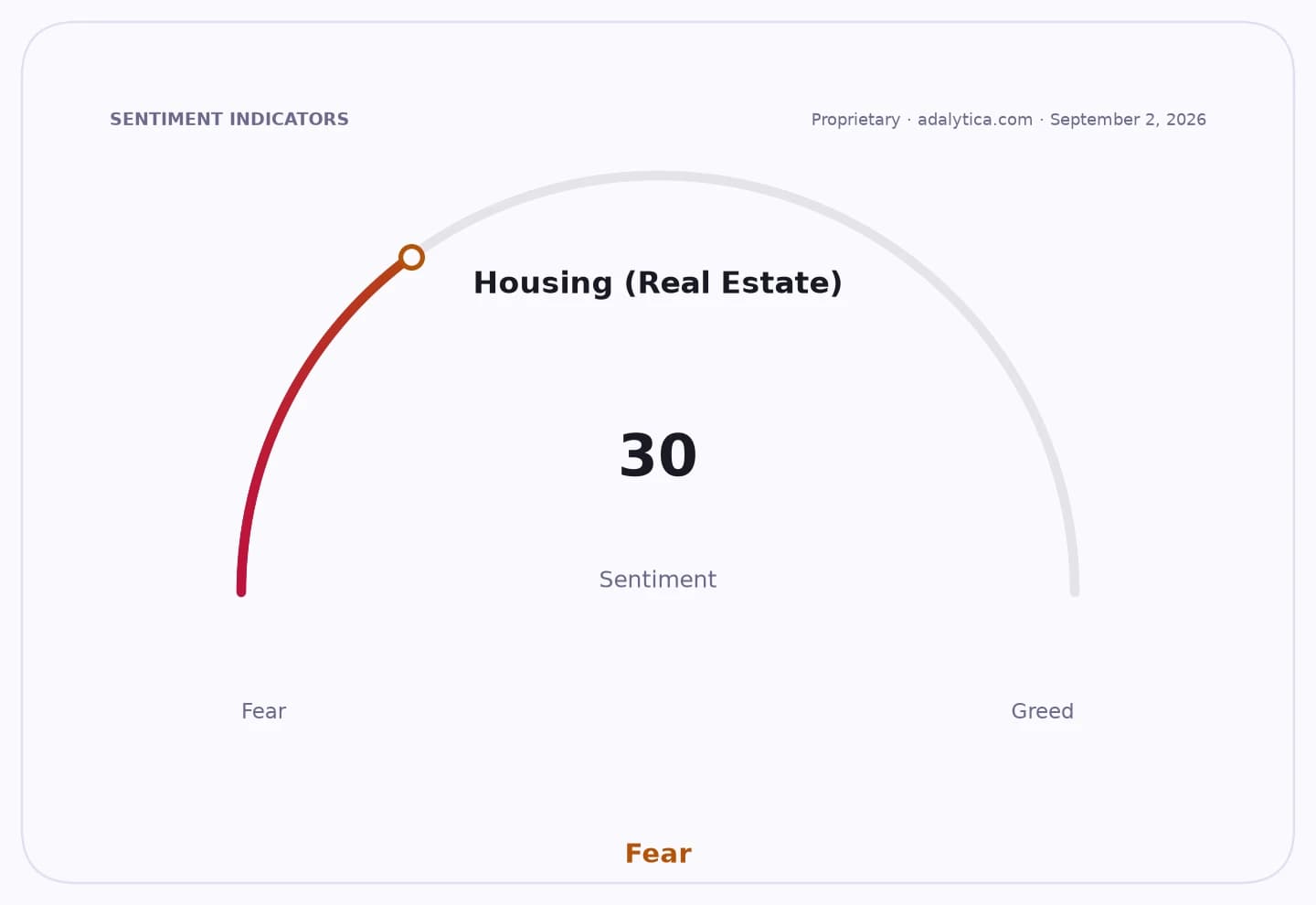
Sentiment IndicatorsⓘProprietary · adalytica.com · September 20, 2026
This is a snapshot — live sentiment, awareness and momentum for 130+ markets update continuously in the dashboard.Open AlphaPulse
The weakness is broad, not confined to one political base. Support among people in their 50s has fallen to 46%, while those in their 40s were split 47% to 47% and the 50s were close at 46% positive and 49% negative. Outside the southwest Jeolla region, approval was mostly in the 30s across the country. That kind of erosion suggests the dissatisfaction is spreading beyond the usual partisan lines and into the middle of the electorate that often sets the tone for policy durability.
Housing is the clearest fault line. Gallup said property policy has topped the list of negative responses since late July, and after recent cabinet appointments, personnel issues have moved into second place. That combination is politically damaging because it links two areas that shape market expectations: where people can live, and who they believe is running the state competently. In Korea, both can spill over into prices, bank lending and the willingness of consumers to spend.
There is still some support under the surface. Among respondents who approved of Lee, the most common reasons were diplomacy and the economy or livelihoods. That suggests markets should not read the poll as a wholesale rejection of the government’s agenda. But the direction of travel is what counts. Approval is now at its lowest since his inauguration, and the survey did not capture his Sept. 18 press conference, leaving room for a short-term rebound or further slippage.
For long-term investors, the key question is whether the administration can steady public trust without losing policy momentum. South Korea’s equity market, property-related sectors and domestic demand names tend to respond not just to earnings, but to confidence in the policy backdrop. When that backdrop frays, volatility usually rises before valuations recover.
The takeaway for investors is simple: this is not a reason to abandon South Korea, but it is a reason to stay selective, favor companies with strong balance sheets and export exposure, and watch whether Lee can rebuild credibility on housing and appointments. That will help determine whether this is a temporary political dip or a more durable drag on the economy.
| Entity | Gains | Losses |
|---|---|---|
| Households worried about housing | ▲Policy pressure for relief | ▼Confidence in the government |
| Opposition parties | ▲Political leverage | ▼None from the poll |
| Export-focused companies | ▲Less tied to domestic politics | ▼Little direct benefit |
| Domestic consumer and property sectors | ▲Potential policy reset | ▼Demand sentiment and pricing power |