South Korea will pause flights and delay the stock market open on Thursday to protect one of the country’s most important academic rituals, underscoring how seriously Seoul treats the annual Suneung college entrance exam even as it moves to tighten controls after an AI cheating scandal.
South Korea delays flights and stock market for Suneung
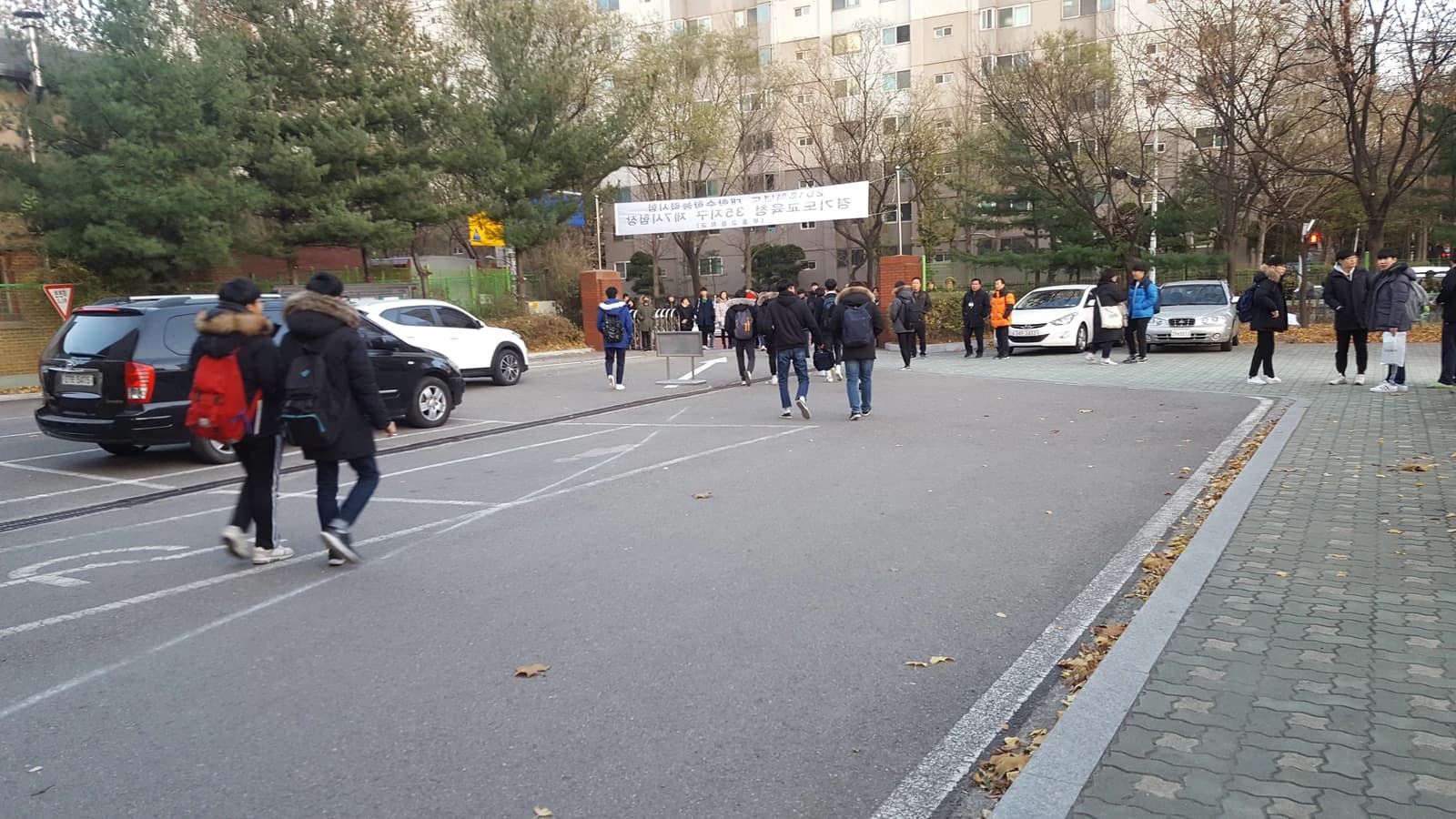
The 35-minute aviation halt, from 1:05 p.m. local time, will temporarily suspend takeoffs and landings nationwide and force 130 flights to be rescheduled, including 81 international and 49 domestic services. Aircraft already in the air will have to remain at least 3 kilometers above ground during the exam listening test, a reminder that the country is willing to disrupt transport infrastructure to give students a quiet testing window.
Sentiment Indicators
For investors, the larger point is not the inconvenience itself but the state’s willingness to prioritize social stability and public confidence over short-term commercial efficiency. South Korea is also pushing back the stock market open to 10 a.m. and delaying the close by an hour to reduce morning traffic around exam centers, a move that will briefly reshape trading rhythms in one of Asia’s most active markets.
The timing comes as the Suneung faces a fresh credibility test after a tax accountant exam scandal in which the top scorer admitted using a miniature camera, AI and a smartphone to access answers. That episode has spurred the government to set up an interagency task force to counter AI-assisted cheating and to block public Wi-Fi access on exam day, a sign that educational integrity is now colliding with the spread of consumer technology.
That matters economically because South Korea’s exam system is deeply tied to labor-market sorting, social mobility and the long-run quality of its workforce. In a country where university placement can shape careers for years, preserving trust in the testing process helps protect the pipeline of talent that supports everything from conglomerates to finance and technology.
The market angle is narrower but still relevant. South Korea’s benchmark exchange will open later than usual, and exchange-traded funds such as the iShares MSCI South Korea ETF have already been under pressure, with recent technical readings showing the fund trading below its 50-day and 200-day moving averages. EWY’s weakness reflects broader caution around Korean assets, where investors have been balancing cyclical exposure against domestic policy surprises and global risk sentiment.
Longer term, the bigger investment lesson is that South Korea is entering a new phase where AI is no longer just a productivity tool for companies and investors — it is also a governance issue for schools, regulators and exam authorities. As Seoul tightens monitoring before and after tests, and as it considers further restrictions on remote connections, the message to markets is clear: the country will adapt quickly to preserve institutional credibility.
For long-term investors, that makes South Korea worth watching, not because a one-hour market delay moves fundamentals, but because the country’s response shows how aggressively it intends to defend the rules that underpin its human capital and financial credibility.
| Entity | Gains | Losses |
|---|---|---|
| South Korean students | ▲Quiet exam conditions | ▼Morning schedule disruption |
| Airlines and travelers | ▲None | ▼Delays and rescheduled flights |
| Stock market investors | ▲Later, orderly open | ▼Short-term trading inconvenience |
| South Korean authorities | ▲Public trust in exams | ▼Scrutiny over AI-cheating gaps |