Spain’s battle with inflation is moving from rhetoric to policy, and the most immediate winner is the country’s lowest-paid workers.
Spain raises minimum wage to 1,286 euros
Prime Minister Pedro Sánchez’s government has approved a 5.3% increase in the monthly minimum wage to 1,286 euros, a move that will lift pay for more than 2.5 million people just as annual consumer prices are rising 3.5%, largely on the back of higher energy costs. For households stretched by food, rent and utility bills, the increase offers real relief. For investors, it is a reminder that Spain’s consumer story is no longer just about stubborn prices — it is about how policymakers are trying to preserve purchasing power without derailing growth.
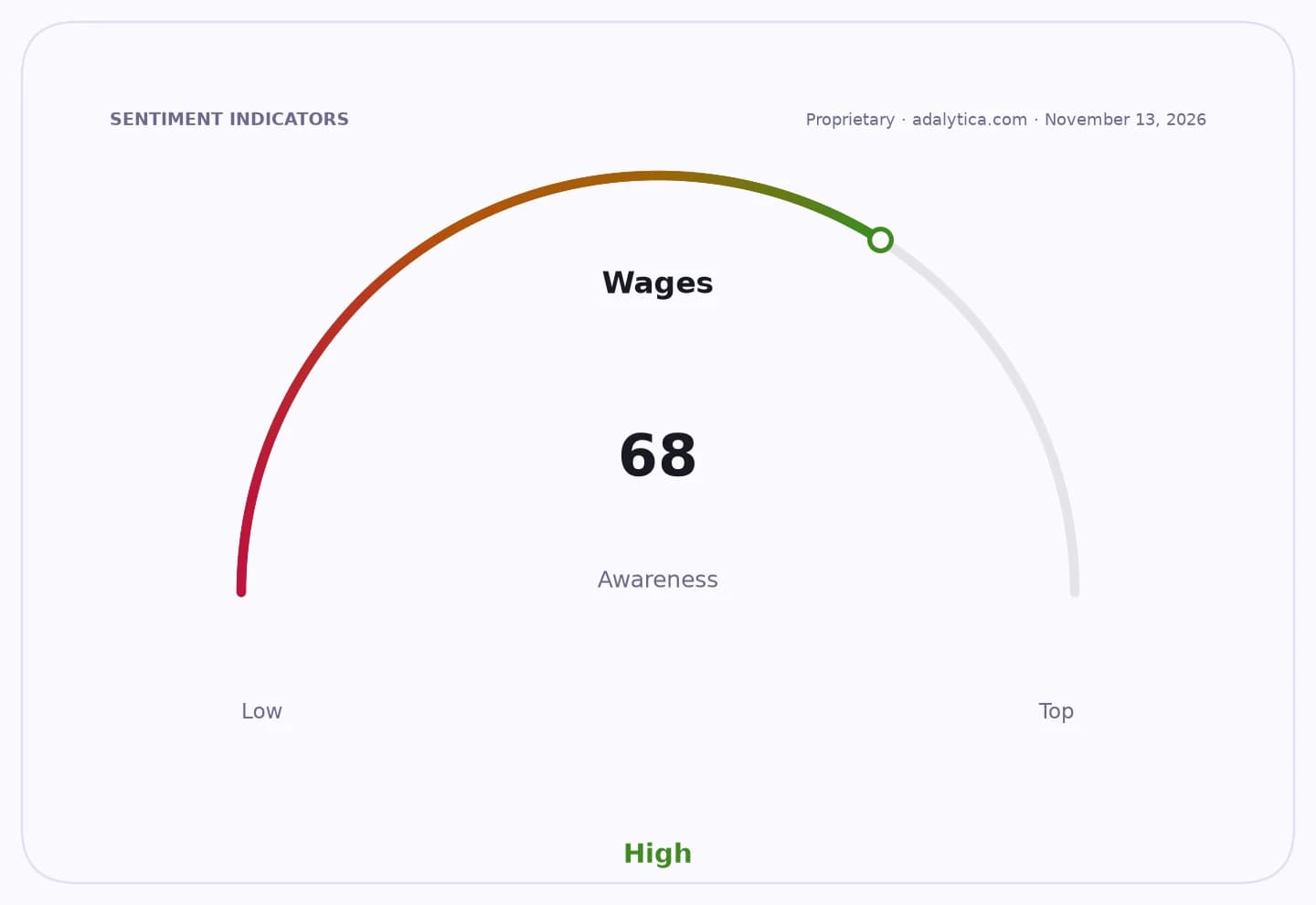
Sentiment Indicators
That matters because Spain is still outperforming much of the euro area. The European Commission has recently improved its outlook for the country, keeping Spain among the fastest-growing large economies in the European Union. Stronger growth gives the government room to act, but it also means the policy mix is becoming more interventionist: tax relief in some areas, price limits or pay floors in others, all aimed at cushioning the cost-of-living squeeze.
The inflation backdrop is what makes this debate politically urgent. Energy prices remain a key driver, and Spain’s housing market is adding another layer of pressure, with property prices rising faster than the EU average as foreign demand and limited social housing keep supply tight. In that environment, wages at the bottom of the market are increasingly a policy tool, not just a labor-market issue.
For investors, the key question is whether Spain can keep growing while households regain some spending power. A higher minimum wage supports domestic consumption and can help lower-income consumers, who tend to spend a larger share of their income. But it also raises costs for employers in labor-intensive sectors, from hospitality to retail, where margins are already sensitive to energy, rent and financing costs.
The ninth minimum wage increase since 2018 fits a broader European pattern: governments are trying to blunt inflation’s social cost without reigniting it. That balancing act may prove easier in Spain than in countries with weaker growth, but it will still shape profits, wages and policy choices over the next year. For long-term investors, Spain remains worth watching — not as an inflation crisis story, but as a test of whether a resilient economy can keep compounding through it.
| Entity | Gains | Losses |
|---|---|---|
| Low-wage workers | ▲Higher take-home pay | ▼Slower hiring risk |
| Spanish consumers | ▲More spending power | ▼Higher prices still bite |
| Labor-intensive employers | ▲Stronger demand from workers | ▼Higher wage costs |
| Spain’s economy | ▲Support for growth | ▼Margin pressure in small firms |