Strategy has added another 1,142 bitcoins to its balance sheet for about $90 million, a purchase that came in just before bitcoin slid toward $60,000 and underscored how aggressively Michael Saylor’s company is still leaning into its corporate treasury strategy.
Strategy buys 1,142 Bitcoin for $90 million

The buy was executed at an average price of $78,815, according to an 8-K filing with the SEC, leaving Strategy with 714,644 BTC, or about 3.4% of bitcoin’s theoretical 21 million supply. At recent prices, that stash is worth roughly $49.2 billion, implying about $5.2 billion in paper losses versus the company’s latest cost basis.
Sentiment IndicatorsⓘProprietary · adalytica.com · September 7, 2026
This is a snapshot — live sentiment, awareness and momentum for 130+ markets update continuously in the dashboard.Open AlphaPulse
The timing matters because the purchase appears to have been made Monday or Tuesday, when bitcoin was still trading around $70,000, before the token broke below $78,000 and then fell to a low near $60,000 on Thursday. In other words, Strategy did not buy the dip this time, and the miss revived questions about how much near-term mark-to-market pain the company can absorb if crypto volatility persists.
The latest purchase also lifted Strategy’s average bitcoin cost slightly to about $76,056, including fees, because the new coins were bought above the company’s blended basis. That keeps the firm above water only if bitcoin stabilizes well above recent lows, a calculation investors have watched closely since the company reported a fourth-quarter loss tied to the decline in bitcoin.
Funding still comes from the same playbook: sales of common A shares through an at-the-market program. Strategy sold 616,715 shares last week for roughly $89.5 million, and had $7.97 billion remaining under the ATM program as of Feb. 8, giving it room to keep buying even without tapping debt markets.
The structure is why the stock remains one of the market’s purest and most leveraged proxies for bitcoin. When MSTR trades well, Strategy can issue shares at richer prices and accumulate more BTC per unit of dilution; when the stock weakens, the model becomes less efficient and the dilution stings more.
That tension showed up in the share price itself. MSTR swung sharply last week, touching $107 on Thursday before rebounding toward $135 on Friday, a move that mirrors bitcoin’s volatility but with extra force. Standard technical indicators on the stock, including the 50-day and 200-day moving averages and RSI readings, also point to a market still wrestling with momentum rather than settling into a trend.
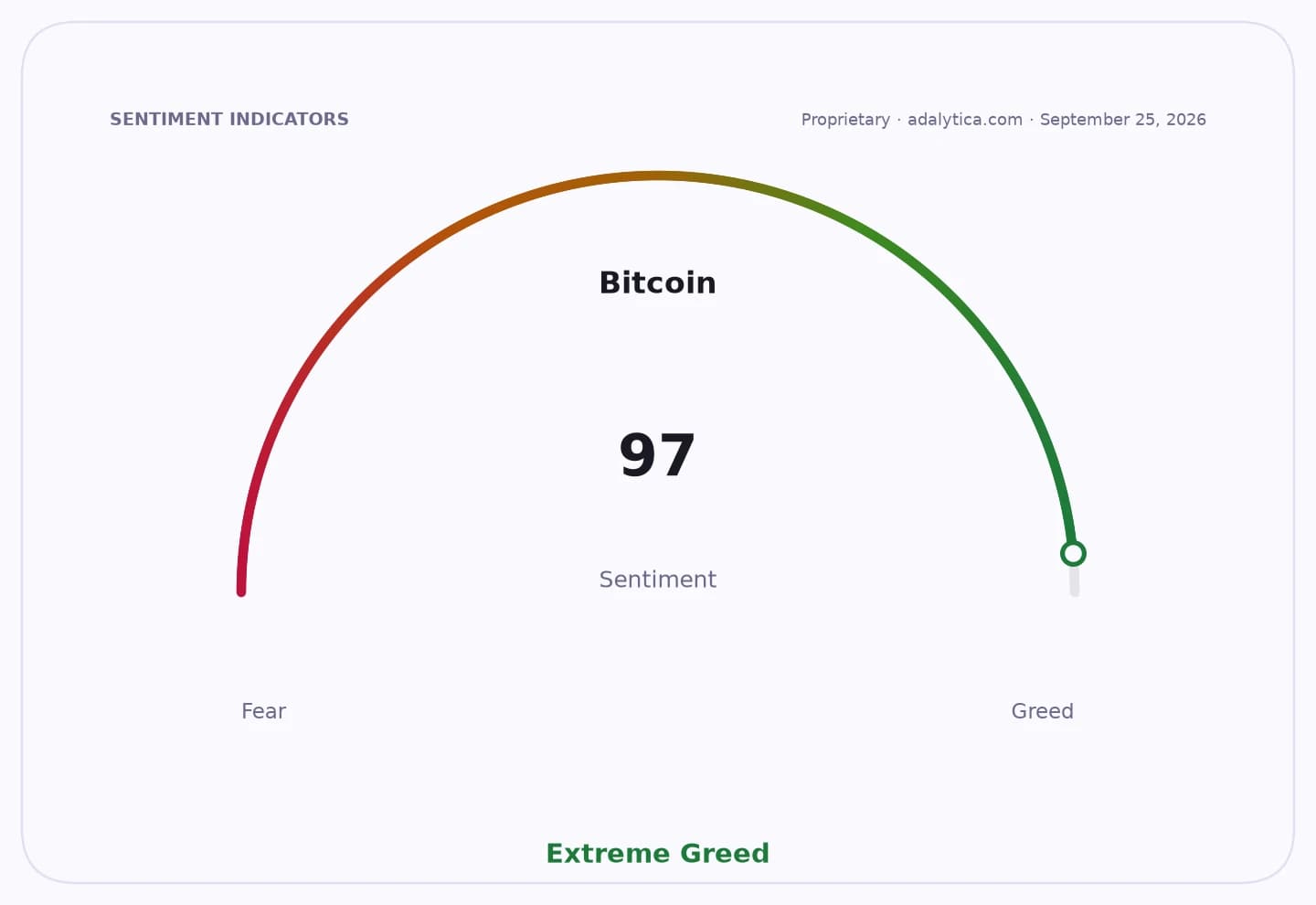
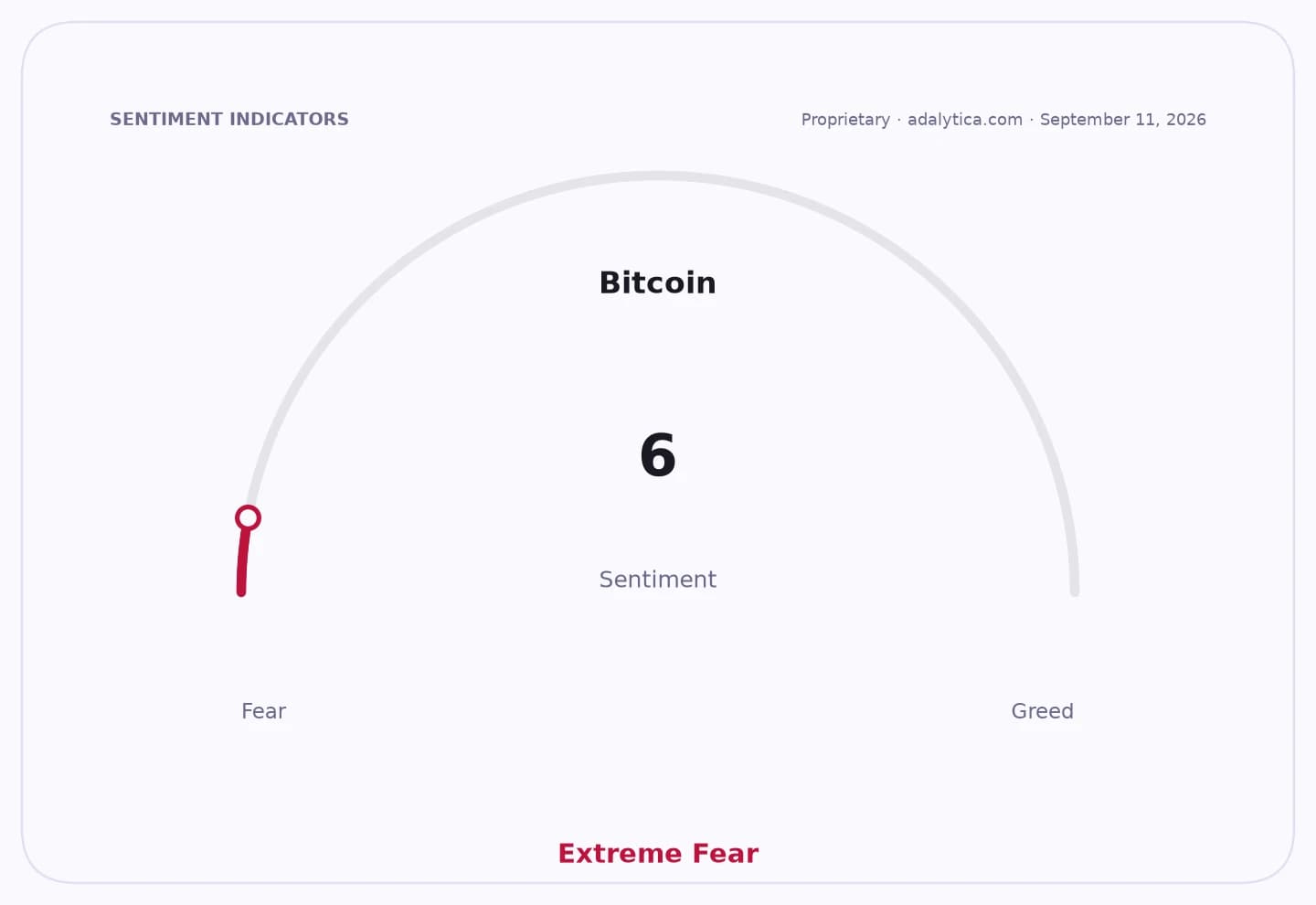
For bitcoin investors, the move is another sign that the biggest corporate accumulator is still adding exposure even as fear has spiked. Adalytica’s Bitcoin Fear & Greed Index sits in “Fear” territory at 26, with awareness in “Extreme Fear” at 8, a backdrop that tends to keep traders focused on liquidity, forced selling and whether treasury buyers can keep absorbing supply.
The next test is whether Strategy continues to buy into weakness or slows if bitcoin keeps sliding, as it did during the 2022 downturn. Investors will also watch the company’s next update on holdings and any shift in MSTR’s valuation premium, which has become central to how much bitcoin Strategy can add without eroding shareholder value.
| Entity | Gains | Losses |
|---|---|---|
| Strategy (MSTR) | ▲Larger bitcoin stack | ▼More dilution and mark-to-market risk |
| Bitcoin bulls | ▲Corporate demand support | ▼Less room for quick capitulation relief |
| MSTR shareholders | ▲Higher BTC exposure per share if stock stays strong | ▼Lower NAV cushion if BTC falls |
| Short sellers | ▲Volatility and valuation dislocations | ▼Risk of sharp squeeze on BTC rebounds |