Strive Inc. is signaling that another Bitcoin buy may be coming, and that matters because the company is trying to turn its stock into a leveraged proxy for the cryptocurrency at a time when investor demand for corporate Bitcoin exposure remains strong.
Strive Signals Another Bitcoin Buy

Chief Executive Matt Cole posted a chart Sunday showing Strive holds 27,462 Bitcoin, worth about $2.37 billion, making it the sixth-largest corporate holder of the token. He paired the chart with the phrase “Strive for Amplified Bitcoin,” underscoring the company’s plan to use preferred equity to fund common-stock exposure to the asset. In practical terms, Strive is not just accumulating Bitcoin — it is trying to build a financing machine around it.
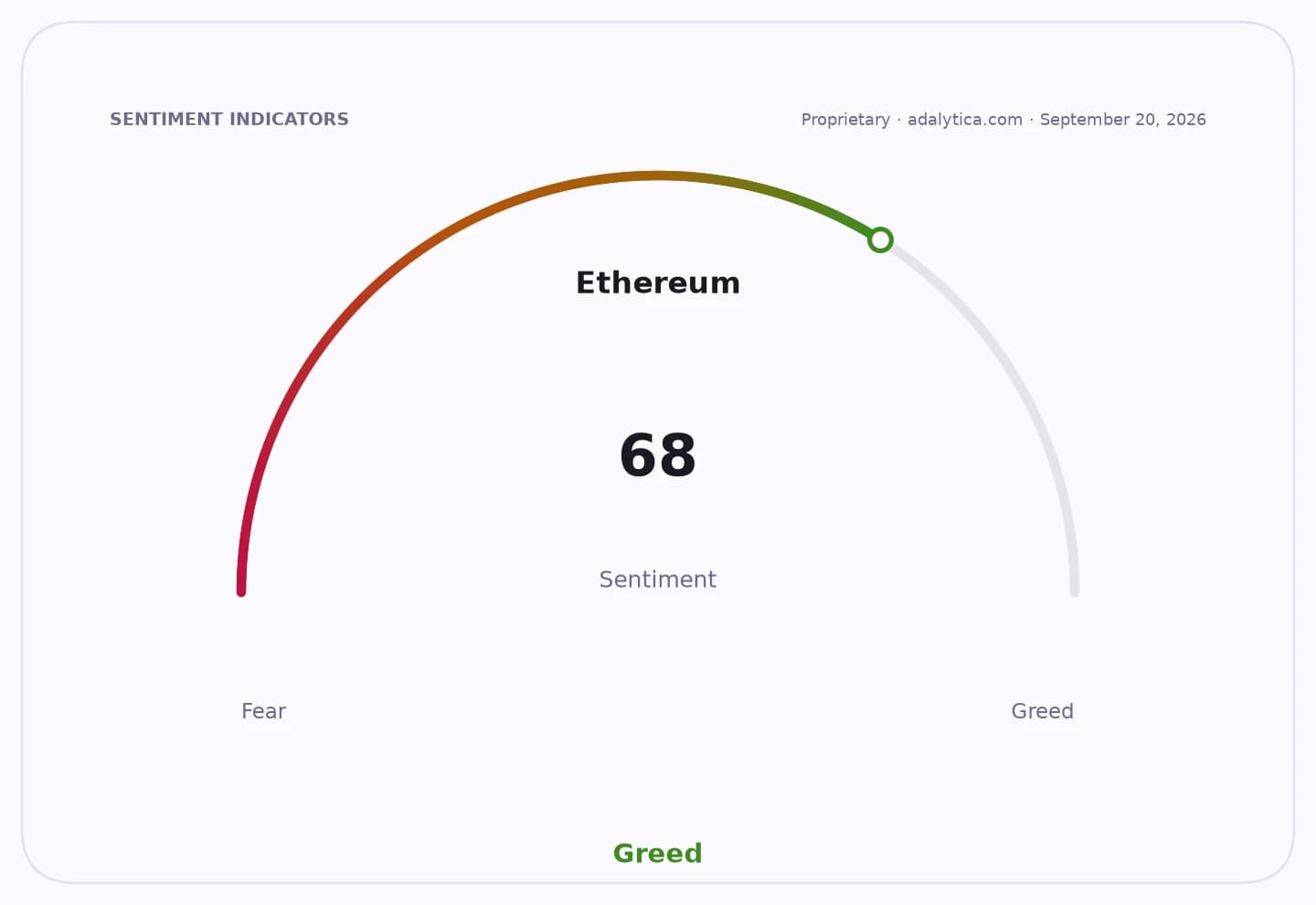
Sentiment IndicatorsⓘProprietary · adalytica.com · October 5, 2026
This is a snapshot — live sentiment, awareness and momentum for 130+ markets update continuously in the dashboard.Open AlphaPulse
That strategy closely tracks Michael Saylor’s playbook at Strategy, where Sunday Bitcoin charts have often preceded Monday purchase disclosures. For investors, that is the key tell. If Strive follows through, the company could reinforce a growing trade in listed equities that give shareholders magnified exposure to Bitcoin without having to buy the token directly. In a market where Bitcoin is still oscillating around the mid-$80,000s — and where conventional technical indicators show the coin sitting above its 50-day and 200-day moving averages despite recent volatility — corporate treasury demand remains an important source of incremental buying.
The stock market is already treating the setup as tradable. Strive shares rose 3.3% in premarket trading Monday after closing at $30.03 on Friday. Bitcoin itself was up 1.5% over 24 hours to $86,465 in the latest read. Strategy, the most established corporate Bitcoin vehicle, remains the benchmark, and its shares continue to function as a high-beta bet on the coin’s next leg higher. Coinbase, as the exchange and custody gateway for the sector, remains another obvious beneficiary if treasury-company accumulation accelerates.
The bigger economic point is that Bitcoin is increasingly being absorbed into corporate balance sheets as a form of reserve asset and capital-markets product, not just a speculative token. That creates a feedback loop: more issuance, more purchases, more visibility, and potentially more capital from investors who want upside exposure to crypto but prefer a listed equity wrapper. It also makes the market more sensitive to financing conditions, dilution risk and the pace of inflows from institutions.
Adalytica’s Bitcoin Fear & Greed snapshot showed neutral sentiment but extreme fear in awareness, a combination that often leaves room for momentum if corporate buyers keep stepping in. The market is still underestimating how much of the next Bitcoin cycle may be driven less by retail frenzy and more by balance-sheet strategy, treasury engineering and equity-market access.
For investors, the opportunity is not simply in owning Bitcoin. It is in owning the toll roads around it — the companies issuing the paper, custodying the coins, and amplifying the exposure. If Strive does report fresh purchases, it would be another reminder that the corporate Bitcoin trade is becoming a durable capital-allocation theme, not a one-off headline.
| Entity | Gains | Losses |
|---|---|---|
| Strive (ASST) | ▲More treasury leverage | ▼Greater dilution risk |
| Bitcoin (BTC) | ▲New corporate demand | ▼Higher volatility risk |
| Strategy (MSTR) | ▲Validation of playbook | ▼Less scarcity premium |
| Coinbase (COIN) | ▲Trading and custody volume | ▼Lower-margin competition |