Swiss consumer confidence improved in the second quarter but remained below its benchmark, signaling a tentative recovery in household sentiment that is still too weak to point to a decisive rebound in domestic demand.
Swiss Sentiment Improves, But Demand Still Unconfirmed
The reading matters because Switzerland’s economy has relied heavily on resilient employment, services activity and high-value exports while households have stayed cautious. A sub-benchmark confidence gauge suggests consumers are less gloomy than earlier in the year, but not yet confident enough to drive a broad pickup in discretionary spending or give companies more pricing power.
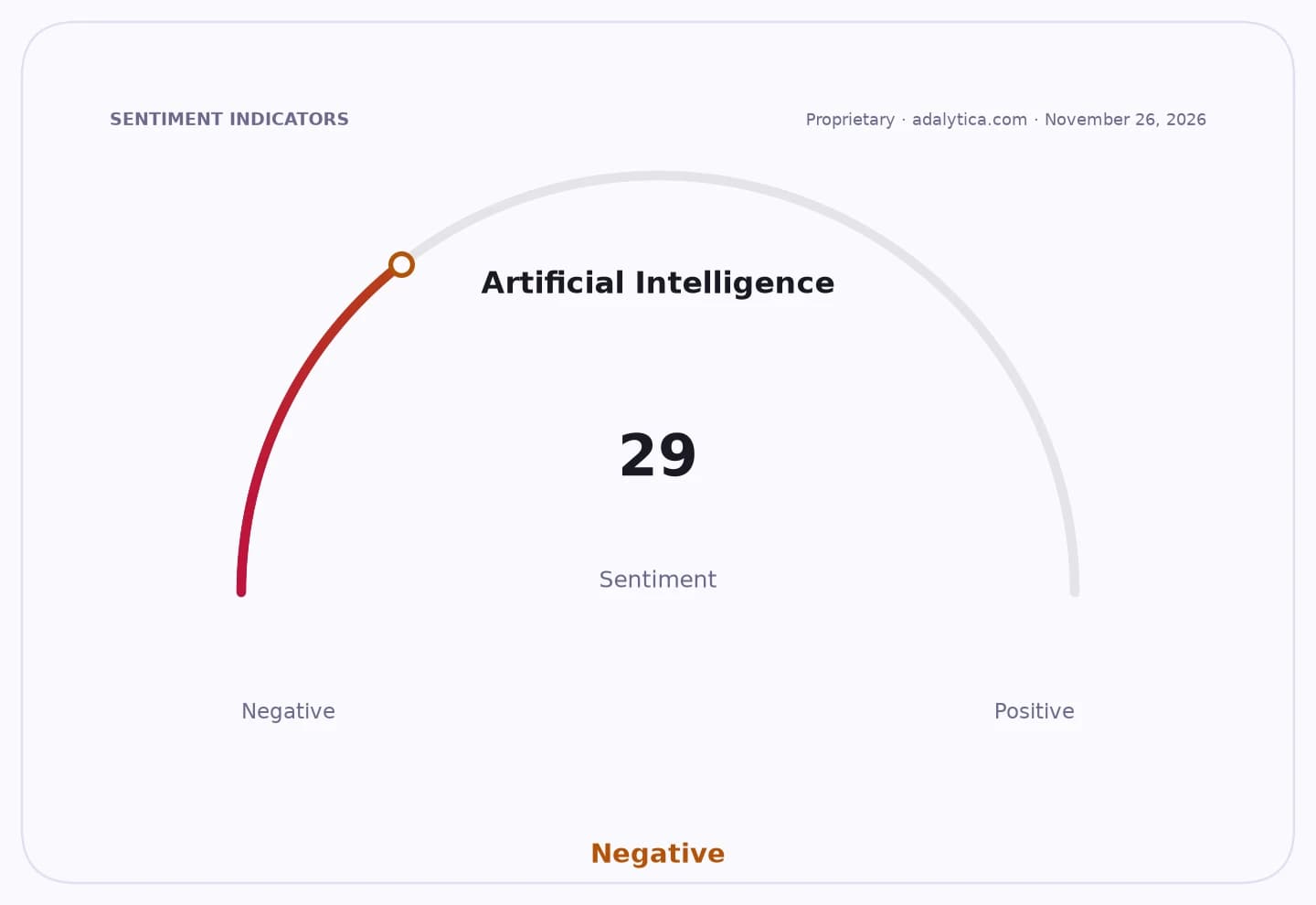
Sentiment Indicators
For the Swiss National Bank, that keeps the policy backdrop tilted toward caution. Weak confidence can restrain consumption and inflation pressure, even as financial markets show pockets of resilience. The iShares MSCI Switzerland ETF closed at $62.93 on July 10, above its 50-day moving average of $61.35 and 200-day moving average of $59.01, conventional technical indicators that point to continued support for Swiss equities despite the uneven consumer backdrop.
Currency markets are sending a more defensive signal. The Invesco CurrencyShares Swiss Franc Trust ended at $108.99 on July 10, below both its 50-day and 200-day moving averages, suggesting the franc proxy has lost momentum. A softer franc can help Swiss exporters, but it also complicates the purchasing-power picture for households if imported goods become more expensive.
Consumer Confidence Recession Sentiment vs EWLadalytica.com
Explore this data interactively — full history, time series and cross-market comparisons.
Proprietary indicators from Adalytica.com show a sharp improvement in consumer-confidence recession sentiment, rising to 78 from 19 over two days and up 41 points over seven days. Awareness remained low at 11, however, indicating the shift in sentiment has yet to become a broad-based market narrative.
The economic story is therefore one of improvement without confirmation. Better confidence reduces recession risk at the margin, but a reading below benchmark keeps investors focused on whether wage growth, employment and lower inflation can convert caution into spending.
The next test is whether the Q2 improvement carries into actual consumption data and company earnings. Until then, Swiss domestic-facing businesses may get some relief, while exporters and globally diversified firms remain better positioned if household demand stays subdued.
| Entity | Gains | Losses |
|---|---|---|
| Swiss exporters | ▲Softer franc support | ▼Weak domestic signal |
| Domestic retailers | ▲Sentiment recovery | ▼Confidence still below benchmark |
| Swiss equities | ▲Technical support | ▼Consumer caution |
| Swiss franc bulls | ▲Safe-haven optionality | ▼Momentum below averages |