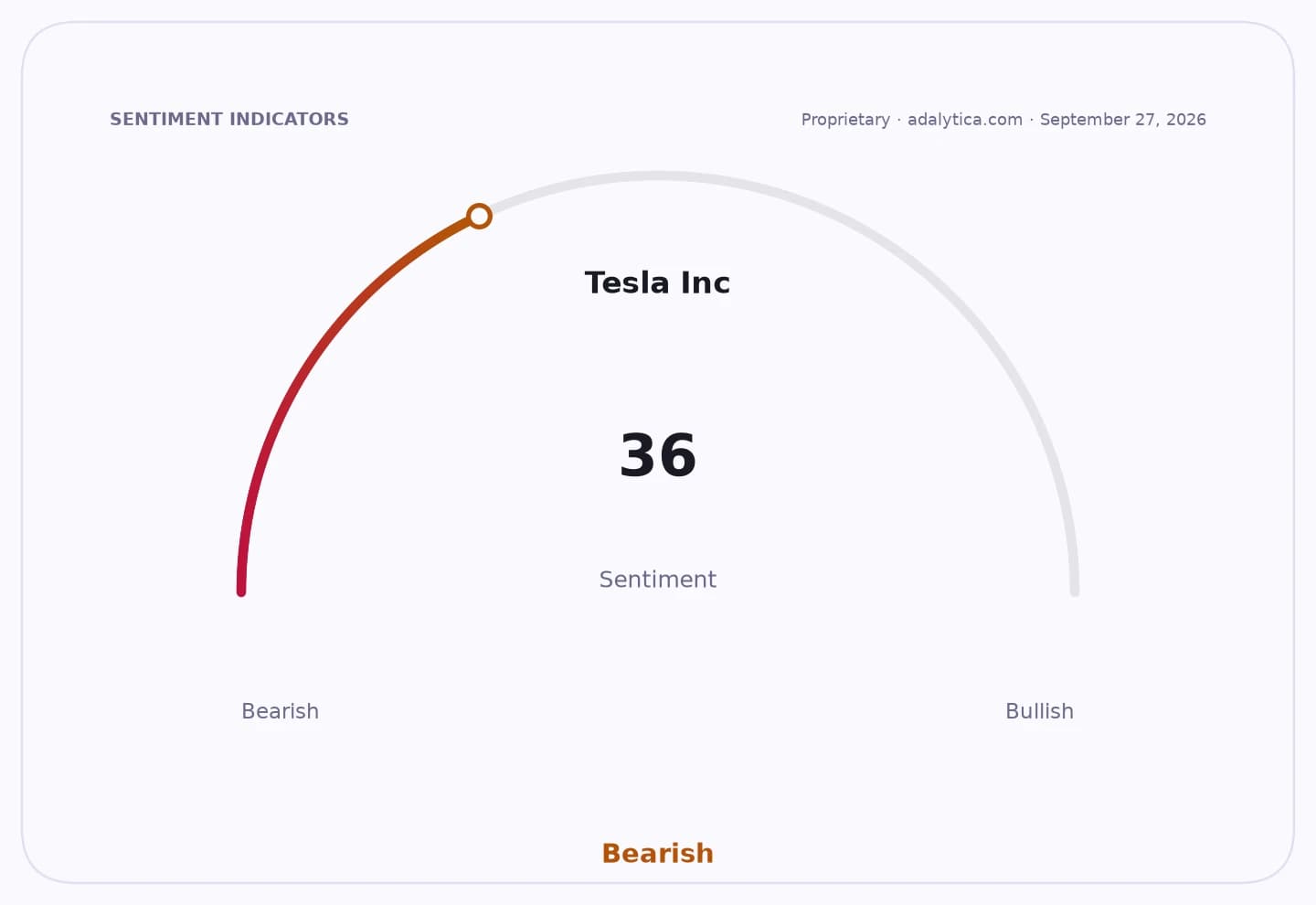
Tesla’s third-quarter deliveries came in above Wall Street expectations, giving investors a clear read on demand momentum at a time when the company is trying to defend growth while preserving margins.
Tesla Q3 Deliveries Beat Wall Street Estimates

The electric-vehicle maker said it delivered 486,532 vehicles in the quarter, compared with analyst estimates of about 461,000 units, according to FactSet. The beat is important because deliveries remain Tesla’s most closely watched operating gauge and a key proxy for revenue, gross margin direction and cash generation. For a stock trading on both growth and execution, a stronger-than-expected quarter reduces near-term fear that demand is faltering.
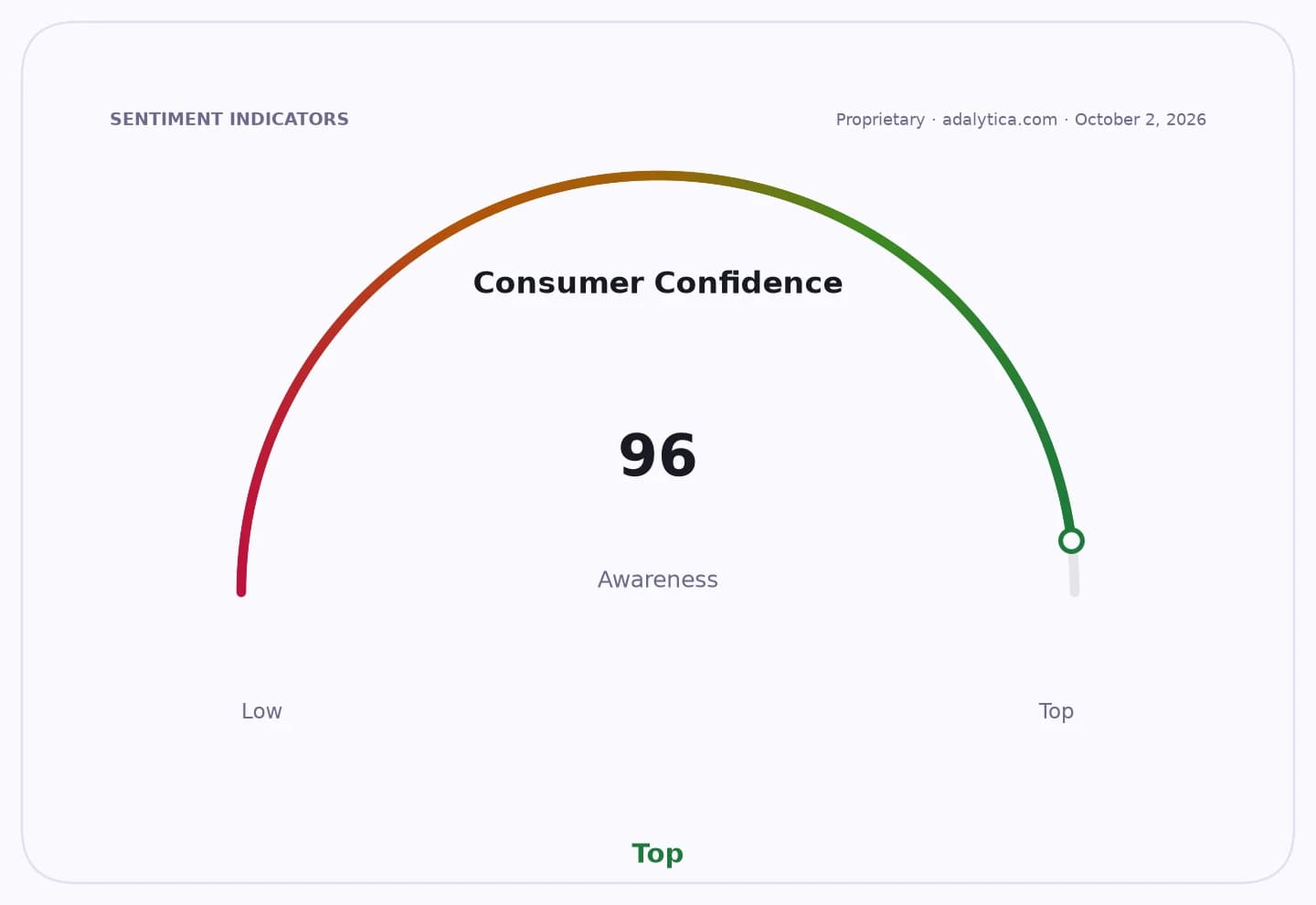
Sentiment IndicatorsⓘProprietary · adalytica.com · October 2, 2026
This is a snapshot — live sentiment, awareness and momentum for 130+ markets update continuously in the dashboard.Open AlphaPulse
The market reaction reflects that logic. Tesla shares rose after the release, helped by the fact that the delivery number landed well above consensus rather than merely meeting it. On recent trading data, the stock had been volatile but supported by momentum, with technical indicators showing the shares back above the 50-day moving average and the relative strength index improving from oversold levels. That leaves the stock less about proving the long-term story and more about whether quarterly execution can keep pace with elevated expectations.
The delivery performance also matters beyond Tesla itself. A beat in a quarter that often draws heavy scrutiny suggests EV demand is still intact even as the sector faces tougher pricing, uneven incentives and widening competition. That is a positive read-through for broader electric-vehicle demand, though not necessarily for pricing power. The key investor question is whether Tesla is gaining volume without sacrificing too much margin, especially as the company continues to operate in a more policy-sensitive environment with tariffs, incentives and supply-chain costs still in play.
Tesla’s own filings have flagged those pressures, noting that trade and fiscal policy changes and geopolitical conflict can affect supply chains, production costs and vehicle demand. That means the delivery beat is encouraging, but it does not erase the risk that a volume win could still come with thinner profitability if the company leans on discounting or if cost inflation reasserts itself later in the year.
For investors, the next focus will be whether Tesla can translate the delivery strength into an earnings and margin profile that justifies the stock’s premium valuation. If the company can show that demand remains resilient without a sharp deterioration in profitability, the quarter strengthens the bullish case. If margins disappoint, the delivery beat may look more like a one-off demand pulse than evidence of durable operating leverage.
| Entity | Gains | Losses |
|---|---|---|
| Tesla shareholders | ▲Stronger delivery momentum | ▼Complacency on margins |
| Tesla | ▲Better demand read-through | ▼Higher scrutiny on profitability |
| EV rivals | ▲Sector demand validation | ▼Relative weakness versus Tesla |
| Short sellers | ▲— | ▼Squeeze risk after beat |