True Corporation is pitching artificial intelligence as the next productivity engine for Thailand’s small and midsize businesses, arguing that the country’s 3.3 million SMEs must close a wide gap between their economic weight and their contribution to GDP if growth is to accelerate.
True Corporation pitches AI for Thai SMEs
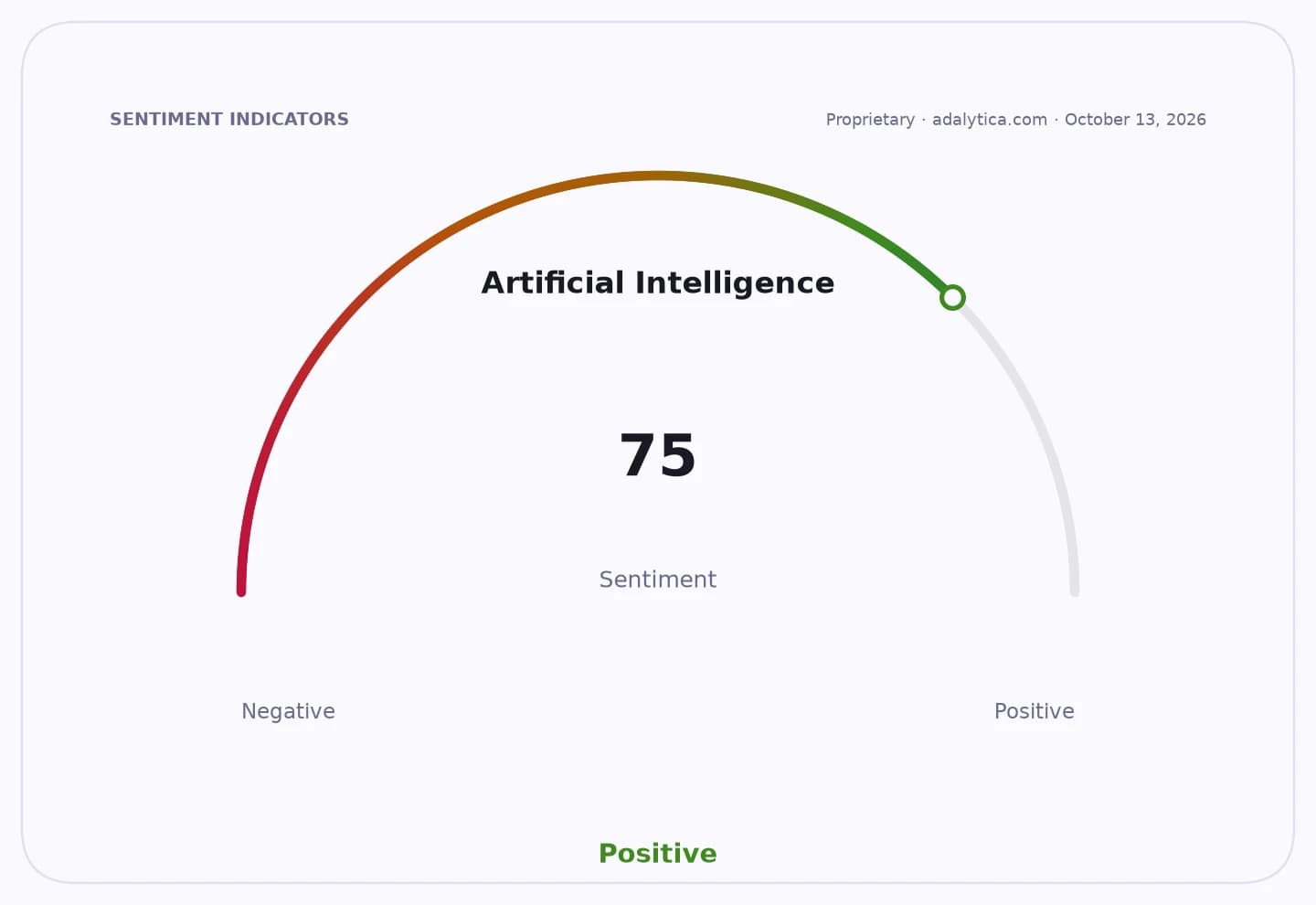
Artificial Intelligence
The telecoms group used a business summit in Bangkok to promote what it calls “AI-Powered SMEs,” framing AI not as a back-office tool but as a core operating layer for sales, customer service, automation, content and decision-making. That message matters because SMEs account for 99.5% of Thai businesses and employ about 69.5% of the workforce, yet generate only 35% of GDP, underscoring the productivity gap policymakers and companies are trying to narrow.
Sentiment Indicators
True said only 18% to 24% of Thai SMEs are using AI seriously across their organizations, and just 9% are deploying advanced AI at full scale. But among that small cohort, 84% reported higher productivity, 71% said revenue improved and 64% brought products to market faster, suggesting the biggest gains will go to firms able to move beyond basic chatbot use and embed AI into daily operations.
The company’s most notable pitch was its new LBM, or Large Behavior Model, described as Thailand’s first Consumer Digital Twin. Built with EGG Digital, the system combines data from more than 55 million telecom users and over 20 million retail consumers, under local data and governance rules, to simulate customer behavior and test product ideas before money is spent on rollout.
For investors, the story is less about a technology launch than about a strategic push to capture enterprise demand in a market where digital transformation remains early. If Thai SMEs adopt AI at scale, the addressable market for connectivity, cloud services, cybersecurity, automation and analytics could expand meaningfully for providers such as True, while also improving efficiency for customers across retail, services, sales and manufacturing.
True also set out a simple growth formula for SMEs: capital, technology and people. The company said financing, bundled tech services and workforce upskilling all need to move together, and pointed to its enterprise packages and True Digital Academy as part of that effort.
The immediate test is execution: whether SMEs can turn AI pilots into measurable gains in labor productivity, order conversion and repeat purchases. The broader bet is that Thailand’s growth gap can be narrowed not by more labor alone, but by making that labor more productive through AI.
| Entity | Gains | Losses |
|---|---|---|
| True Corporation | ▲More enterprise demand | ▼Slower SME digitization |
| Thai SMEs adopting AI | ▲Higher productivity and revenue | ▼Manual workflows and higher costs |
| EGG Digital / data partners | ▲More use cases for consumer analytics | ▼Narrower data monetization if adoption lags |
| Traditional low-tech competitors | ▲— | ▼Competitive pressure from AI-enabled firms |