Turkey’s house price index rose 22.3% from a year earlier in September, but the increase still lagged inflation, meaning home values fell 5.7% in real terms and underscoring how high prices and borrowing costs continue to squeeze buyers.
Turkey house prices rise 22.3% in September
The central bank’s figures show that nominal gains in Turkish property remain strong, but they are no longer keeping pace with the broader cost of living. That matters for the economy because housing is both a major store of household wealth and a key transmission channel for monetary policy. When real prices are falling, it usually signals that demand is being restrained by tighter financial conditions even if the headline price index remains positive.
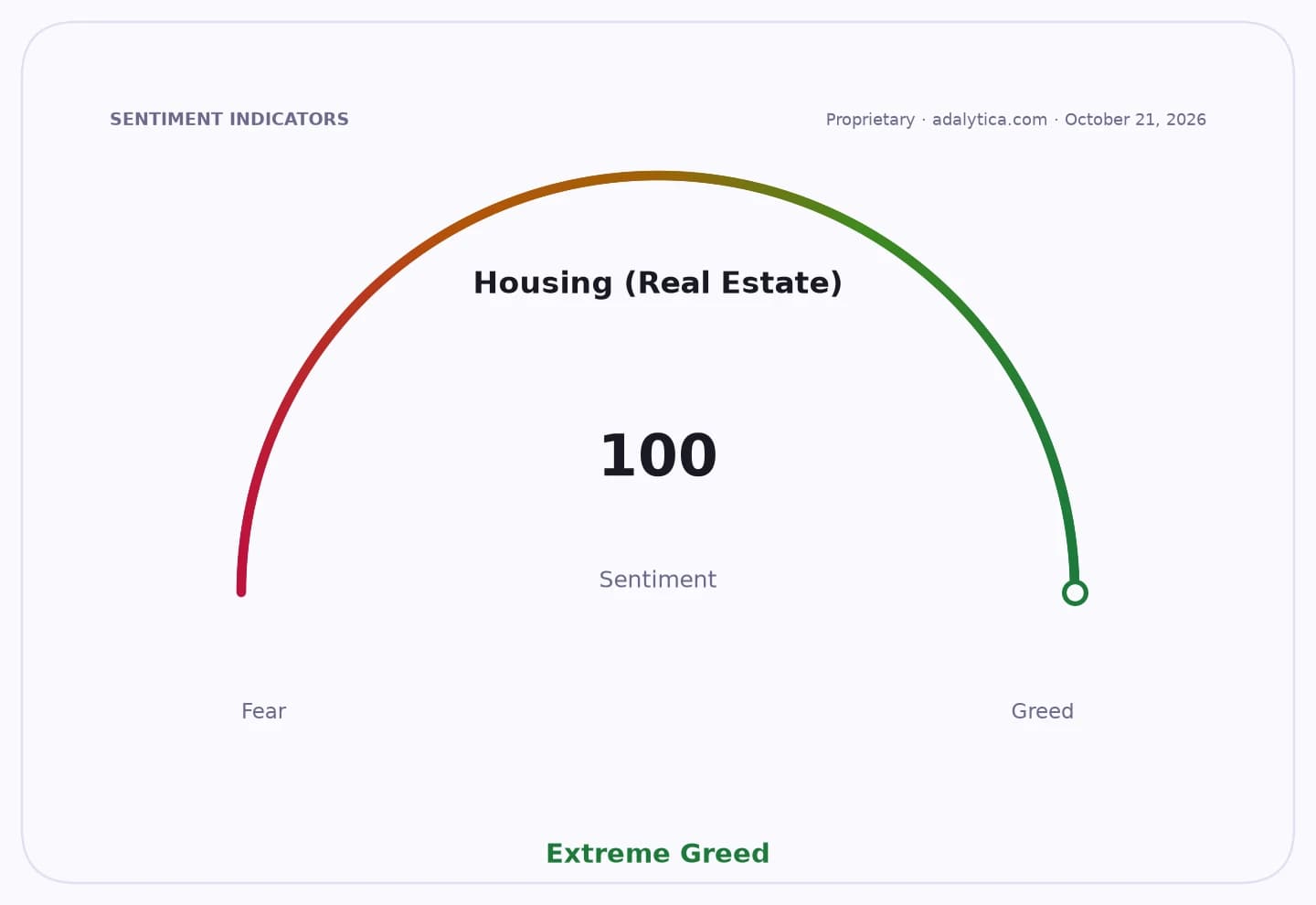
Sentiment IndicatorsⓘProprietary · adalytica.com · October 18, 2026
This is a snapshot — live sentiment, awareness and momentum for 130+ markets update continuously in the dashboard.Open AlphaPulse
On a monthly basis, the housing price index rose 1.2% to 239.4 in September, while the new-tenant rent index climbed 2.1%. The rental measure was up 26.6% from a year earlier in nominal terms, but down 2.4% in real terms, suggesting that housing affordability remains strained even as inflation erodes purchasing power. For households, that combination means neither buying nor renting is cheap in real terms.
The regional split points to persistent pressure in Turkey’s largest market. Prices in Istanbul rose 2% on the month and 26.8% year on year, outpacing Ankara and Izmir, while the new-tenant rent index in Istanbul jumped 3.5% monthly and 35.5% annually. That makes the country’s commercial center the main driver of national price growth and the clearest sign that demand remains concentrated in larger urban areas.
For investors, the report reinforces a familiar trade-off in Turkish assets: property remains an inflation hedge in nominal terms, but not necessarily a real-return story. Developers and landlords with pricing power may still benefit, especially in Istanbul, yet the erosion in real house values points to weaker underlying affordability and the risk that transaction volumes stay subdued. If inflation slows faster than house prices, real gains could improve; if borrowing costs stay elevated, nominal growth may continue to outstrip the broader market’s ability to absorb it.
The data leave housing market participants watching two variables most closely: the path of inflation and the stance of monetary policy. Until inflation cools meaningfully or financing costs ease, Turkey’s property market is likely to keep producing headline price gains that look solid, but real returns that remain under pressure.
| Entity | Gains | Losses |
|---|---|---|
| Homeowners in Istanbul | ▲Nominal price gains | ▼Real purchasing power |
| Renters | ▲— | ▼Higher monthly housing costs |
| Property developers/landlords | ▲Pricing power in big cities | ▼Volume growth and affordability |
| Turkish households broadly | ▲— | ▼Housing affordability |