In Lithuania’s biggest cities, the old rent-versus-buy question is no longer a clean win for ownership — and in Vilnius, renting can already be the more expensive monthly choice unless you can’t stomach the upfront cash.
Lithuania rent vs buy gap widens in Vilnius
That matters because housing is one of the biggest line items in a household budget, and the answer is shifting as home prices climb faster than rents. Lithuanian central bank data show housing sale prices rising 11% to 12% a year in the winter of 2025-2026, while rents increased 5% to 7%, widening the gap between what it costs to own and what it costs to lease.
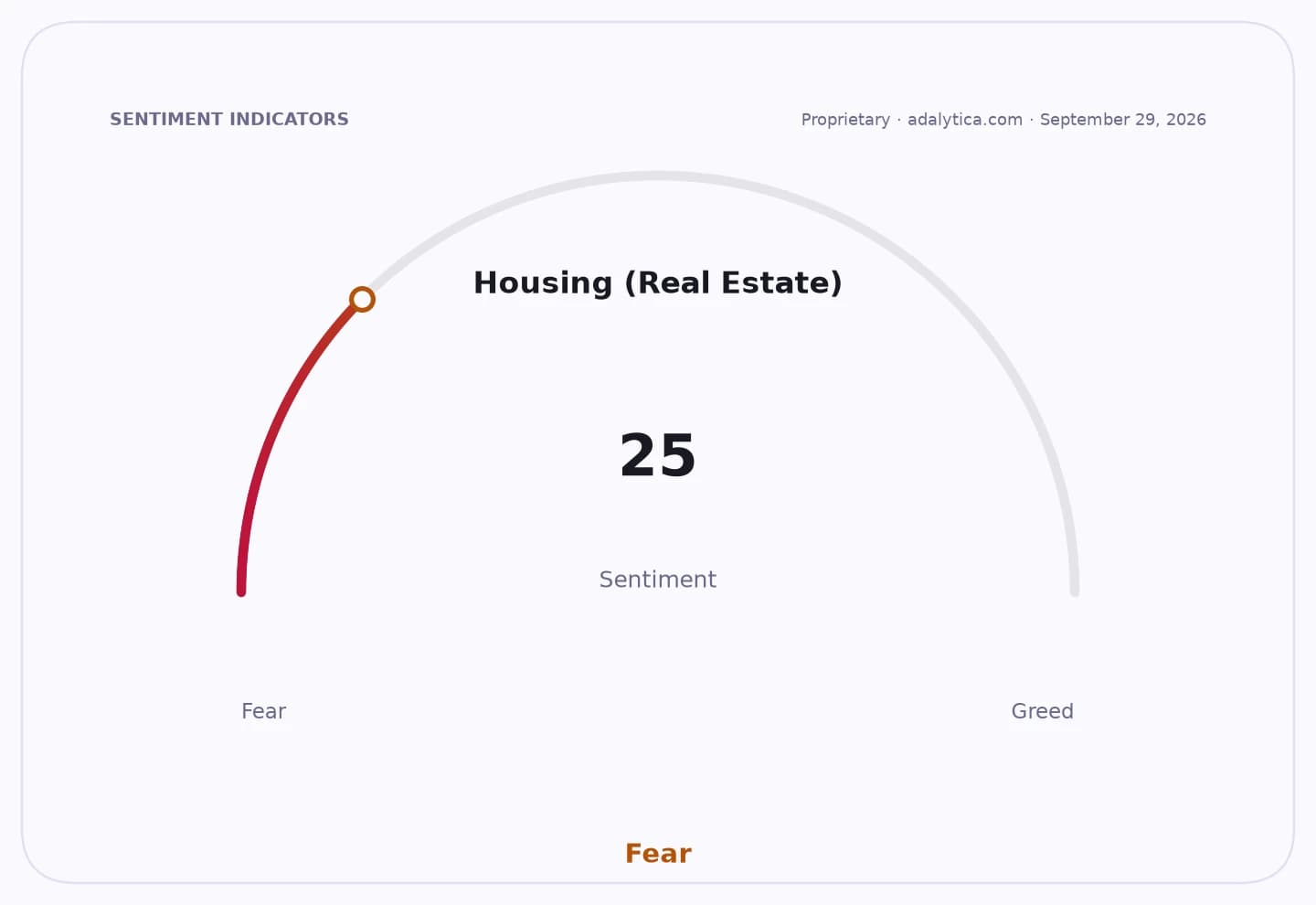
Sentiment IndicatorsⓘProprietary · adalytica.com · September 30, 2026
This is a snapshot — live sentiment, awareness and momentum for 130+ markets update continuously in the dashboard.Open AlphaPulse
For investors, that gap tells two stories at once. First, rental demand is staying resilient because many households either cannot raise a down payment or prefer the flexibility of renting. Second, ownership still has a compounding advantage over time, especially when monthly mortgage costs are fixed while rents tend to rise with inflation.
The math is most striking in Vilnius. Based on a 50-square-meter apartment, a 30-year loan, a 15% down payment and a 4.09% mortgage rate, the monthly cost of buying comes to about 705 euros once a maintenance reserve is included. Estimated rent for a similar two-room apartment is about 733 euros a month, making ownership about 28 euros cheaper on a cash-flow basis.
But that small monthly edge comes with a big catch: the buyer needs nearly 25,000 euros upfront for the down payment and transaction costs. That is why the comparison is never just about the monthly payment. It is also about liquidity, emergency savings and whether the money tied up in a home could earn more elsewhere.
The picture looks even better for buyers in Kaunas and Klaipėda. In Kaunas, the estimated all-in monthly cost of ownership is about 509 euros versus rent of 583 euros, a gap of 74 euros in favor of buying. In Klaipėda, the spread widens to roughly 111 euros, with ownership at about 459 euros a month compared with estimated rent of 570 euros.
That is the key economic narrative: as long as home prices keep rising faster than rents, ownership becomes more attractive for people who plan to stay put for years. Rent, meanwhile, remains the rational choice for those who value mobility, need capital for other investments or simply do not have enough cash saved for a deposit.
The comparison also helps explain why housing markets can stay hot even when affordability is stretched. Buyers are not just comparing mortgage payments with rent; they are comparing today’s housing cost with tomorrow’s. If rents continue to rise and the mortgage principal stays fixed, the buyer’s relative position improves over time.
That is why the long-term investor should think beyond the monthly bill. In a market like Vilnius, renting may still make sense for flexibility, but in Kaunas and Klaipėda ownership looks like the stronger financial bet for households planning to stay for several years. For investors watching housing demand, developers, lenders and landlords, the takeaway is the same: affordability remains tight, but the ownership-versus-rent equation is getting more city-specific by the month.
| Entity | Gains | Losses |
|---|---|---|
| Homebuyers | ▲Fixed housing costs | ▼Big upfront cash |
| Renters | ▲Flexibility | ▼Rising monthly rents |
| Landlords | ▲Strong rental demand | ▼Price-sensitive tenants |
| Banks/Lenders | ▲Mortgage demand | ▼Higher affordability stress |