A new UBS study reinforces the biggest housing-market lesson for buyers in Germany’s costliest cities: if you are paying peak prices, renting can still be the smarter financial move.
Germany Housing: Renting Still Beats Buying in Munich
That matters because the gap between home prices and the income needed to justify ownership remains wide even after a 20% drop in Munich and Frankfurt between 2022 and 2024. UBS’s Global Real Estate Bubble Index now classifies both cities as only moderately at risk of a bubble, but it also says the rental arithmetic still tilts sharply against ownership. In Frankfurt, it would take more than 30 years of rental income to recoup a purchase price; in Munich, the figure rises to as much as 40 years, putting it behind only Zurich in the bank’s 21-city ranking.
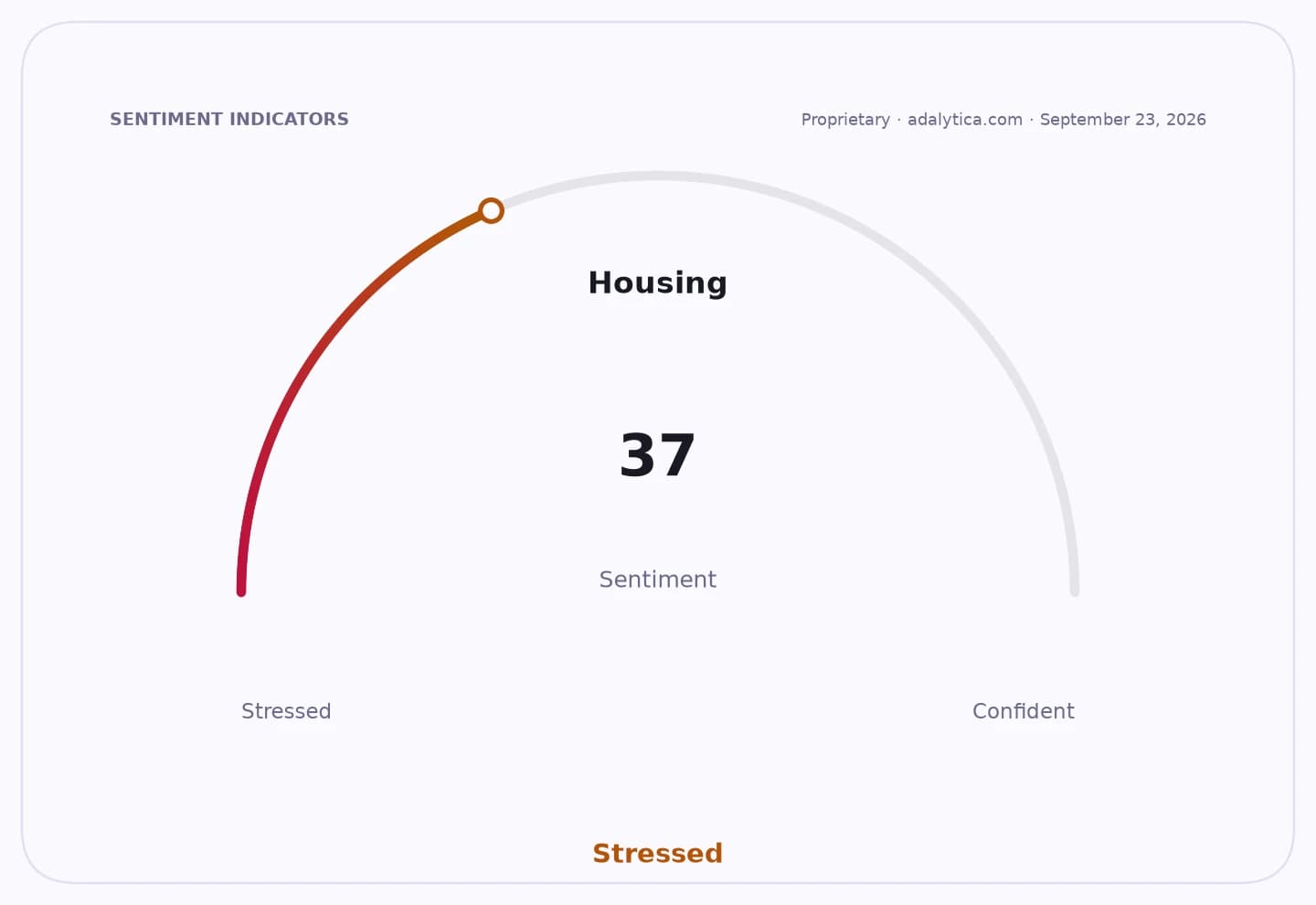
Sentiment IndicatorsⓘProprietary · adalytica.com · September 28, 2026
This is a snapshot — live sentiment, awareness and momentum for 130+ markets update continuously in the dashboard.Open AlphaPulse
For investors, that is not just a housing-market curiosity. It is a signal that affordability remains stretched, transaction volumes may stay subdued and the rent-versus-buy trade continues to favor landlords, residential REITs and rental platforms over leveraged homebuyers. The market may no longer be screaming bubble, but it is still pricing ownership as an expensive bet in a high-rate world.
UBS economist Matthias Holzhey said the lower bubble risk reflects a changed macro backdrop: interest rates are higher, inflation has been sticky and speculation is less attractive than it was before 2022. That shift is important. Higher borrowing costs have not only cooled prices in the priciest German cities; they have also kept the buy side cautious even as rents continue to rise. In Munich and Frankfurt, asking rents have climbed since 2022, though at a slower pace than before.
The economics are straightforward. When mortgage rates move up faster than wages and home prices, the monthly cost of owning can stay punishing even after a correction. That is why a fall in nominal prices does not automatically restore affordability. It also explains why UBS’s framing matters: the bubble risk may be lower, but the relative value of renting versus buying remains skewed toward tenants in Europe’s prime urban markets.
That is where the investable angle gets interesting. The clearest beneficiaries are large rental landlords and apartment owners with pricing power, especially in markets where ownership remains out of reach for many households. In the U.S., that logic is echoed by listed landlords such as American Homes 4 Rent, Invitation Homes and Essex Property Trust, whose shares have been pressured by rate volatility but whose long-run thesis is built on the same structural divide between scarce, expensive ownership and persistent rental demand. On the technical side, AMH and INVH have been trading below their 50-day and 200-day moving averages, while their relative strength readings have weakened sharply, suggesting the market has yet to fully price a durable rental-demand premium.
The broader message is that the housing trade is no longer about chasing headline price gains. It is about owning the cash flows tied to affordability stress. If Germany’s top cities are any guide, expensive rent may still be preferable to expensive ownership for consumers — but for investors, that same pressure can create a long-duration opportunity in rental assets, especially if rates stay elevated and homebuyers remain sidelined.
| Entity | Gains | Losses |
|---|---|---|
| Renters in Munich/Frankfurt | ▲Better financial flexibility | ▼No equity buildup |
| Rental landlords | ▲Stronger demand, rent growth | ▼Less upside from home sales |
| Homebuyers | ▲Lower prices than 2022 peak | ▼Still face high mortgage costs |
| Banks/mortgage lenders | ▲Stable lending demand if deals revive | ▼Fewer affordability-driven purchases |