Kazakhstan’s mortgage market is still growing, but the real story is that borrowers are taking on much larger loans to keep up with housing costs that are rising far faster than paychecks.
Kazakhstan mortgage lending grows as home prices rise
That matters because this is not a clean sign of healthy demand. It is a sign that affordability is deteriorating. When home prices climb 15.5% on the primary market and 11.8% on the secondary market in a year while real incomes rise just 0.1%, households have only two choices: buy less house, or borrow more. The data suggest many are choosing the second option.
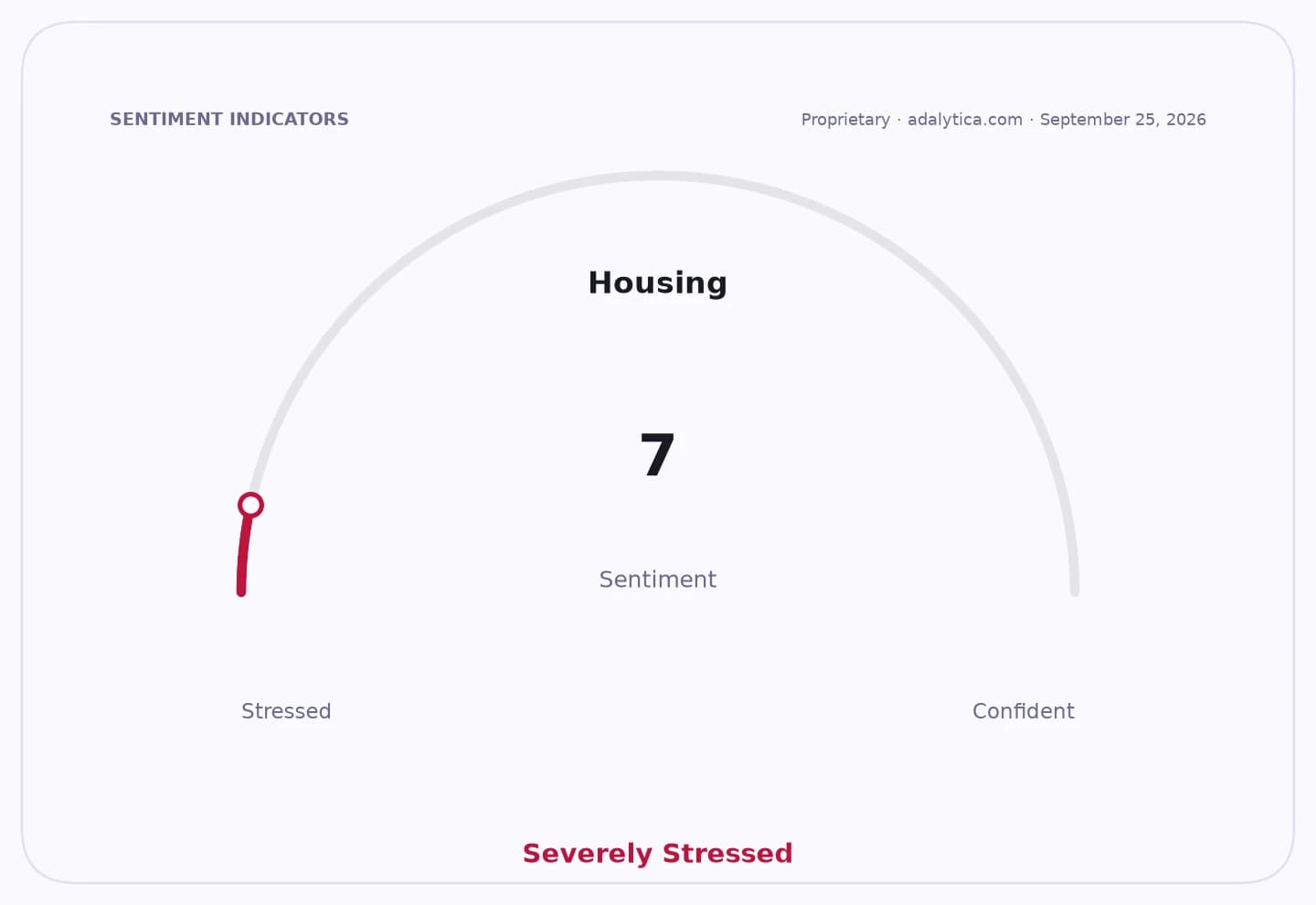
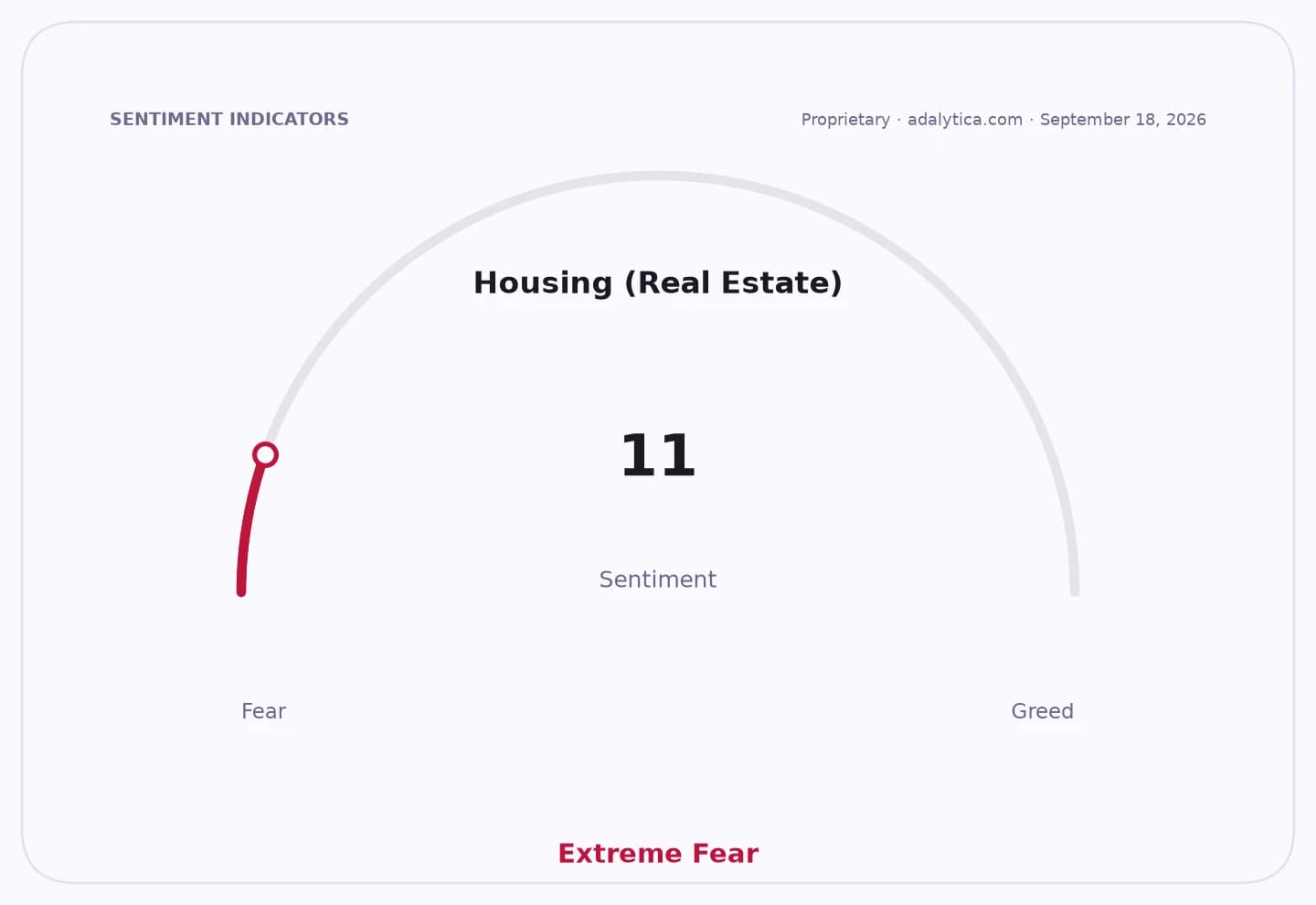
Sentiment IndicatorsⓘProprietary · adalytica.com · September 7, 2026
This is a snapshot — live sentiment, awareness and momentum for 130+ markets update continuously in the dashboard.Open AlphaPulse

The change is showing up clearly in loan structure. In the first half of 2026, the share of mortgages above 20 million tenge rose to 39.6% from 31.4% a year earlier, while loans under 10 million tenge slipped to 16.5% from 20.7%. In plain English, Kazakhstanis are not necessarily buying more homes — they are financing more expensive ones.
For investors and lenders, that is an important distinction. Mortgage volume rose 12.4% year on year to 1.1 trillion tenge in the first half, even as retail lending overall fell 3.6%. But most of that growth came from Otbasy Bank, which increased lending 32.8% to 916.7 billion tenge. Commercial banks’ market mortgages dropped 39% to 161.5 billion tenge, cutting their share of the market to 14.3% from 26.2%.
That tells you the market is being propped up by subsidized and savings-linked lending rather than by a broad-based private credit cycle. The base rate was 18% for much of the period, while average new mortgage rates hovered around 10% because of heavy reliance on preferential programs. For banks, that limits the appeal of longer-term mortgage lending. For buyers, it means access depends increasingly on state support, employer partnerships and pension withdrawals rather than on market pricing.
The pension angle is another clue to the strain. Withdrawals from the Unified Accumulation Pension Fund for housing jumped 59% to 407.5 billion tenge, helping buyers cover down payments. But that is a finite source of funding, not a permanent fix for the gap between home prices and household incomes.
The good news is that credit quality remains strong for now, with nonperforming loans at just 0.41%. That is what you would expect in a secured product with down payments and tighter borrower selection. It also means lenders are not yet facing a wave of stress from the bigger-ticket loans.
Still, investors should read this as a affordability-led market, not a demand boom. The larger loan sizes are a symptom of price pressure, and the sector’s near-term growth is likely to keep coming from preferential lending, not from an organic rebound in purchasing power. If wages do not catch up, or if policy support weakens, the market will struggle to keep expanding at the same pace.
For long-term investors, the takeaway is simple: Kazakhstan’s mortgage story is about resilience on the surface and pressure underneath. The banks and housing institutions tied to state-backed financing look best positioned, while pure market lenders remain exposed to high funding costs and weak household affordability. Worth watching, but not a market to chase blindly.
| Entity | Gains | Losses |
|---|---|---|
| Otbasy Bank | ▲Lending growth and market share | ▼Less room for private competition |
| Kazakhstan homebuyers | ▲Access to subsidized financing | ▼Larger debt burdens |
| Commercial banks | ▲Limited benefits from portfolio growth | ▼Shrinking mortgage share |
| Housing sellers/developers | ▲Bigger loans support sales | ▼Affordability stays stretched |