Turkey’s finance minister is signaling that the fight against inflation, not headline growth, remains the government’s defining economic priority as policymakers try to restore price stability and investor confidence after years of elevated costs and currency pressure.
Turkey inflation fight remains top policy priority
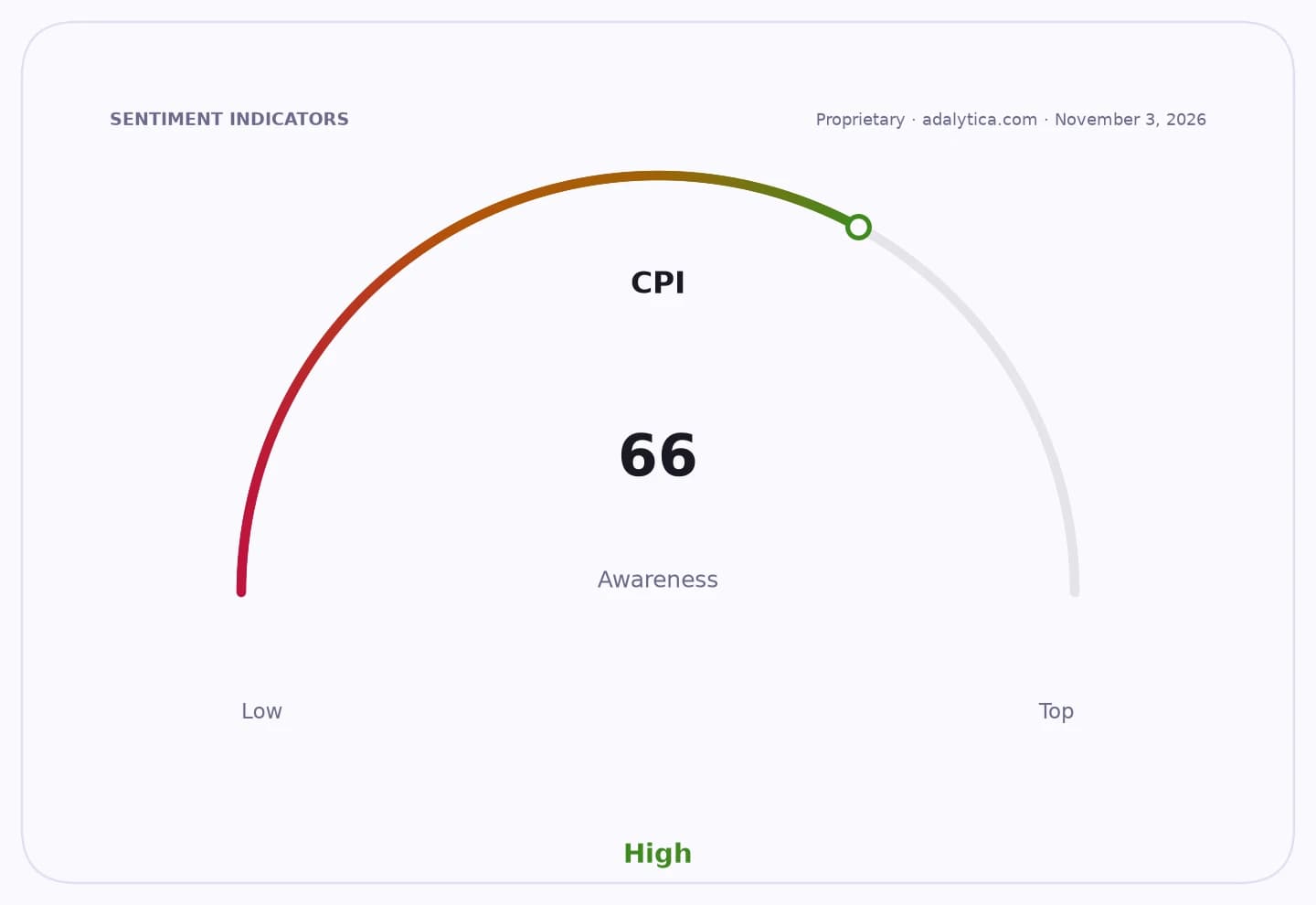
CPI
Treasury and Finance Minister Mehmet Şimşek said the government’s main economic objective is to bring inflation back to single digits, pairing that goal with a push for current-account surpluses through higher domestic energy production, renewable power, higher-value industry and service exports. The message matters because it frames the policy path for one of emerging markets’ most closely watched economies: tighter fiscal discipline and disinflation are being presented as the foundation for stronger long-term growth, rather than as a temporary restraint on it.
Sentiment Indicators
For investors, the statement is a reminder that Turkey’s macro story remains primarily about credibility. Lower inflation would ease pressure on wages, cut financing costs, improve access to longer-term credit and support valuations across domestic assets by reducing the discount rate investors demand for Turkish risk. It would also help households whose real incomes have been eroded by repeated price spikes, a point Şimşek emphasized by saying inflation hits fixed-income earners hardest.
The minister’s remarks come as markets and economists continue to track October inflation data for evidence that price growth is slowing. Surveys from AA and Bloomberg HT pointed to monthly consumer-price increases of 2.20% and 2.42%, respectively, a pace that would still be high by the standards of a country aiming for single-digit annual inflation. The central issue for markets is whether Turkey’s policy mix can keep generating disinflation without derailing growth or forcing a renewed squeeze on domestic demand.
Şimşek also tied the anti-inflation drive to fiscal discipline, arguing that previous gains in Turkey’s economy were achieved by maintaining budget restraint. That is important economically because the market tends to treat fiscal looseness, credit expansion and a weaker currency as reinforcing forces in Turkey’s inflation cycle. A sustained commitment to discipline would support the central bank’s efforts and could help anchor expectations, especially if the government avoids measures that undermine monetary tightening.
His comments on the current account were equally significant. Turkey has long run external deficits, leaving it dependent on foreign financing and vulnerable to swings in capital flows. A shift toward surplus would improve balance-of-payments resilience and reduce pressure on the lira, but it would require a structural change in the economy that is much harder to achieve than a cyclical slowdown in demand. That makes the goal credible as a policy direction, but still distant as a market outcome.
The broader narrative is that Ankara is trying to reprice Turkey as a reform story rather than an inflation story. That case will stand or fall on whether monthly inflation cools steadily enough to allow interest rates, bond yields and currency volatility to normalize. Until then, investors are likely to treat every inflation print as a test of whether the government’s single-digit target is a policy anchor or a political aspiration.
| Entity | Gains | Losses |
|---|---|---|
| Turkish households | ▲Lower inflation, stronger purchasing power | ▼High prices, real-income erosion |
| Turkish government | ▲Policy credibility if disinflation holds | ▼Political costs of tighter policy |
| Local borrowers | ▲Lower funding costs over time | ▼Higher rates and constrained credit near term |
| Foreign investors | ▲Better macro stability, lower currency risk | ▼Volatility if inflation stays sticky |