Turkey’s biggest stock market scandal in years is doing more damage than a wave of arrests: it is shredding confidence in the country’s capital markets and showing how quickly a liquidating fraud can turn into a broad market crash. Nearly 456,000 investors were caught in the collapse of 131 funds run by seven management companies, and the fallout has already dragged the BIST 100 to its worst month since 2008.
Turkey stock scandal hits funds and BIST 100

The immediate economic risk is not just paper losses. When a structure built on illiquid small-cap stocks, related-party trades and borrowed money starts to unwind, the damage spreads from one fund complex to the entire market. That is what happened here. The BIST 100 fell 16.65% in September, small-cap shares dropped about a third on average, and some names slid 50% to 90% as forced selling met a lack of real buyers. Once redemptions began, funds had to dump both manipulated holdings and more liquid stocks to raise cash, turning a localized scam into a systemwide selloff.
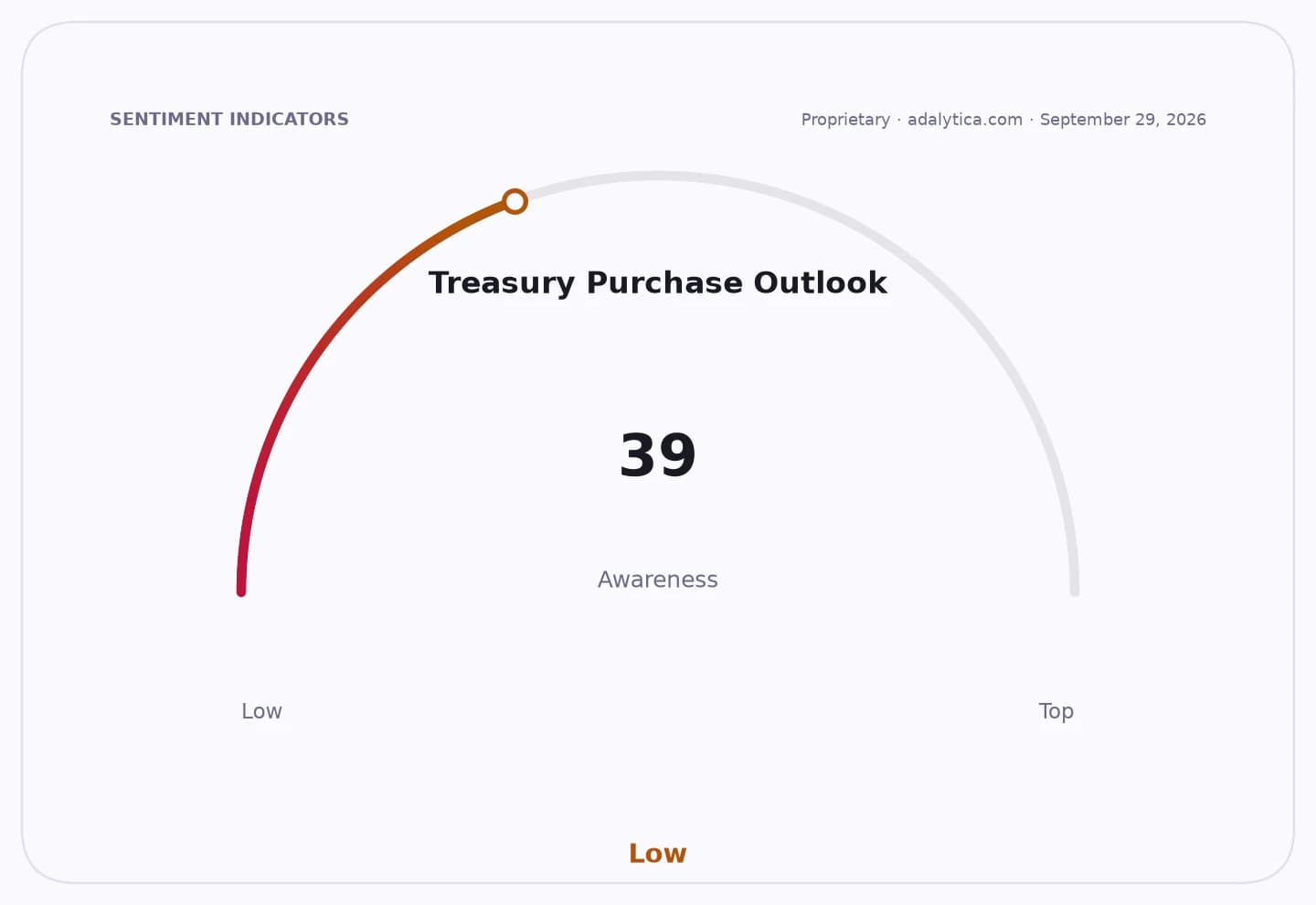
Sentiment IndicatorsⓘProprietary · adalytica.com · October 4, 2026
This is a snapshot — live sentiment, awareness and momentum for 130+ markets update continuously in the dashboard.Open AlphaPulse

Reuters’ calculation that 100 lira in one of the best-known funds, Tera TLY, would have grown to 15,882 lira since the start of 2025 shows why so many households were drawn in. In an economy scarred by years of inflation and lira weakness, these funds looked like a sanctioned way to protect savings. That is why the story matters beyond Turkey: when traditional safe havens fail, investors chase nominal returns and become vulnerable to structures that manufacture performance rather than earn it.
The alleged mechanics were brutally simple. Funds bought large stakes in thinly traded companies, then related entities traded tiny lots at higher prices to reset the mark-to-market value of the entire position. Rising reported returns attracted more cash, which was then used to push the same shares higher again. As long as inflows kept coming, the illusion held. Once regulators tightened rules and investors rushed for the exit, the scheme’s true value vanished.
Turkey’s Capital Markets Board said it detected unexplained gains in illiquid shares in late 2025, but the toughest restrictions were not imposed until Aug. 28, 2026. By then, 131 funds were headed for liquidation, with interim payouts capped at 1 million lira per investor per fund. The central bank has stepped in with liquidity support, while prosecutors and police have frozen assets and widened the probe to 106 suspects. That sequence matters to markets because delayed enforcement does not just punish fraudsters; it concentrates losses on the last investors in line.
For investors, the lesson is blunt: in markets where liquidity is thin, price is not proof. That is especially true in second- and third-tier stocks, where even modest buying can distort valuations and where fund-to-fund trading can masquerade as genuine demand. The scandal also undercuts Istanbul’s pitch as a regional financial center, because capital formation depends on trust that reported returns reflect market reality, not circular trading.
The comparison with Russia is hard to ignore. As rates fall and domestic savings hunt for yield, money can migrate quickly from deposits and money-market products into riskier equity and fund strategies. In a narrow market with few liquid large caps and limited foreign access, even modest inflows can inflate the price of smaller names. That creates opportunity, but also the same temptation to fake performance if oversight lags.
The investable takeaway is to favor the picks-and-shovels of market integrity and liquidity over the thinly traded names most exposed to distortions. In any market where retail capital is moving out the risk curve, the winners are the exchanges, custodians, big liquid brokers and high-quality blue chips with real free float. The losers are opaque active funds, illiquid second-tier stocks and anyone relying on artificial performance to attract fresh money.
| Entity | Gains | Losses |
|---|---|---|
| Big liquid blue chips | ▲Safer inflows | ▼Less speculative demand |
| Exchanges, custodians, large brokers | ▲Higher oversight value | ▼Contagion from fraud scandals |
| Retail investors in cash products | ▲Lower exposure | ▼Yield-seeking capital losses |
| Small-cap funds and thinly traded shares | ▲— | ▼Forced selling, price collapse |