UIDAI is ramping up artificial intelligence across Aadhaar authentication as India’s digital identity system scales sharply and fraud attempts become more sophisticated, a shift that matters for the security of banking, telecom and government payments that increasingly rely on the platform.
UIDAI Expands AI Fraud Checks in Aadhaar Authentication

Chairman Neelkanth Mishra said the identity authority is using AI extensively to detect fraud, describing the fight with scammers as a “cat-and-mouse game” in which UIDAI is adding liveness checks, face and thumbprint verification and anti-spoofing tools before fraudsters can exploit gaps. The timing is important: daily Aadhaar authentications have climbed to about 10 crore from roughly seven crore when Mishra first wrote his comments for the annual report, and UIDAI is now preparing infrastructure for 25 crore to 30 crore authentications a day.
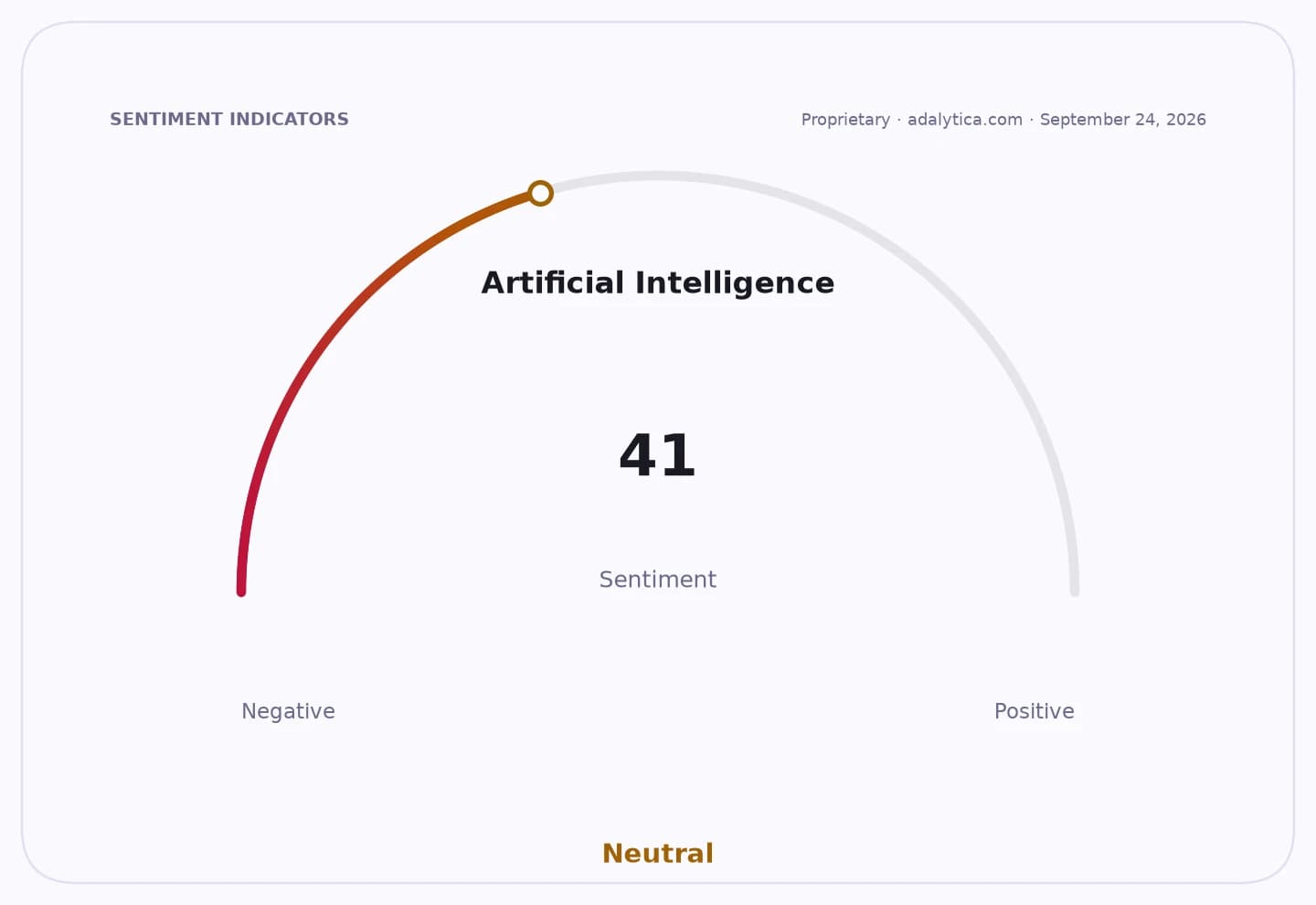
Sentiment IndicatorsⓘProprietary · adalytica.com · September 11, 2026
This is a snapshot — live sentiment, awareness and momentum for 130+ markets update continuously in the dashboard.Open AlphaPulse
That expansion turns Aadhaar into more than a public-utility database. It is becoming critical digital infrastructure for a wider slice of India’s economy, with more than 600 entities now using it to establish identity online for banking, telecom and other services. The larger the footprint, the more costly any breach, spoofing attempt or authentication failure becomes — not just for UIDAI, but for the institutions that depend on it to onboard customers, verify transactions and contain losses from account misuse and synthetic identities.
The agency’s new Aadhaar Face Authentication SDK and sandbox are designed to accelerate that adoption. By allowing banks, fintechs and government departments to integrate face authentication directly into native apps, UIDAI is lowering friction for customers while also trying to harden the system with AI and machine-learning-based liveness and anti-spoofing checks. The controlled sandbox also lets developers test failure scenarios such as network interruptions, invalid signatures and spoofing attempts before going live, which could reduce implementation risk in a sector where weak onboarding controls often become an entry point for fraud.
For investors, the immediate takeaway is that India’s digital identity rails are still widening, and the winners are likely to be institutions that can convert secure verification into lower fraud losses and faster customer acquisition. That is supportive for lenders, fintechs and payment platforms that can embed Aadhaar-based authentication cleanly into their apps. It also reinforces demand for cybersecurity, identity verification and digital onboarding technologies across the ecosystem.
The longer-term implication is that AI is moving from a defensive tool to a core layer of India’s public digital architecture. Mishra’s comment that agentic use cases may emerge over the next three years points to a future where people may delegate authentication to AI agents rather than manage every interaction themselves. That creates new business models, but also new attack surfaces, meaning the next phase of growth in digital identity will likely be defined as much by fraud prevention as by convenience.
| Entity | Gains | Losses |
|---|---|---|
| UIDAI | ▲Stronger fraud detection | ▼Higher infrastructure cost |
| Banks and fintechs | ▲Easier app-based onboarding | ▼Greater compliance burden |
| Fraudsters | ▲Narrowing attack surface | ▼More failed spoofing attempts |
| Consumers | ▲Faster authentication | ▼More scrutiny of identity checks |