A controversial push to build a “digital nation” in Uruguay is putting a real-world stress test on the AI boom, and investors in Microsoft, Nvidia and Alphabet should care because the next battleground for growth may be policy, not computing power.
Uruguay digital nation puts AI regulation in focus
For the big AI names, that matters because the industry’s economics still depend on moving faster than regulators. Microsoft, Nvidia and Alphabet have spent the past year pouring money into AI infrastructure, model deployment and cloud capacity. Their shares have also reflected that optimism: Microsoft closed at $512.80 on Oct. 1, Nvidia at $230.86 and Alphabet at $338.24. But the market is increasingly asking a harder question — where can these companies scale AI with fewer limits, and how long can that advantage last?
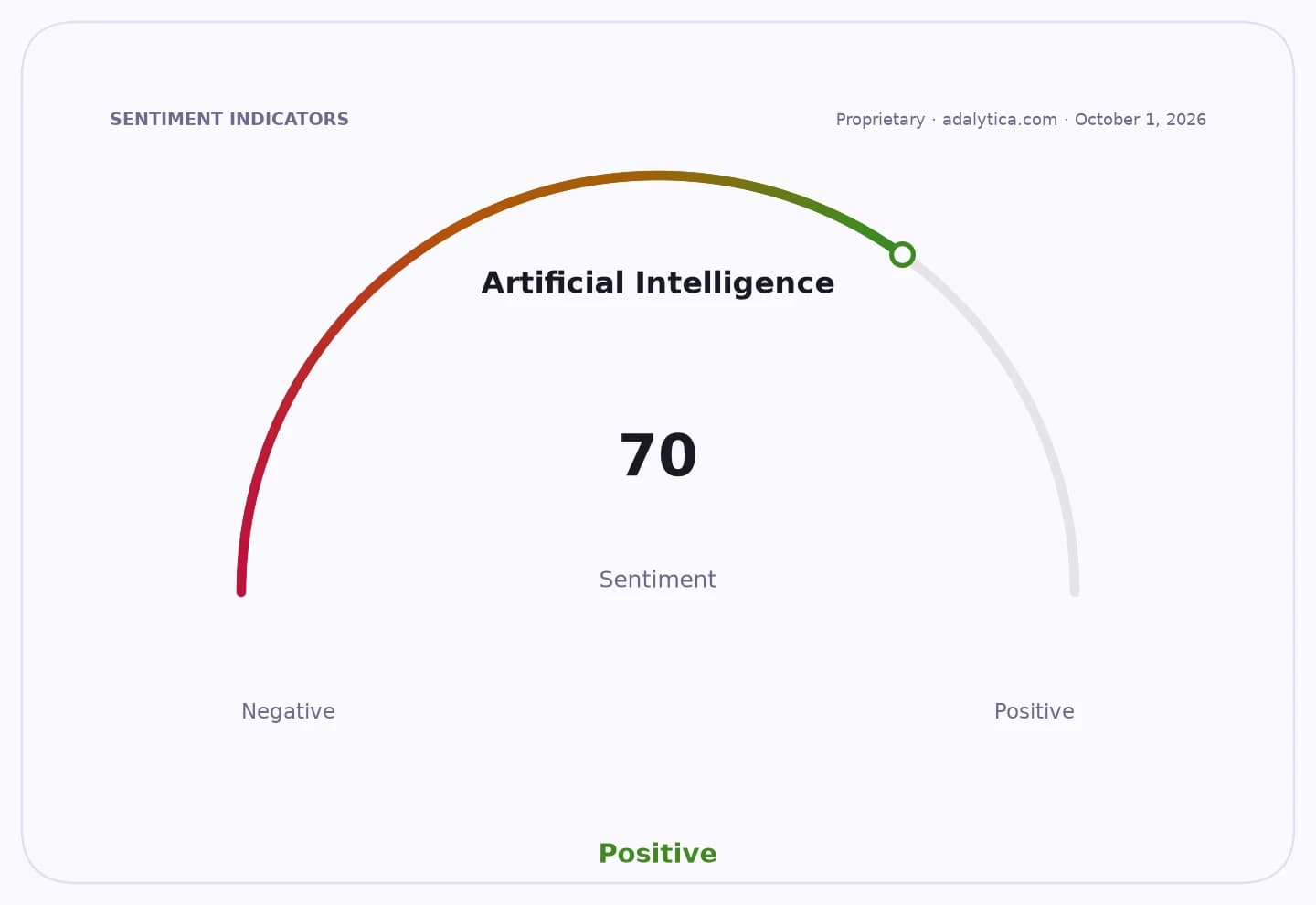
Sentiment IndicatorsⓘProprietary · adalytica.com · October 1, 2026
This is a snapshot — live sentiment, awareness and momentum for 130+ markets update continuously in the dashboard.Open AlphaPulse
Uruguay is emerging as one answer. The South American country has spent years building a reputation for stability, rule of law and a relatively business-friendly investment climate. That is now drawing interest from outside tech investors and policymakers as governments in the region look to attract capital in AI, green energy, hydrocarbons and mining. The pitch is simple: use a small, stable country as a live laboratory for AI development and deployment, away from the tighter oversight that has started to shape the U.S. and Europe.
That is exactly why the project is controversial. AI companies want access to cheap power, reliable data infrastructure and a regulatory regime that does not slow experimentation. Governments, meanwhile, are already moving the other way. Microsoft has warned in recent filings that the EU’s AI Act and similar rules could raise costs or restrict the deployment of advanced models and services. Nvidia has made similar disclosures about frontier-model restrictions and the risk that governments could limit the hardware, software and systems used in AI development.
For investors, the Uruguay story is bigger than one project. It highlights a split that could define the next phase of AI returns: the companies that can build across jurisdictions with the fewest legal frictions, and the ones that get trapped by local compliance costs. That makes regulatory arbitrage a genuine competitive issue, not a footnote. If more governments try to emulate Uruguay’s openness, the winners could be the firms with the deepest capital, broadest cloud ecosystems and strongest hardware supply chains. If not, the industry may face a slower, costlier rollout than bulls expect.
The market backdrop suggests investors are still treating AI as a long-duration growth theme rather than a near-term policy trade. Nvidia remains well above its 200-day moving average, while Microsoft has also recovered above both its 50-day and 200-day averages after a rough stretch earlier in the year. Alphabet has steadied as well. That resilience says the secular demand story is intact. But it also shows how much of the AI trade still depends on the assumption that deployment will stay global, scalable and relatively unconstrained.
That is what makes Uruguay worth watching. A “digital nation” built to experiment with AI without limits could become either a template for future AI hubs or a warning sign that the industry is moving faster than governments are willing to tolerate. For long-term investors, the key takeaway is not to chase the headlines, but to watch which companies can keep expanding while regulation tightens elsewhere. Those are the stocks most likely to compound for years.
| Entity | Gains | Losses |
|---|---|---|
| Uruguay | ▲investment inflows | ▼regulatory scrutiny |
| Microsoft | ▲faster AI deployment | ▼compliance costs |
| Nvidia | ▲more hardware demand | ▼export and usage limits |
| Alphabet | ▲room to test AI products | ▼slower rollout in regulated markets |