Artificial intelligence is deepening a structural split in global investing, with the US capturing the bulk of the capital, talent and market gains while Europe risks falling further behind.
US AI Spending Leaves Europe Behind

That matters because AI is no longer just a theme for venture capitalists or chipmakers. It is becoming a core driver of productivity, corporate profit margins and long-run economic growth. The region that builds the best AI infrastructure and turns it into real business value is likely to command better earnings growth, higher equity valuations and a stronger currency over time.
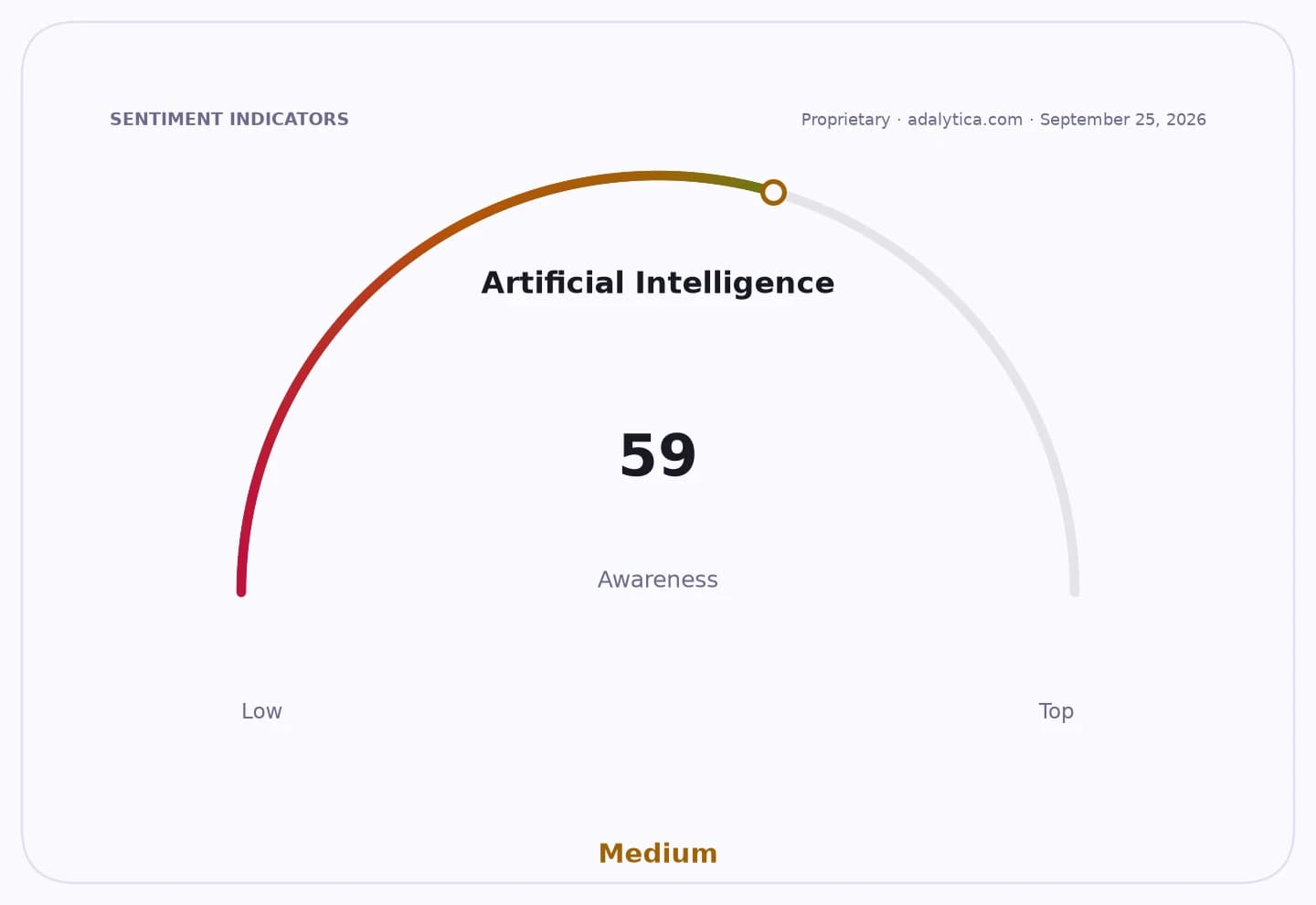
Sentiment IndicatorsⓘProprietary · adalytica.com · August 26, 2026
This is a snapshot — live sentiment, awareness and momentum for 130+ markets update continuously in the dashboard.Open AlphaPulse
The US still has the ingredients to dominate. Its biggest tech companies are pouring money into AI data centers, chips and software, and investors continue to reward that spending. Microsoft, Alphabet and Nvidia remain at the center of the buildout, and despite bouts of volatility, their shares still trade like long-duration bets on an AI-powered economy. Microsoft has rebounded to around $492 a share after a sharp spring selloff, while Nvidia is back above $213, showing that investors are still willing to pay up for the companies supplying the picks and shovels of the AI boom.
By contrast, Europe’s problem is not simply that it lacks a Nvidia. It is that the region has fewer companies with the scale, balance sheet strength and risk appetite to fund an AI arms race. That leaves Europe more exposed to imported technology, weaker capital formation and a slower pass-through from AI spending to profits. The result is a widening investment gap that can feed on itself: more money goes to US stocks and US infrastructure, which in turn helps preserve US leadership.
The macro backdrop reinforces that divide. The Federal Reserve’s policy rate is around 3.63%, while the US 10-year Treasury yield is near 4.69%, levels that still make investors scrutinize growth, but not enough to deter spending on strategic technology. US industrial production is also edging higher, suggesting the economy has room to absorb heavy AI-related capital investment. In other words, the US can finance the buildout and keep growing. Europe, with more fragmented capital markets and less deep tech concentration, has a harder time matching that pace.
Investor behavior is already reflecting the split. The S&P 500 sits in a neutral but constructive posture, according to Adalytica’s trade signals, while the dollar shows extreme fear in sentiment even as awareness stays high — a reminder that capital is still paying close attention to US assets. For long-term investors, that means the AI story is not just about who wins the technology race. It is about where the next decade of free cash flow, index leadership and market returns is likely to accumulate.
Europe is not out of the game, but it needs to solve bigger structural problems: faster permitting, deeper capital pools, more aggressive AI talent retention and a clearer path from research to commercial scale. Until then, the US remains the cleaner place to own the AI buildout.
For investors, the takeaway is straightforward: own the companies enabling AI, keep a global perspective, and don’t confuse Europe’s lower valuations with better opportunity if the earnings engine is still weaker. This is a secular shift worth watching closely, and one that favors patience over speculation.
| Entity | Gains | Losses |
|---|---|---|
| US tech leaders | ▲Capital inflows, higher valuations | ▼Less challenged by Europe |
| Europe’s tech sector | ▲Select niche adopters | ▼Investment share, talent, scale |
| AI infrastructure suppliers | ▲Heavy US spending | ▼Slower European deployment |
| Long-term investors | ▲Compounding in AI leaders | ▼Chasing lagging regions |