US travelers are set to be the world’s most valuable source of overseas tourism spending in 2021, with average expenditure per resident projected at $3,580, underscoring how American demand is likely to lead the rebound in international travel.
US travelers to lead overseas tourism spending in 2021
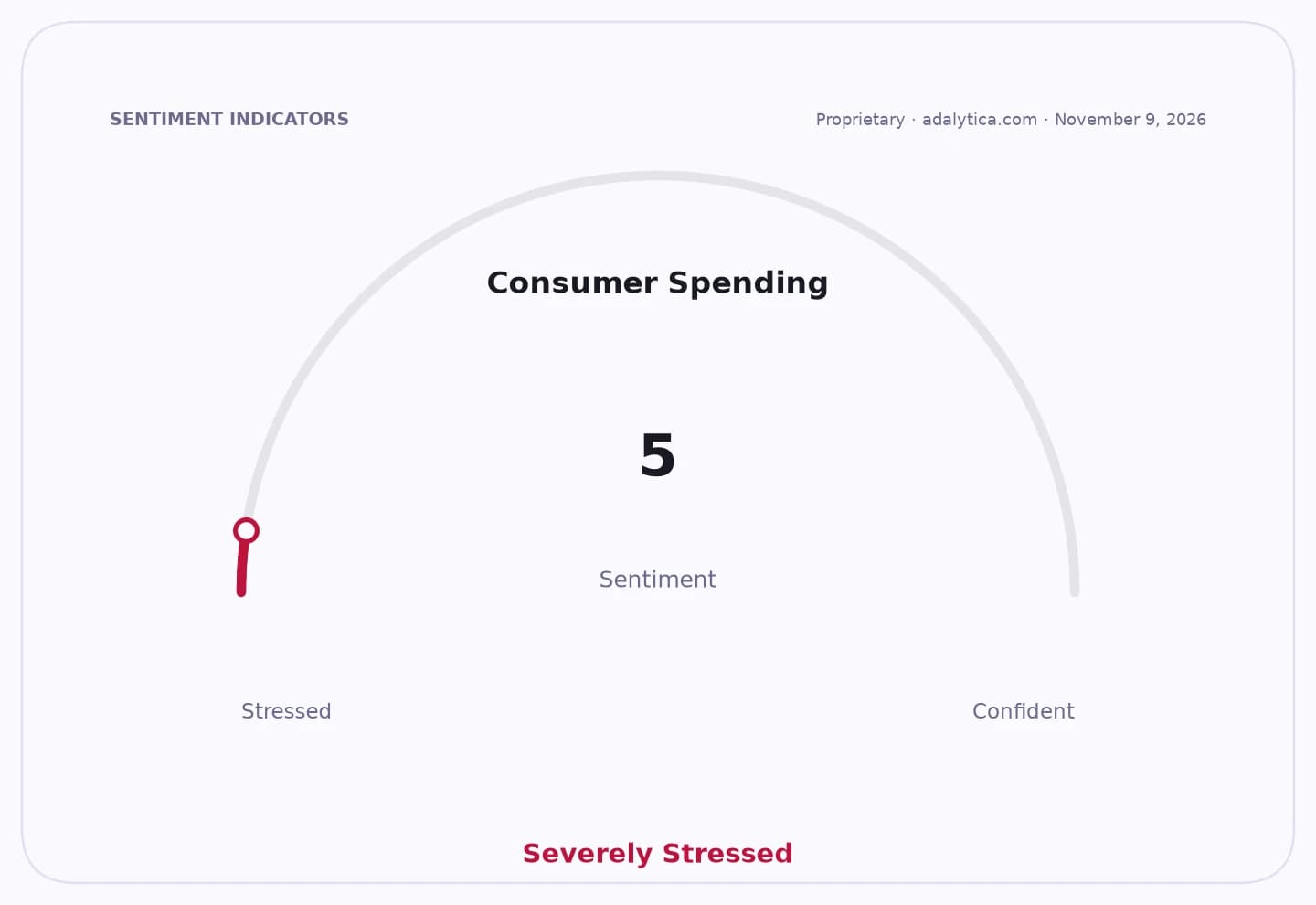
Consumer Spending
That matters because outbound tourism is one of the quickest channels through which household spending in a large economy turns into foreign revenue for hotels, airlines, restaurants and destination economies. With the US market expected to direct a large share of disposable income into trips abroad, analysts say the country’s travelers could become a key engine of recovery for destinations still rebuilding from the pandemic shock.
Sentiment Indicators
Consumer Confidence
The appeal is not just the size of the spend, but its composition. Six of the top 10 overseas destinations for Americans in 2021 are expected to be long-haul markets, reflecting both the depth of US consumer wallets and a willingness to travel further than most source markets. The average trip length of 18 days also makes US visitors especially attractive to tourism operators, since longer stays typically translate into higher room revenue, more restaurant spending and greater ancillary outlays.
Europe remains a major beneficiary, with France and Italy among the strongest draws thanks to culture and food, while sun-and-beach destinations also remain central to demand. Forty-two percent of US respondents said beach holidays are their usual travel type, suggesting that destinations able to package leisure, weather and service quality are best placed to capture this spending.

The broader macro backdrop reinforces the point. Industry analysts expect global outbound tourism expenditure to rise at a 22% compound annual rate between 2021 and 2024, with spending surpassing pre-pandemic levels by 2024. US travelers are central to that recovery because their spending is distributed across multiple continents, giving the country outsized influence on foreign tourism receipts.
For investors, the implication is that the recovery in travel demand is not just a reopening trade but a geographically uneven one, with long-haul and leisure-heavy operators likely to benefit first. That supports airlines, online travel platforms and destination-exposed hotel groups, while also favoring markets that can convert high-spending American visitors into sustained revenue growth. Booking Holdings, Expedia and Airbnb all sit in the path of that reacceleration, although their share prices have been volatile as traders weigh demand normalization against broader market weakness.
The risk for the sector is that the rebound in US travel spending may be strong but not linear. Cost pressures, capacity constraints and policy shifts in destination markets could blunt the pace of recovery, even if demand remains robust. Still, with US consumers projected to spend more overseas than any other nationality in 2021, the country is set to remain the single most important demand source for the global tourism recovery.
| Entity | Gains | Losses |
|---|---|---|
| US travelers | ▲Wider choice, long-haul access | ▼Higher travel costs |
| Global destinations | ▲Faster tourism revenue recovery | ▼Dependence on US demand |
| Online travel firms | ▲Higher booking volumes | ▼Margin pressure from volatility |
| Domestic leisure markets | ▲Less from outbound spend | ▼Missed foreign visitor inflows |