Budget-conscious travelers are increasingly swapping iconic tourist magnets for cheaper “destination dupes” as elevated prices keep pressure on holiday plans and reshape demand across the travel industry.
Travelers Shift to Cheaper Destination Dupes

The shift matters because leisure travel is one of the most discretionary purchases households make, and the willingness to trade prestige for value is a clear sign that consumers are still price-sensitive even after inflation has eased from its peak. U.S. CPI data in the context shows consumer prices at 337.476 in October, with the latest forecast pointing to 338.6475 in November, while unemployment remains low at 4.1%, underscoring a labor market that is stable but not immune to household caution.
Sentiment Indicators
Consumer Confidence
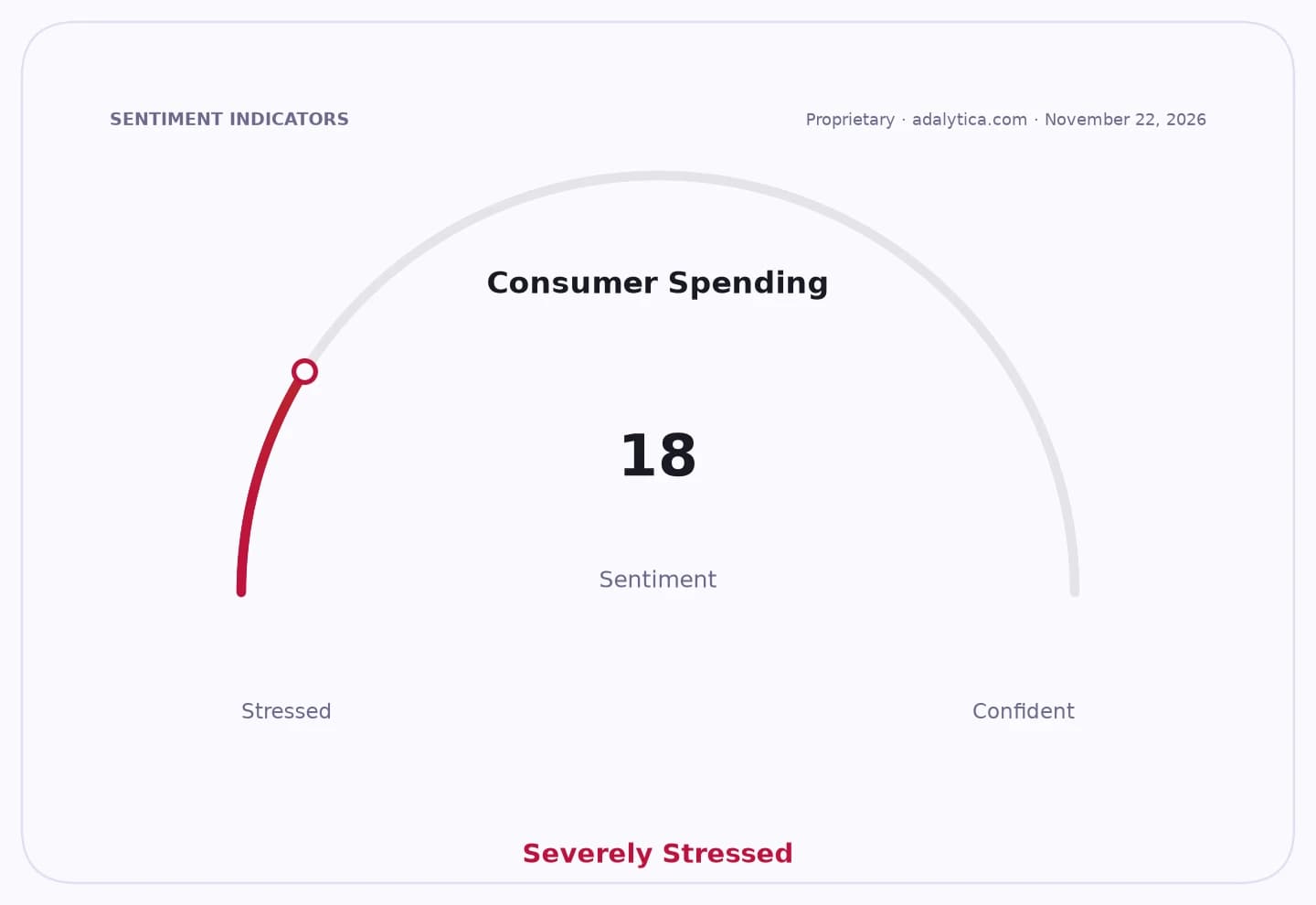
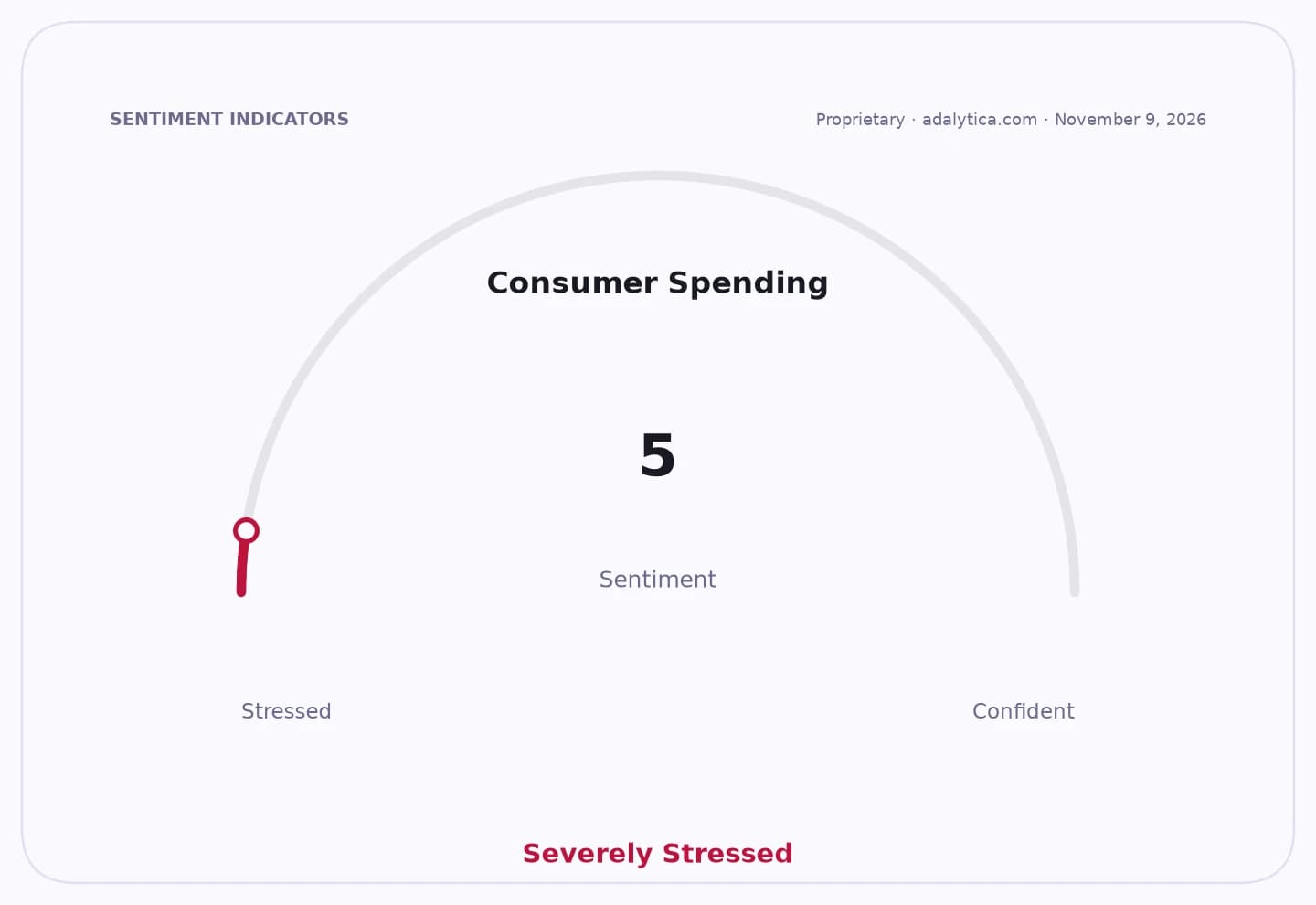
That backdrop helps explain why budget-travel advice is gaining traction. Adalytica’s Consumer Spending Sentiment reading is neutral at 61, but its awareness gauge sits at 71, labeled “Greed,” suggesting consumers are actively hunting for value rather than spending freely. At the same time, the broader Consumer Confidence Recession Sentiment index is in “Extreme Fear” at 14, a sign that households remain wary of committing to expensive trips.
The travel-specific implication is a rerouting of demand away from the world’s most expensive and congested destinations and toward second-tier alternatives that offer similar scenery, culture or city energy at lower cost. The seed examples — Austria instead of Switzerland, Phu Quoc instead of a Mediterranean island, Kuala Lumpur instead of Singapore, Sri Lanka instead of Bali and Seoul instead of Tokyo — reflect a broader consumer playbook: preserve the experience, cut the bill.
That behavior is economically significant for airlines, hotels and online travel platforms because it can redistribute spending rather than eliminate it. Travelers may still book long-haul flights, but they are likely to choose lower-cost destinations, shorter stays or more flexible itineraries, which can pressure premium pricing at top-tier locations while supporting demand in substitute markets. For suppliers, the mix shift may matter as much as total volume.
Publicly listed travel companies are exposed to that reallocation in different ways. Airbnb, Booking Holdings and Expedia all sit in the path of travelers comparing destinations and prices, but the impact is not identical. Booking’s shares have fallen to 144.91 from an August peak above 212, while Expedia has slid to 234.96 from above 328 in late August, reflecting a weaker market read on booking trends and margin durability. Airbnb has also pulled back from its August highs even after a sharp run-up earlier in the year.
Technically, the moves suggest investors are reassessing the durability of travel demand rather than abandoning the sector outright. Booking’s close is below its 50-day and 200-day moving averages, a bearish signal by conventional technical analysis, while Expedia has also dropped under both trend lines. Airbnb remains above its 200-day average but has cooled from overbought levels seen in August, when its RSI readings spiked above 85, indicating enthusiasm had outrun the near-term fundamentals.
The bull case is that value-seeking travel still supports transaction volumes, and alternative destinations could expand the addressable market for online booking platforms if travelers remain willing to spend on experiences, just in less famous places. The bear case is that persistent cost sensitivity, especially around accommodation and discretionary extras, could compress pricing power and force suppliers to compete harder for each booking.
For investors, the key question is whether “destination dupes” are a temporary consumer workaround or a more durable shift in travel behavior. If inflation stays sticky and households remain cautious, the winners may be the platforms and destinations that can capture budget demand without relying on premium tourist branding. The losers are likely to be the overvisited, overpriced hubs that have long benefited from scarcity and status.
| Entity | Gains | Losses |
|---|---|---|
| Budget travelers | ▲Lower trip costs | ▼Less prestige |
| Substitute destinations | ▲More demand | ▼Smaller brand cachet |
| Booking platforms | ▲Broader value traffic | ▼Margin pressure |
| Iconic tourist hubs | ▲— | ▼Demand diversion |