A101’s 22 November catalog underscores how discount retailers are leaning harder on food, household staples and big-ticket electronics as consumers stay focused on value in an inflation-heavy environment.
A101 November Catalog Highlights Discount Retail Demand

The most important signal is not a single price tag but the breadth of the promotion: from sunflower oil, sugar and detergent to televisions, espresso machines, white goods and toys, A101 is spreading its offer across essential and discretionary categories to capture households that are trying to stretch budgets without abandoning non-essential purchases entirely. That mix matters economically because it shows spending remains under pressure even as demand has not disappeared; shoppers are still buying, but they are trading down, timing purchases around campaigns and relying on short-duration discounts.
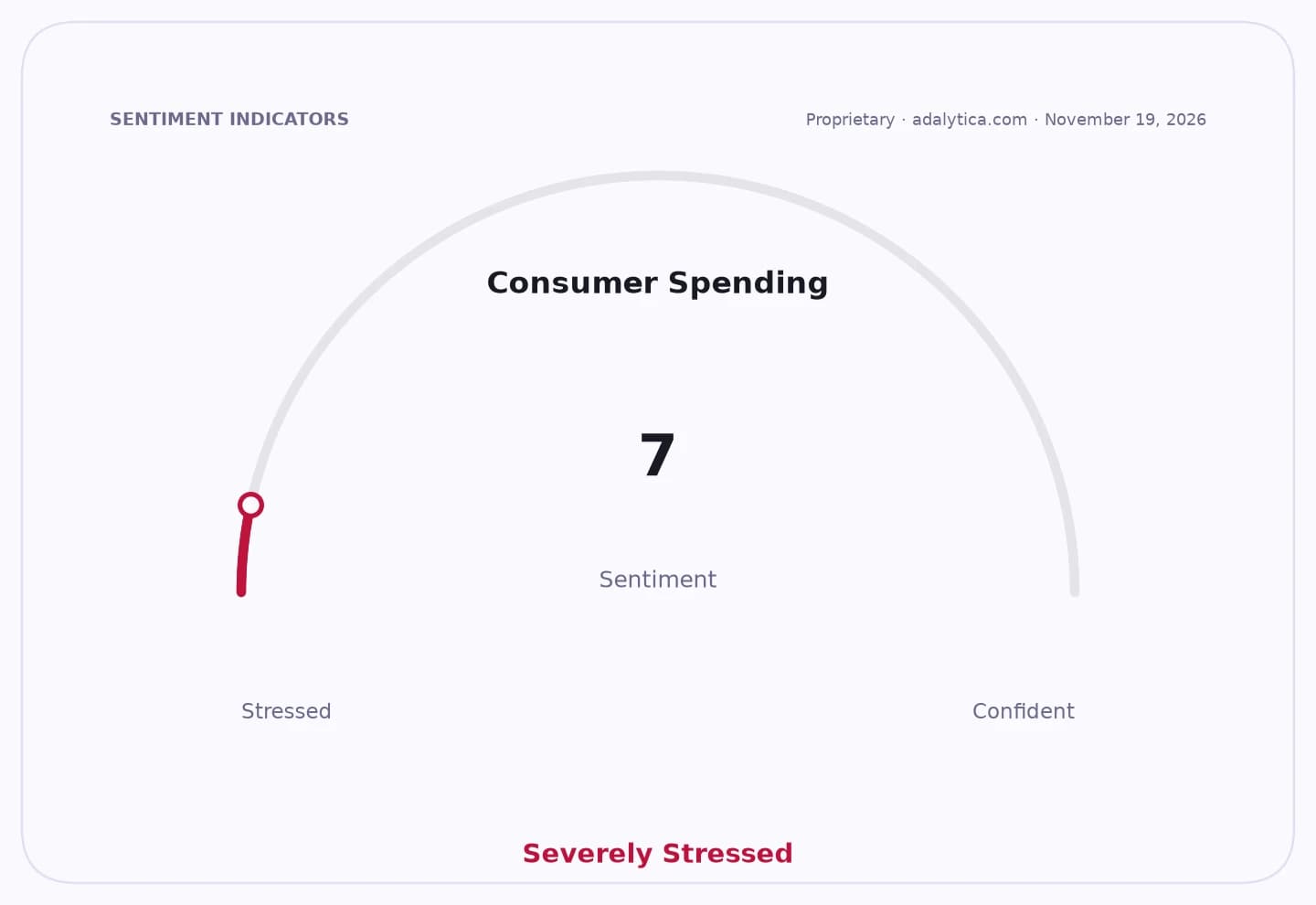
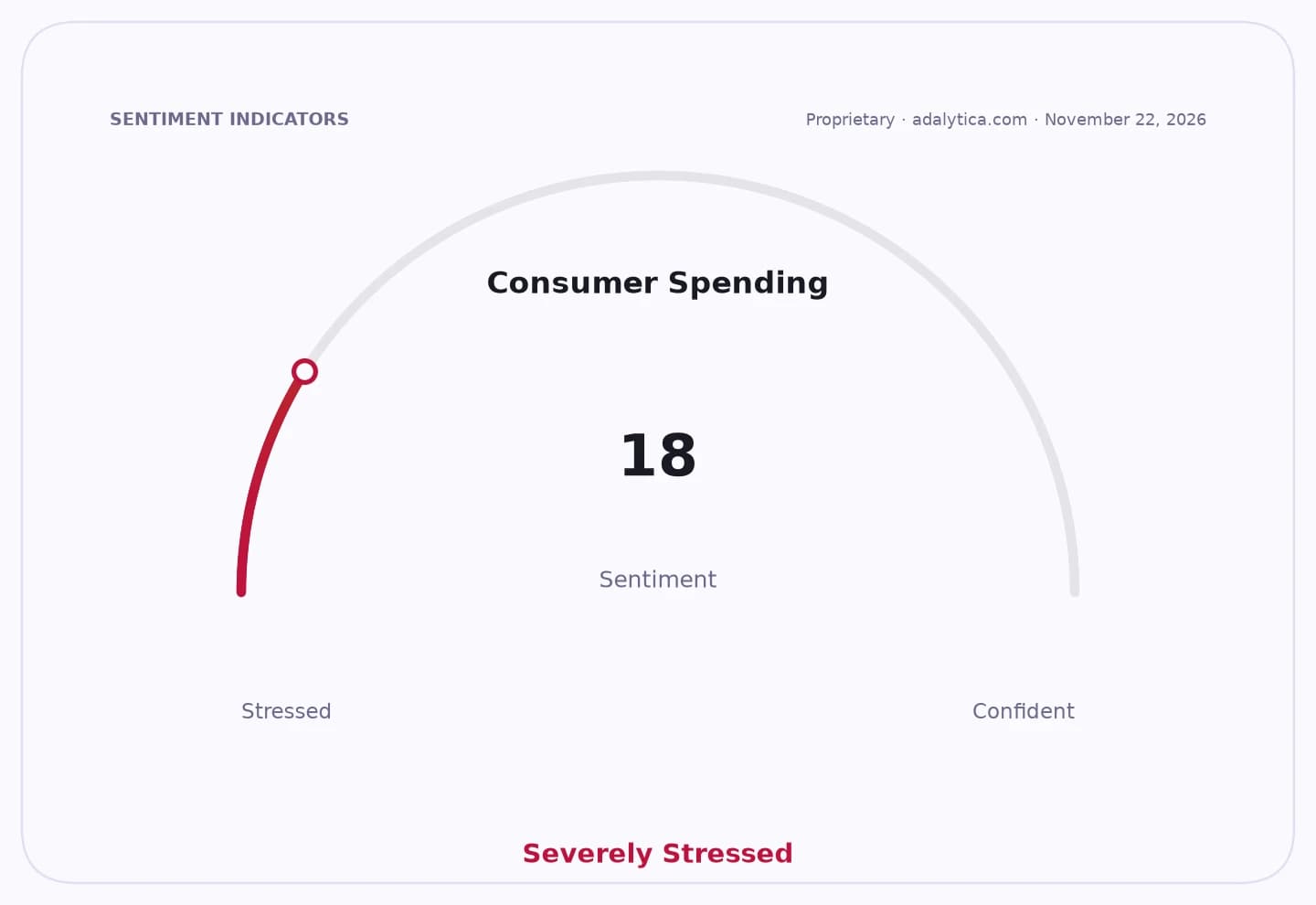
Sentiment Indicators
Consumer Spending
The grocery side of the catalog is the clearest window into that behavior. In A101’s “Haftanın Yıldızları” promotion, a 4.5-liter bottle of Yudum sunflower oil is priced at 459 lira, a 5-kilogram bag of sugar at 259.50 lira and a 10-kilogram bag of detergent at 449 lira. Meat and dairy staples are also central: 400 grams of minced beef is listed at 239 lira, while cheese, sucuk and yogurt products sit in a range that keeps essential basket items visible to price-sensitive shoppers. Fruit and vegetable offers — including mandarins, lemons and oranges — round out a classic defensive retail mix built for households watching their weekly bill.
That is why the campaign structure matters as much as the prices themselves. The 22 November offers do not run on one schedule: the “Tazenin Yıldızları” fresh-food promotion ends on 22 November, while the main “Aldın Aldın” and “A101 Ekstra” programs run to 26 November, and “Haftanın Yıldızları” runs through 27 November. For consumers, that fragmentation encourages shopping around multiple windows and channels. For retailers, it helps manage stock and traffic. For investors, it points to a sector where basket-building and frequency of visits are still doing the heavy lifting.
The catalog also shows that even in a cautious consumer climate, there is still room for aspirational purchases — but only when the price is right. A Samsung 58-inch smart LED television is listed at 38,499 lira, while A101’s online-only “Ekstra” channel includes a 15,999 lira Philips LatteGo espresso machine, a 14,999 lira Roborock robot vacuum and white goods from LG and SEG. The presence of these products suggests discretionary spending has not vanished; it has become more selective, more promotion-driven and more dependent on the channel offering the sharpest perceived value.
That dynamic is important for listed retailers and suppliers because it can protect traffic even as margins come under pressure. Discounters gain from volume, basket expansion and customer loyalty built around staples, while branded manufacturers and premium suppliers are forced to meet consumers at a lower price point or risk being swapped out for private-label or lower-cost alternatives. The risk is that aggressive promotions can support sales but compress gross margins if consumers become conditioned to wait for campaigns.
The broader backdrop supports that interpretation. Conventional inflation indicators remain elevated compared with pre-pandemic norms, while consumer sentiment data in the supplied context shows a weak reading, with Adalytica’s consumer spending sentiment at 18 and labeled “Fear.” In that setting, a retailer like A101 is not merely advertising discounts; it is adapting to a market where affordability is a strategic advantage and where the ability to move staples, appliances and electronics through different sales channels may determine who keeps share.
For investors, the key takeaway is that value-led retail remains defensive, but not immune. A101’s catalog suggests demand exists across categories, yet it is being rationed by price and timing. That favors discount chains with scale and sourcing power, while exposing premium sellers, import-heavy brands and any retailer dependent on full-price discretionary spending. The next catalyst will be whether this kind of campaign-led demand becomes a durable pattern into year-end or simply a temporary response to persistent household pressure.
| Entity | Gains | Losses |
|---|---|---|
| A101 | ▲Higher traffic and basket mix | ▼Margin pressure from promotions |
| Price-sensitive households | ▲Lower basket costs | ▼Less access to full-price choices |
| Premium brands | ▲Limited visibility | ▼Trade-down risk |
| Higher-priced retailers | ▲Benchmarking against discounts | ▼Share loss to discounters |