Asda’s push to lean on adjacent retail businesses comes as investors keep rewarding the big-box model, with Walmart, Target and Costco all trading above key long-term trend levels and near or at fresh highs. That gives the UK grocer a clearer message: in a weak consumer environment, scale and add-on revenue can matter as much as core grocery traffic.
Asda leans on retail adjacencies as peers rally
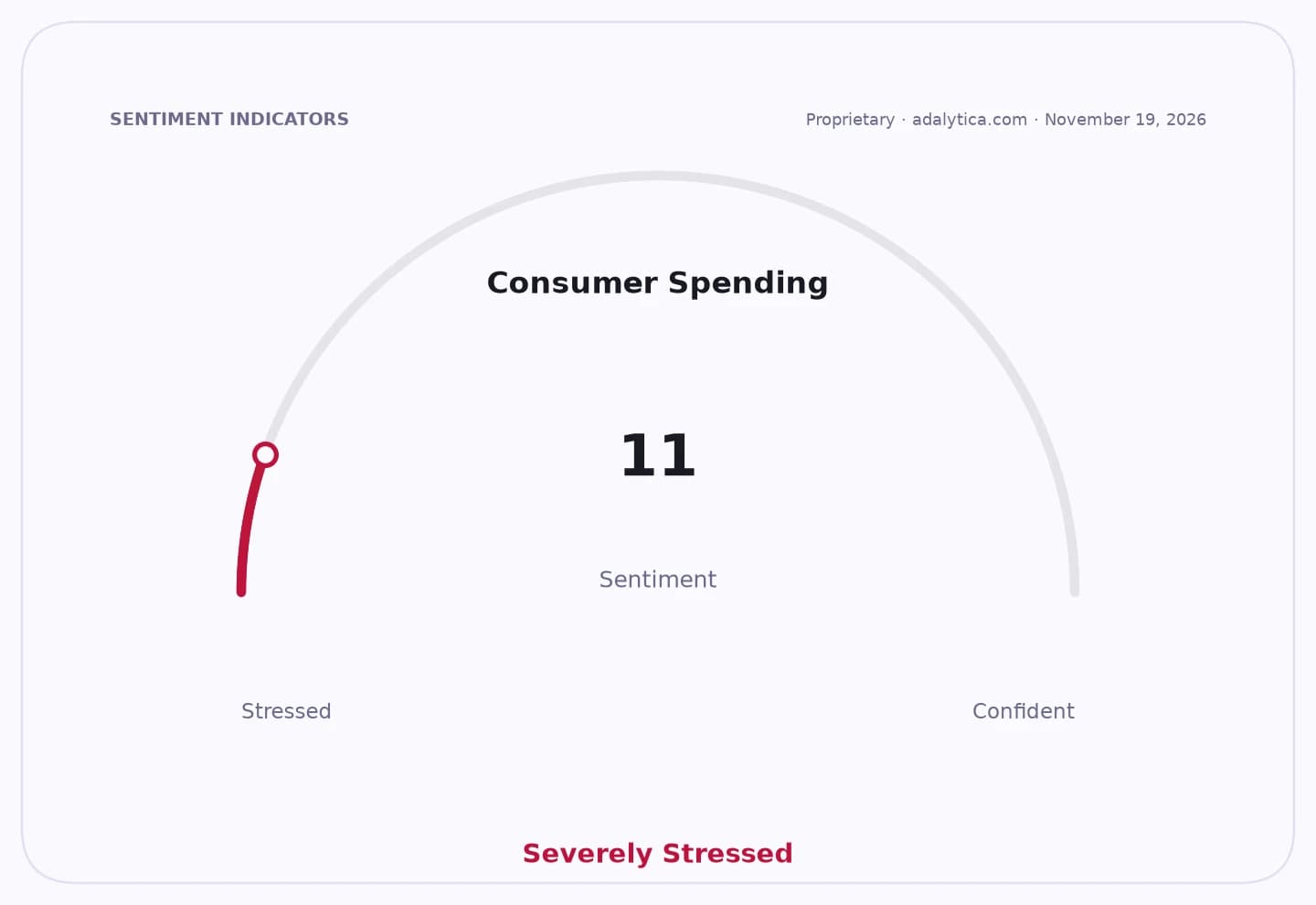
Consumer Spending
The investment case is being shaped by a split consumer backdrop. Adalytica’s Consumer Spending Sentiment gauge sits at 18, in “Fear,” while the S&P 500 snapshot shows “Extreme Fear” even as market awareness remains elevated, a sign that investors are still looking for defensives and cash-generative retailers. For grocers and mass merchants, that can make side businesses — retail media, financial services, marketplace offers, general merchandise and other adjacent categories — more valuable because they widen margins without relying entirely on food inflation or volume growth.
Sentiment Indicators
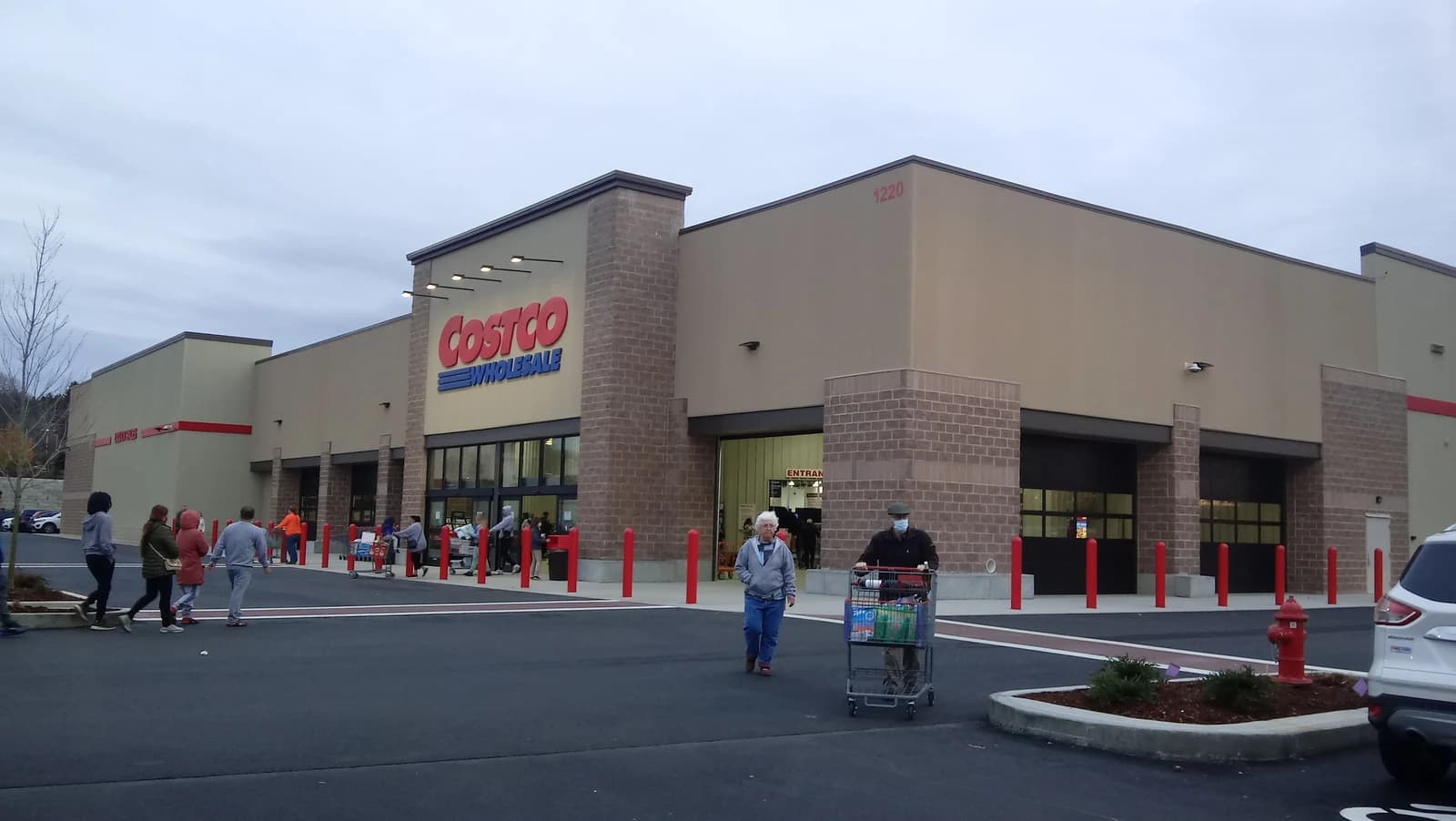
Walmart has been the clearest beneficiary of that playbook. Its shares closed at $127.95 on Friday, after reaching $127.69 on Nov. 2 and briefly moving above $130 in February, with the stock still well above its 50-day average of $116.65 and 200-day average of $118.68. Costco, meanwhile, finished at $1,102.15 on Friday, far above its 50-day average of $985.78 and 200-day average of $976.36, underscoring how investors continue to pay up for retailers that can expand into higher-margin services and memberships.
Target’s chart is less dramatic but still supportive. The stock ended at $165.83 on Friday, above both its 50-day average of $155.94 and 200-day average of $136.15, after a sharp rally earlier in the year. The move suggests the market still sees room for large-format chains to defend share by layering in offerings beyond pure discretionary sales.
For Asda, the strategic logic is straightforward. Supermarket economics alone are thin, and UK consumers remain under pressure, so tapping nearby revenue streams can help offset pricing competition and softer basket growth. The risk is execution: adjacent businesses can lift margins, but they also require capital, management attention and discipline to avoid distracting from the core grocery operation.
Investors will be watching whether Asda can turn the “side hustle” idea into repeatable earnings rather than a branding exercise. In a market still favoring defensive retail names, the companies that can prove their add-on businesses scale without eroding grocery execution are likely to get the benefit of the doubt.
| Entity | Gains | Losses |
|---|---|---|
| Asda Group | ▲Higher-margin revenue streams | ▼Pure grocery dependence |
| Walmart | ▲Validation of adjacencies strategy | ▼Limited downside from caution |
| Target | ▲Proof of non-grocery diversification | ▼Less room if turnaround stalls |
| Costco | ▲Membership-led premium valuation | ▼Competitors chasing its model |