Retailers tied to discretionary spending are now diverging sharply as consumer fear deepens, with Burlington Stores leading the group higher even as the broader backdrop points to a more cautious shopper heading into the holiday season.
Burlington, Target, Walmart Diverge as Consumers Turn Cautious
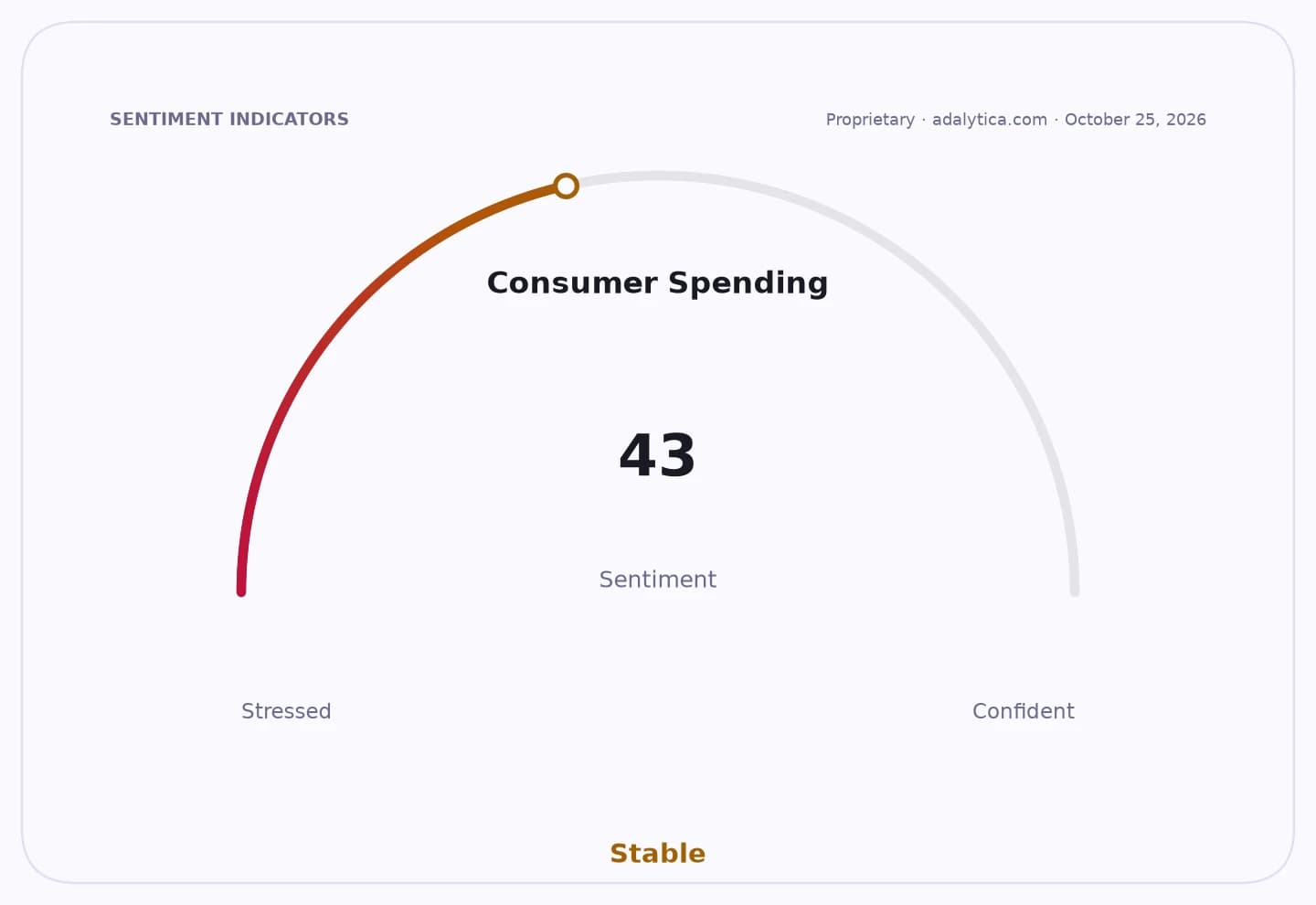
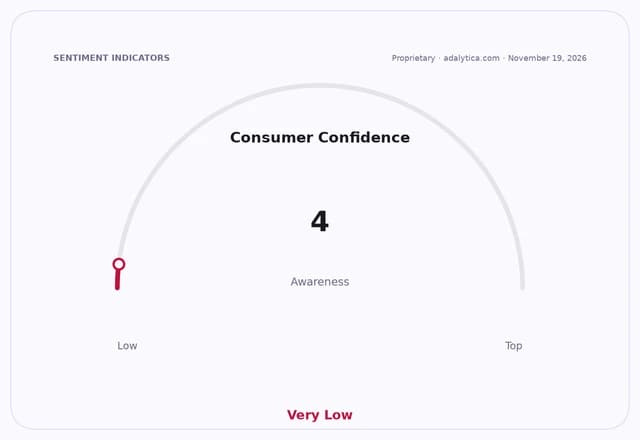
The split matters because home-furnishings and general merchandise chains live and die by household confidence, and the latest readouts suggest consumers are still buying, but are becoming far more selective. Adalytica’s Consumer Confidence Recession Sentiment sits at 4, or “Extreme Fear,” while Consumer Spending Sentiment is only 11, also in “Extreme Fear,” even as Retail Sales Sentiment has recovered to 31 from a weaker level earlier this month. That combination points to an economy where spending has not collapsed, but the mix is shifting toward value, necessity and promotional buying.
Sentiment Indicators
That backdrop helps explain why Burlington’s stock has outperformed the larger big-box names. Burlington closed at $248.02 on Nov. 19, after touching as high as $356.22 in July, and remains well below its 200-day moving average of about $304. The shares are still trying to stabilize after a steep pullback, though the short-term trend has improved: the stock has recovered from $235.14 two days earlier and the RSI has moved back to 56.6, suggesting momentum has cooled from overbought levels without turning outright weak. For a retailer that depends on bargain-hunting traffic, that is a useful setup if consumers continue trading down.
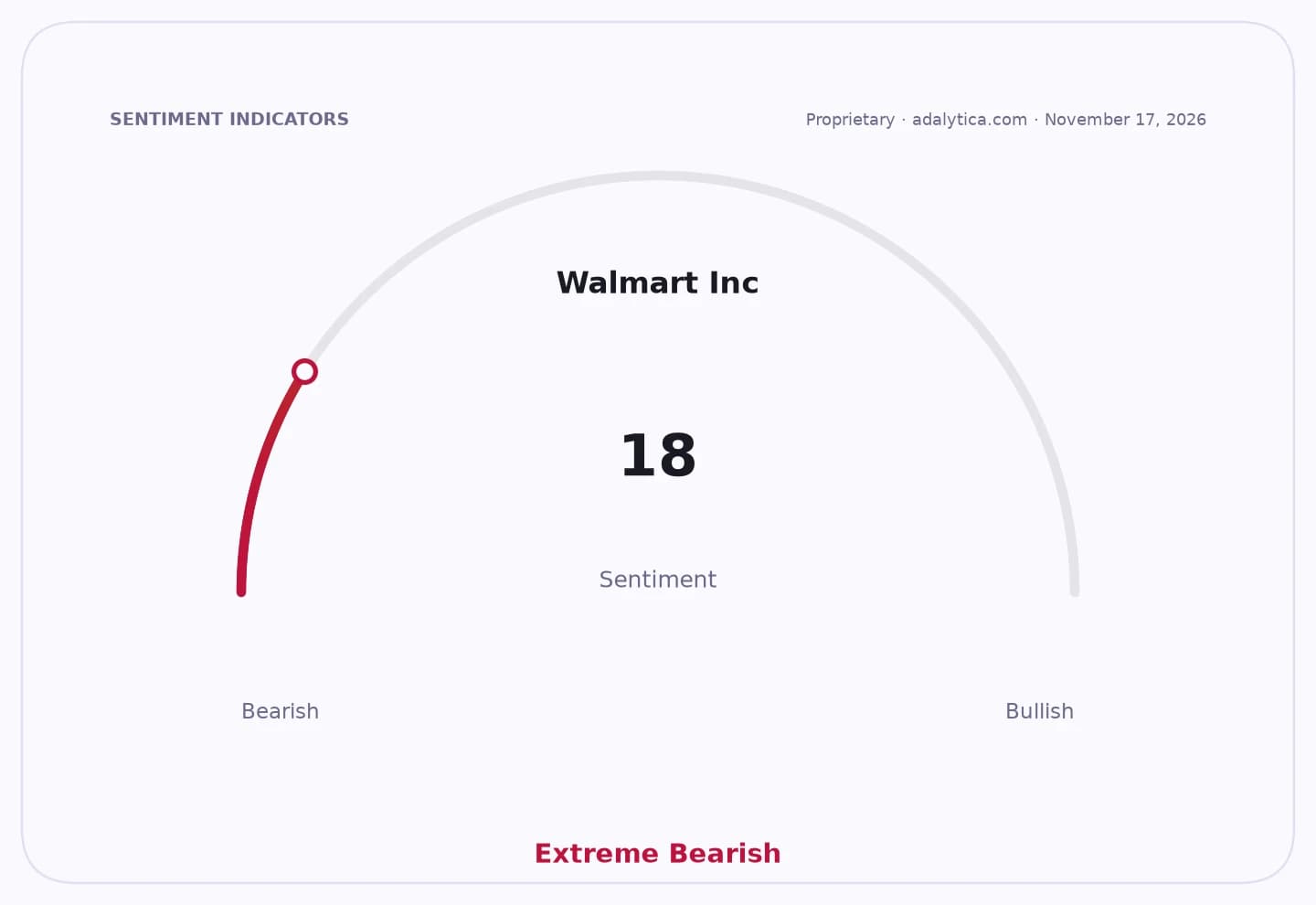
Target and Walmart, by contrast, are showing a different kind of resilience. Target closed at $167.09, extending a rebound that has carried it above both its 50-day and 200-day moving averages. Walmart finished at $126.42, still below its 200-day average near $118.68 but off the pressure seen earlier in the year. Both stocks have benefited from investors favoring scale, inventory control and value positioning, yet the recent price action also suggests the market is willing to reward retailers that can hold margins while customers become more cost-conscious.
The economic implication is that the consumer is not absent, but fragmented. High-frequency sentiment measures indicate anxiety about recession and spending power, while equity markets are rewarding companies that can capture the trade-down effect or defend traffic with pricing power and supply-chain discipline. That is positive for off-price and mass-market chains, but it leaves apparel and home-furnishing merchants more exposed to discounting and slower ticket growth.
For investors, the key question is whether the latest rebound in retail stocks reflects durable demand or a temporary rotation into perceived defensives. Burlington’s volatility shows the market still doubts the durability of discretionary demand. Target’s and Walmart’s strength, meanwhile, suggests investors are treating them less as cyclical retailers and more as consumer-staples proxies with retail leverage.
The next catalyst is the holiday season, when management commentary on traffic, promotions and basket size should clarify whether the consumer is merely cautious or genuinely retrenching. If sentiment remains in “Extreme Fear” while spending holds up, the winners are likely to be the chains with value positioning and operational flexibility. If confidence weakens further, even those names may find the rally harder to sustain.
| Entity | Gains | Losses |
|---|---|---|
| Burlington Stores | ▲Trade-down traffic | ▼Margin pressure |
| Target | ▲Value-focused shoppers | ▼Softening discretionary spend |
| Walmart | ▲Defensive consumer demand | ▼Slower big-ticket purchases |
| Higher-income home retailers | ▲Premium pricing power | ▼Promotion-heavy environment |