U.S. consumers kept spending in September, giving the economy a late-quarter boost even as inflation, higher gasoline costs and a softer labor market continue to squeeze household budgets.
U.S. Retail Sales Rise 0.8% In September

Retail sales rose 0.8% from August, the Commerce Department said, beating economists’ forecasts for a 0.3% increase and following a revised 1.3% gain in August. The report suggests the consumer engine that powers roughly two-thirds of U.S. economic activity remains intact, at least for now, even as the underlying mix points to a more fragile picture than the headline implies.
Sentiment IndicatorsⓘProprietary · adalytica.com · October 17, 2026
This is a snapshot — live sentiment, awareness and momentum for 130+ markets update continuously in the dashboard.Open AlphaPulse
Excluding gas stations, retail sales climbed just 0.2%, a sign that much of the strength came from higher prices rather than a surge in real demand. Gas station sales jumped 6.4% as gasoline prices spiked, while inflation accelerated in September and the average price of regular gasoline topped $4.33 a gallon, according to AAA. That matters because it leaves less room for discretionary spending later, particularly heading into the holiday quarter.
The report still showed consumers spreading their spending across categories. Furniture and home furnishings sales rose 1.3%, electronics and appliance stores gained 0.6%, department stores posted a 1.6% increase and online retailers saw a 0.3% rise. Restaurant sales, the lone services category in the report, advanced 1.1%, underscoring that households are still willing to spend on experiences as well as goods.
For investors, the more important signal is that the consumer has not cracked despite a disappointing labor backdrop. Employers added only 29,000 jobs in the latest payrolls report and the unemployment rate edged up to 4.2%, yet spending is holding up. That combination reduces the near-term odds of a sharp demand recession, but it also makes it harder for the Federal Reserve to declare victory on inflation or cut rates aggressively.
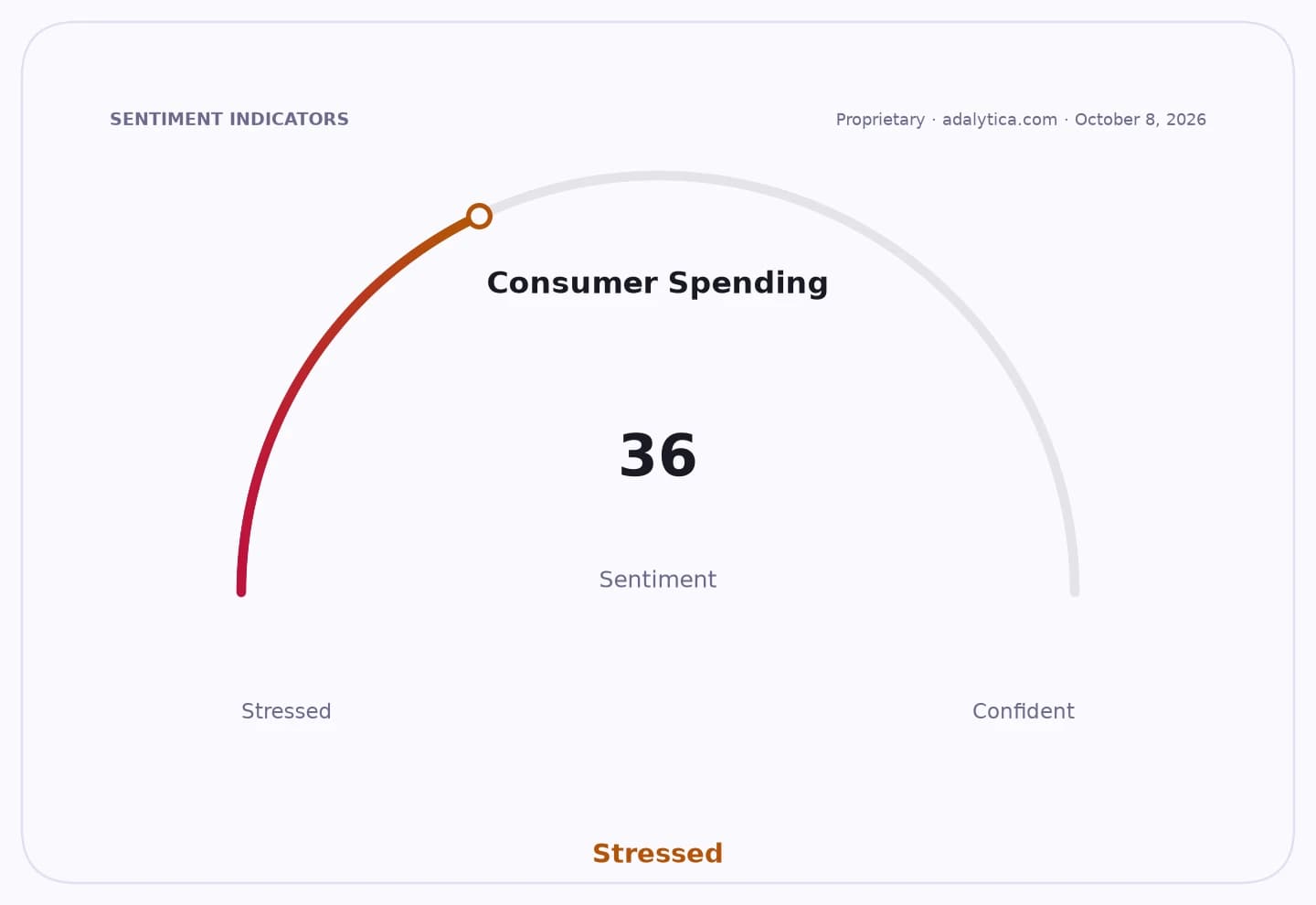
The tension is exactly what markets need to price correctly. Strong nominal sales support retailers with scale, pricing power and balance-sheet flexibility, including Walmart and Amazon, while smaller chains and lower-income-focused names face the risk that higher gas and food costs crowd out discretionary purchases. Adalytica’s Consumer Spending Sentiment gauge sits in “Extreme Fear,” and the disconnect between sentiment and spending is a reminder that consumers are still buying, but often by leaning on promotions, savings and selective trade-down behavior.
That makes the next leg of the consumer story less about whether people are spending and more about who captures the dollars. Companies with logistics advantages, private-label strength and omnichannel reach should keep taking share, while apparel, discretionary home goods and weaker regional chains remain exposed if inflation stays hot into the holidays.
The market should treat this report as confirmation of resilience, not exuberance. If gas prices stay elevated and wage growth continues to lag inflation, spending breadth will narrow, margins will get tested and the holiday season could become a winner-take-more environment for the biggest retailers. Right now, the opportunity is still in the names best positioned to absorb that pressure and turn a shaky consumer into steady profit growth.
| Entity | Gains | Losses |
|---|---|---|
| Walmart | ▲Traffic from value-seeking shoppers | ▼Smaller grocers and chains |
| Amazon | ▲Online share gains | ▼Brick-and-mortar rivals |
| Gas stations | ▲Higher nominal sales | ▼Consumers’ discretionary budgets |
| Discount retailers | ▲Trade-down demand | ▼Premium retailers |