U.S. consumer confidence slipped for a third straight month in October, a warning sign that persistent prices are still squeezing households and could keep spending growth uneven as the holiday season approaches.
U.S. consumer confidence falls for third straight month

That matters because consumer spending is the backbone of the U.S. economy. When families feel their budgets are stretched, they trade down, delay purchases and lean harder on savings or credit. For investors, that can mean slower sales growth for retailers, restaurants and travel companies, even if headline stock indexes remain close to record territory.
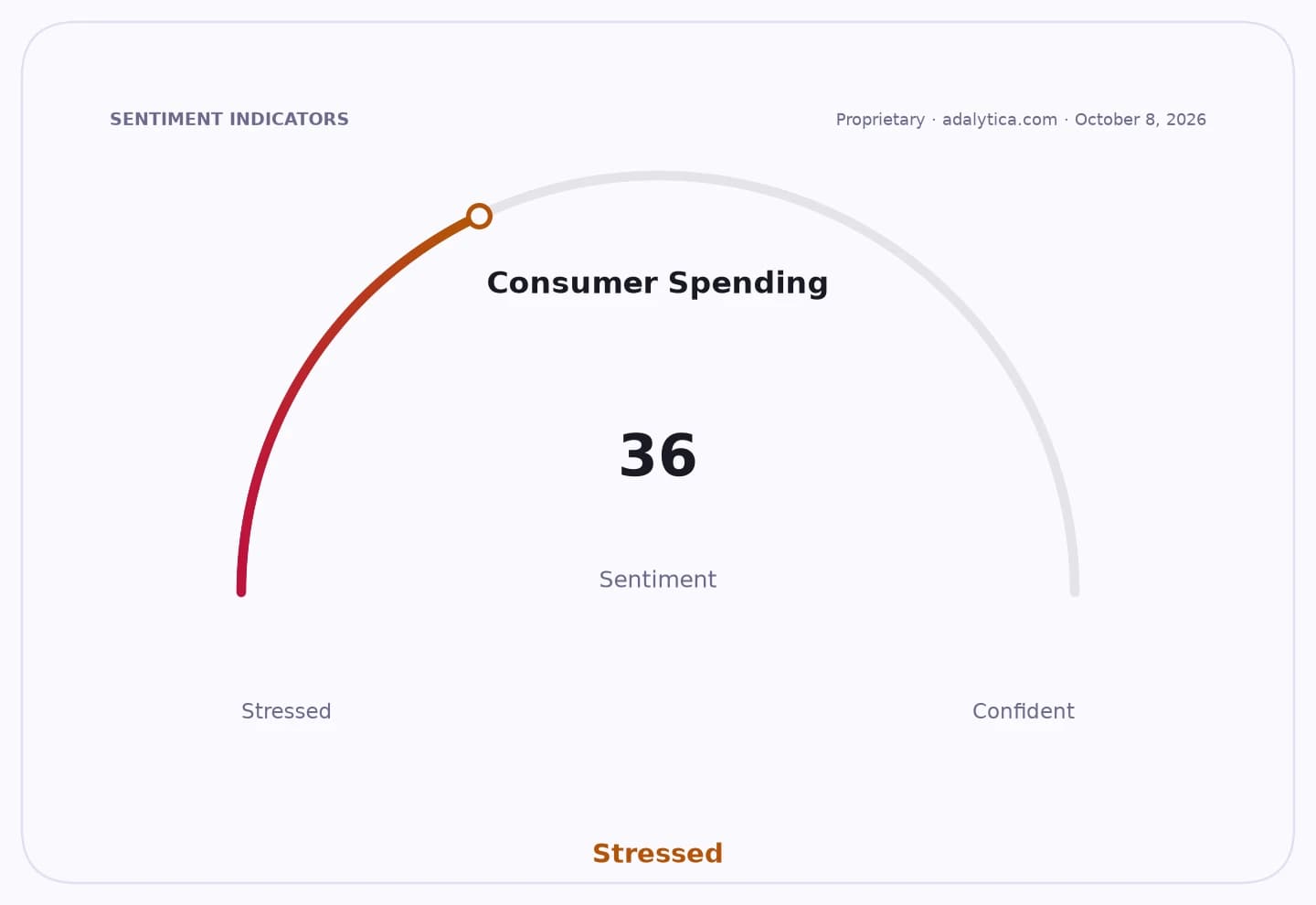
Sentiment IndicatorsⓘProprietary · adalytica.com · October 12, 2026
This is a snapshot — live sentiment, awareness and momentum for 130+ markets update continuously in the dashboard.Open AlphaPulse

The latest signal fits a broader pattern of consumers becoming more selective rather than carefree. Inflation has cooled from its peak, but prices remain high enough to keep sentiment fragile. Adalytica’s Consumer Spending Sentiment snapshot was still only neutral, while its S&P 500 trade-signal gauge showed extreme greed even as awareness sat in fear territory — a reminder that markets can stay upbeat while households stay wary.
That divide helps explain why big indexes such as the S&P 500 and Nasdaq 100 have held firm, with both sitting well above their 50-day and 200-day moving averages, while some individual consumer-facing names remain under pressure. Companies tied most directly to discretionary demand will need to prove they can still grow volumes, protect margins and avoid leaning too heavily on promotions if shoppers keep pulling back.
The market takeaway is simple: this is not yet a recession signal, but it is a caution flag for anyone counting on a broad consumer rebound. Investors should favor businesses with pricing power, recurring revenue and strong free cash flow, because those are the companies best positioned to compound even when households are careful with every dollar.
| Entity | Gains | Losses |
|---|---|---|
| Pricing-power retailers | ▲Better margin defense | ▼Volume-sensitive rivals |
| Consumer staples | ▲Steady demand | ▼Discretionary sellers |
| Large-cap index funds | ▲Market resilience | ▼Consumer cyclicals |
| Cash-conscious households | ▲More budgeting leverage | ▼Spending flexibility |