Consumer feedback is driving a sharper split in U.S. equity performance, with Amazon holding up far better than McDonald’s and Starbucks as investors reward businesses that can adapt quickly to changing shopper behavior and punish those struggling to read price-sensitive customers.
Amazon, McDonald’s, Starbucks Diverge on Consumer Spending

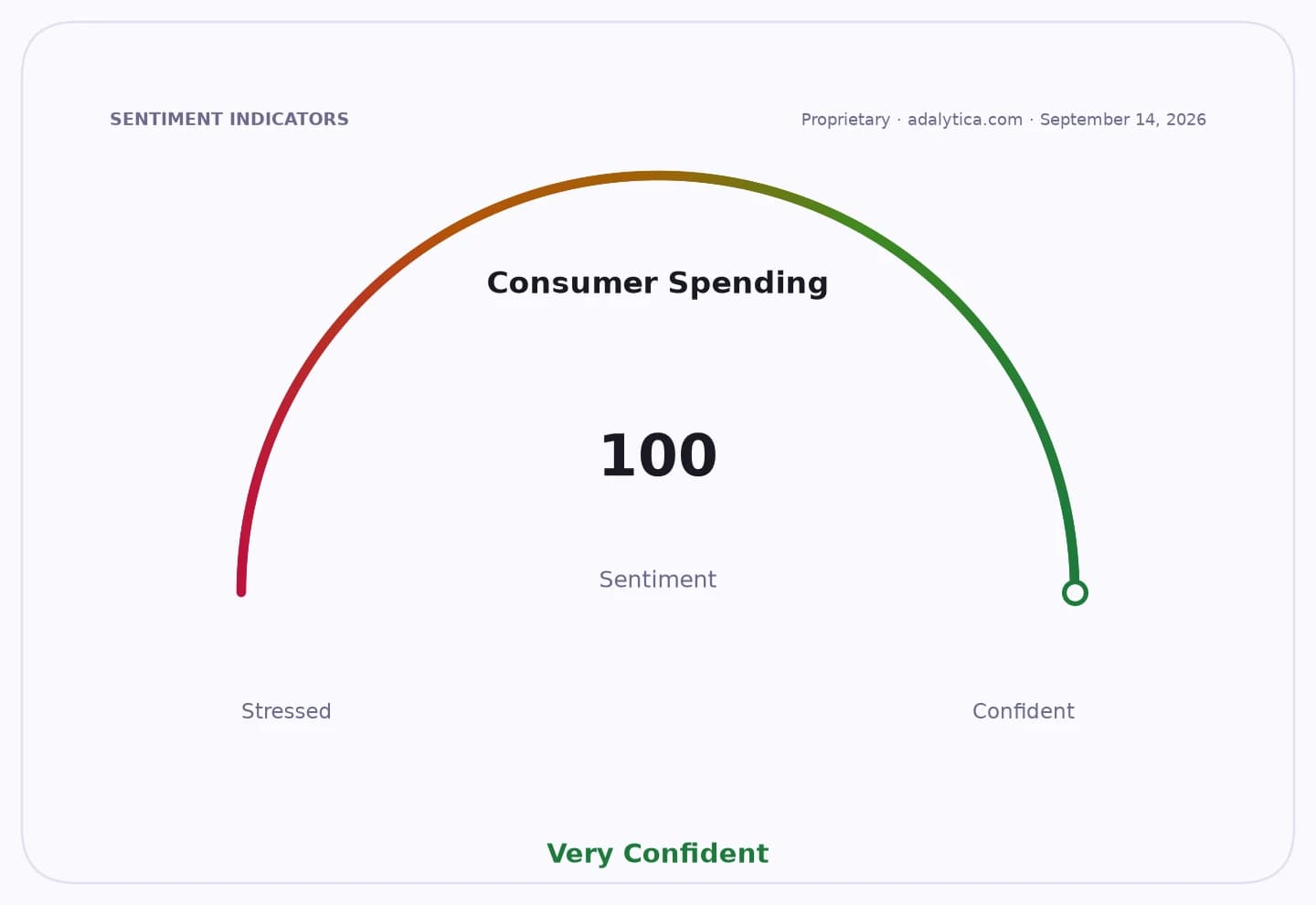
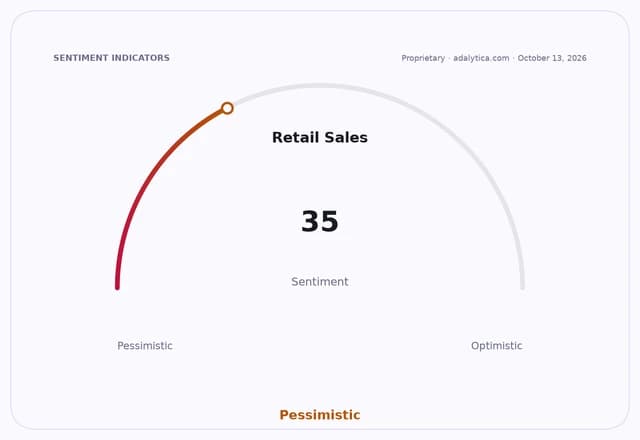
That divide matters economically because the latest signals from consumers point to a more selective spending environment rather than a broad collapse in demand. Adalytica’s consumer-spending gauge remains in neutral territory at 61, but its awareness reading fell to 57 from 61 a day earlier, while retail-sales sentiment dropped to 35, suggesting households are still buying but are increasingly discriminating about where and how they spend.
Sentiment IndicatorsⓘProprietary · adalytica.com · October 13, 2026
This is a snapshot — live sentiment, awareness and momentum for 130+ markets update continuously in the dashboard.Open AlphaPulse
Amazon is the clearest beneficiary of that shift. The stock closed at $258.58 on Oct. 13, above its 50-day moving average of $258.35 and well above its 200-day average of $242.42, while RSI readings at 62.3 and a positive MACD point to continued technical momentum. For investors, that reflects a company positioned to capture value-seeking consumers through e-commerce, broad assortment and logistics scale at a time when the data says shoppers are looking for convenience and cheaper options.
McDonald’s and Starbucks tell a different story. McDonald’s closed at $235.81, below its 50-day average of $253.60 and far under its 200-day average of $283.72, with an RSI of 43.9 and a negative MACD still showing pressure. Starbucks finished at $92, also below its 50-day average of $100.68 and just under its 200-day average of $98.19. Both names have been forced back onto the defensive as consumer feedback turns into evidence of weaker traffic, more price sensitivity and less tolerance for poor value perception.
The narrative is not that consumers have stopped spending. It is that they are voting more aggressively with their wallets. Tesco’s recent sales boost from online shopping captures the same pattern: households under pressure are moving toward channels and formats that feel cheaper, easier and more transparent. That favors retailers with strong digital platforms, deep assortment and the ability to use data to respond quickly to complaints about price, convenience or service.
For companies, the lesson is straightforward. Listening to customers is no longer a branding exercise; it is a margin and market-share imperative. For investors, the opportunity is to distinguish between names that can convert feedback into faster product, pricing and channel decisions and those that keep treating complaints as noise. The next leg of the trade should continue to favor companies that can prove they hear the customer before the customer leaves.
| Entity | Gains | Losses |
|---|---|---|
| Amazon | ▲Value-seeking online shoppers | ▼Brick-and-mortar discretionary rivals |
| McDonald’s | ▲Menu and pricing reset if successful | ▼Traffic-sensitive fast-food peers |
| Starbucks | ▲A sharper value proposition if executed | ▼Premium brands facing trade-down risk |
| Tesco | ▲Online grocery share | ▼Traditional retailers slower on digital shifts |