Vedanta’s aluminium arm is emerging as the strongest growth story inside the group, while Hindustan Zinc looks the most defensive and the oil-and-gas business is losing momentum, making the conglomerate’s four-way comparison increasingly a question of return profile rather than simple size.
Vedanta Aluminium Leads Group Growth Update
The clearest economic message from the latest business updates is that Vedanta is no longer a single-sector bet. Its aluminium, zinc, power and oil-and-gas businesses are moving in different directions, which matters for cash generation, capital allocation and ultimately how investors should value the parent and its listed units. The market will now weigh which asset can sustain margins, which can keep paying out cash and which may need more capital just to defend output.
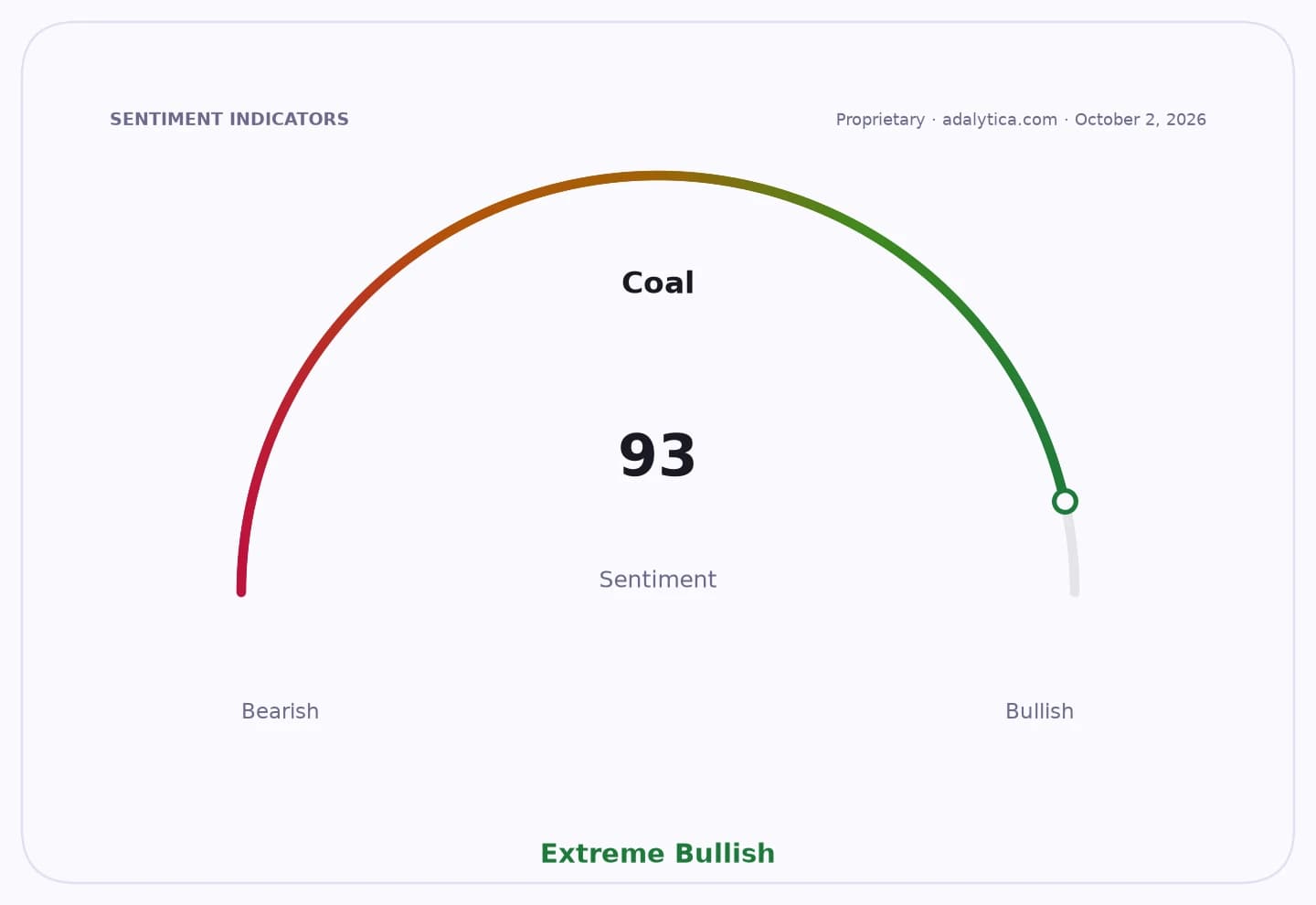
Sentiment IndicatorsⓘProprietary · adalytica.com · October 4, 2026
This is a snapshot — live sentiment, awareness and momentum for 130+ markets update continuously in the dashboard.Open AlphaPulse
Vedanta Aluminium is the standout. It reported record quarterly production of 649 kilotonnes, while alumina output rose 37% year on year to 895 kilotonnes and value-added products climbed 31% to 432 kilotonnes. The start of the second zone at BALCO’s 525 kt smelter potline and consent to operate for the Sijimali bauxite block reduce raw-material risk, improving the visibility of upstream integration. That matters because aluminium returns are highly sensitive to input security and scale, and a more integrated chain can help protect margins even if commodity prices remain volatile.
For investors, that makes aluminium the most plausible multi-year capital appreciation candidate among the four businesses, even if it remains exposed to swings in global aluminium pricing. The key bull case is that scale, feedstock security and value-added output can lift profitability through the cycle. The bear case is that the business still sits in a commodity market where pricing can turn quickly, and expansion needs disciplined execution to convert volume gains into higher equity returns.
Hindustan Zinc offers a different proposition: steady cash, dividend support and a more defensive earnings profile. In a group where some businesses are still in expansion or recovery mode, zinc is the clearest candidate for income-oriented investors who prefer predictable cash flow over operating leverage. That defensive quality is exactly why the stock tends to appeal when markets are uncertain or when commodity investors want less sensitivity to growth surprises.
Vedanta Power is the cyclical growth play. Electricity sales rose 26% year on year to a record 5,593 million units in the quarter, and first-half sales were up 32% to 10,817 million units. Improved performance at Meenakshi Energy and an 83% availability rate at Talwandi Sabo, above the 80% benchmark, show the business is benefiting from stronger plant utilisation. That is important in a country where power demand is expanding and government spending on energy infrastructure remains supportive. The upside case is that sustained demand and better availability can drive operating leverage; the downside is that power remains exposed to fuel costs, regulation and execution risk.
The weakest link was oil and gas. Daily gross operated production fell 19% to 72.2 thousand barrels of oil equivalent per day, hit by natural decline in Rajasthan and a steep drop in Cambay. Mature fields without offsetting reserve additions can erode returns quickly, especially if capital spending is required merely to slow decline rather than expand production. For investors, that raises the question of how much value should be assigned to a business whose output is falling and whose growth path is unclear.
The iron and steel-linked operations also looked under pressure, with Karnataka iron ore production down 49%, weighing on saleable ore. That reinforces the broader pattern: not every Vedanta business is firing, and the market is likely to reward the units with clearer volume growth, stronger cash conversion and better integration.
On balance, the latest numbers support a simple hierarchy. Aluminium looks strongest for long-term growth, Hindustan Zinc for income and resilience, and power for cyclical upside tied to India’s electricity demand. Oil and gas now looks the most challenged, with declining output making returns harder to defend. For investors, the real decision is not just which Vedanta share is cheapest, but which business offers the best mix of growth, cash yield and risk in a commodity cycle that is uneven across the group.
| Entity | Gains | Losses |
|---|---|---|
| Vedanta Aluminium | ▲Record output; stronger integration | ▼Commodity price volatility |
| Hindustan Zinc | ▲Dividend support; stable cash flow | ▼Lower growth potential |
| Vedanta Power | ▲Rising sales; better plant utilisation | ▼Fuel and execution risk |
| Vedanta Oil & Gas | ▲— | ▼Declining production; weaker returns |