India’s steelmakers could soon get a little more breathing room as state-owned SAIL and Bharat Coking Coal Limited move to develop a 4 million-tonne-a-year coking coal project in West Bengal that is designed to unlock about 79 million tonnes of extractable reserves in its first phase.
SAIL and BCCL to Develop West Bengal Coking Coal Project
That matters because coking coal is the lifeblood of conventional blast-furnace steelmaking, and India still relies heavily on imports to feed that chain. Any credible expansion in domestic supply can help reduce exposure to overseas price swings, shipping bottlenecks and currency risk — all of which ripple through steel costs and eventually into margins for producers and builders alike.
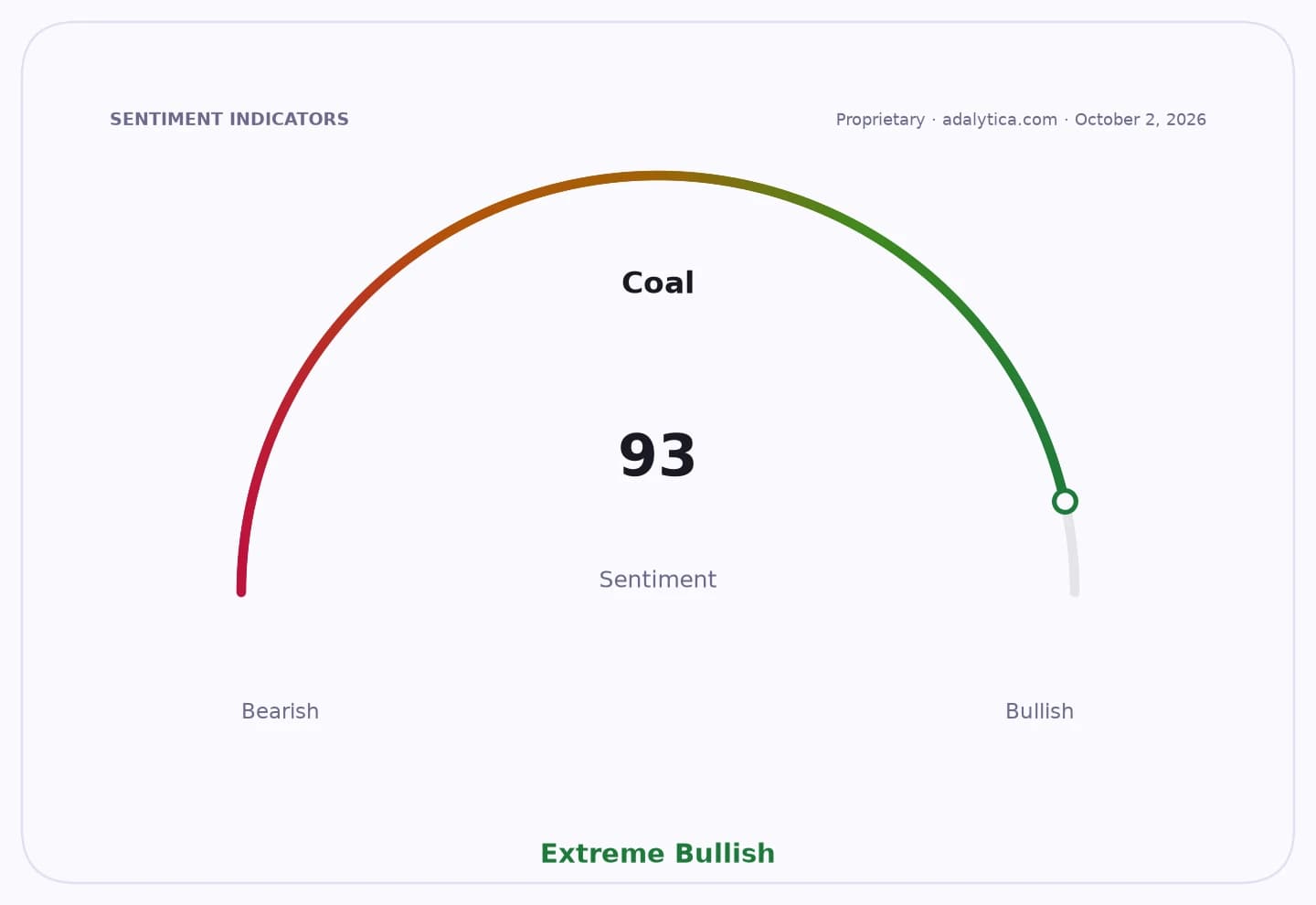
Sentiment IndicatorsⓘProprietary · adalytica.com · October 2, 2026
This is a snapshot — live sentiment, awareness and momentum for 130+ markets update continuously in the dashboard.Open AlphaPulse
The two companies signed a memorandum of understanding to jointly develop and operate adjoining blocks, SAIL’s Indikatta Ramnagore and BCCL’s East of Damagoria, also known as Kalyaneshwari. The plan uses an integrated mining arrangement: work will begin in the Kalyaneshwari block, with overburden dumped into Ramnagore, then the sequence will reverse in a later phase. That kind of coordination may sound technical, but for investors it is the real story — it is about lowering extraction friction, improving resource use and making a larger domestic coal base commercially workable.
From a macro perspective, India is still trying to balance industrial growth with energy security. Steel is central to that ambition, and coking coal remains one of the sector’s most sensitive inputs. A project of this size will not eliminate imports overnight, but it does fit a broader policy and corporate push to strengthen local raw-material chains. In a market where coal and steel prices can swing sharply, even incremental domestic supply can be valuable.
For SAIL, the partnership supports a long-term effort to secure feedstock for its steel operations. For BCCL, it extends the life and utility of coal assets that may be harder to monetize in a faster-moving energy transition. For investors, the key takeaway is that this is less about a near-term earnings jolt and more about reducing structural dependence on imported coking coal over time.
Coal-related sentiment has been hot, with Adalytica’s Coal Fear & Greed Index showing extreme greed, while WTI oil signals have also stayed firm. But those gauges do not change the core investment thesis here: domestic resource security remains a durable theme in India’s heavy industry. If the project advances cleanly through approvals and execution, it could become another small but important step toward cheaper, more resilient steel production.
For long-term investors, the development is worth watching as part of a bigger story — India’s effort to build a more self-sufficient industrial base. That kind of advantage tends to compound slowly, but it can matter for years.
| Entity | Gains | Losses |
|---|---|---|
| SAIL | ▲More secure coal supply | ▼Import dependence |
| BCCL | ▲Better asset utilization | ▼Standalone mine economics |
| Indian steelmakers | ▲Lower raw-material risk | ▼Overseas coking coal suppliers |
| Domestic coal value chain | ▲Demand support | ▼Global exporters |