Vietnam’s domestic coffee prices slipped again over the weekend even as global coffee markets showed early signs of stabilizing, keeping pressure on farmers and exporters in the world’s largest robusta-producing region.
Vietnam coffee prices fall as global markets stabilize
In the Central Highlands, benchmark prices fell about 400 dong a kilogram from the previous week, with Lâm Đồng quoted at 94,200-95,000 dong, while Đắk Lắk and Gia Lai both eased to 94,700 dong a kilogram. The decline followed a brief rebound late in the week, underscoring how fragile the recovery remains.
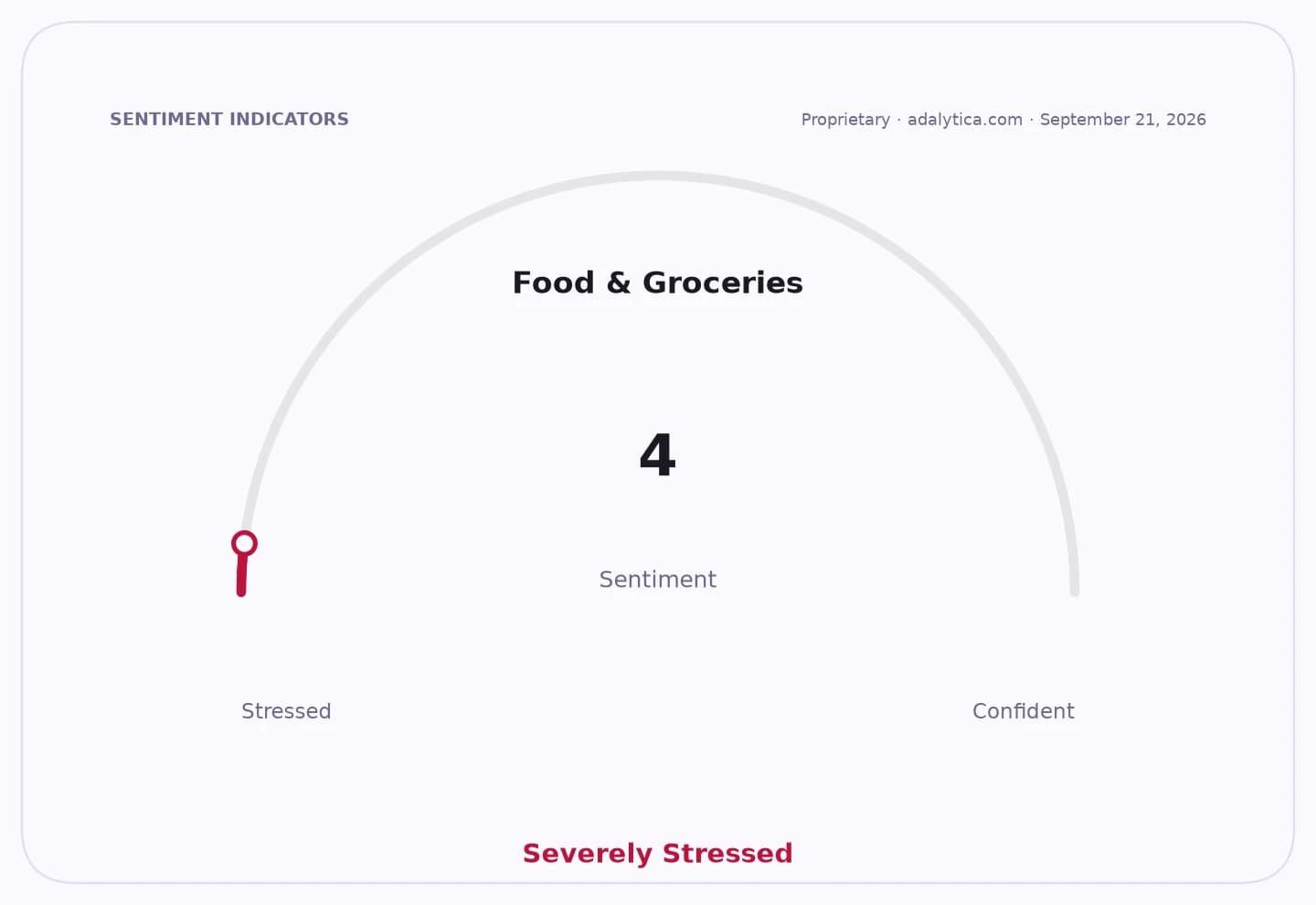
Sentiment IndicatorsⓘProprietary · adalytica.com · September 6, 2026
This is a snapshot — live sentiment, awareness and momentum for 130+ markets update continuously in the dashboard.Open AlphaPulse
The move matters because Vietnam is a key supplier to the global robusta trade, and weak local prices can squeeze export earnings even when shipment volumes hold up. Export turnover has already been hit by softer pricing, forcing traders and processors to rely more heavily on inventories, hedging and higher-value contracts to protect margins.
The broader backdrop is mixed rather than outright bearish. World coffee prices have shown signs of stabilization, but domestic market weakness suggests buyers are still pressuring suppliers and that farmer selling remains sensitive to any pullback in futures.
For investors, the key issue is margin pressure across the coffee value chain. Traders, roasters and packaged-food companies tied to Vietnamese supply may see near-term relief in raw bean costs, but persistent volatility complicates procurement and raises the value of traceability, deep processing and compliance with European import rules.
Vietnam’s coffee sector now faces a familiar test: whether steadier global prices can translate into firmer local buying, or whether domestic oversupply and cautious export demand keep producers under strain. The next clues will come from export data, harvest progress and whether the recent stabilization in world prices extends into sustained buying.
| Entity | Gains | Losses |
|---|---|---|
| Coffee buyers/roasters | ▲Lower input costs | ▼Less inventory certainty |
| Vietnamese farmers | ▲— | ▼Lower farmgate prices |
| Exporters/traders | ▲Potentially cheaper sourcing | ▼Squeezed export margins |
| Global coffee market | ▲Some price stabilization | ▼Limited upside from Vietnam weakness |