Vietnam’s gold market is stuck in a rare trap: prices have eased from their peak, but retail buyers are still losing money the moment they enter.
Vietnam Gold Spreads Keep Retail Buyers Out
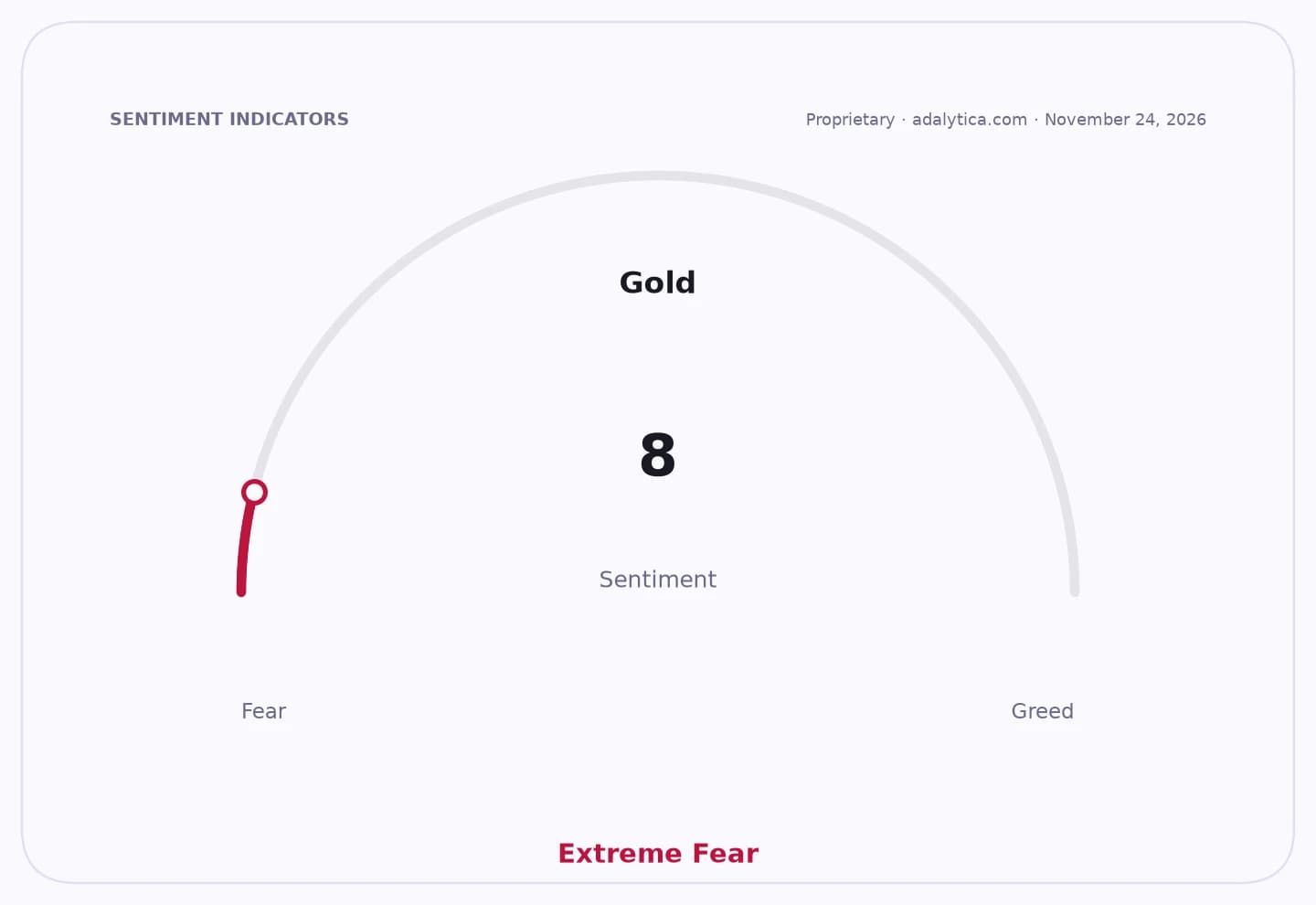
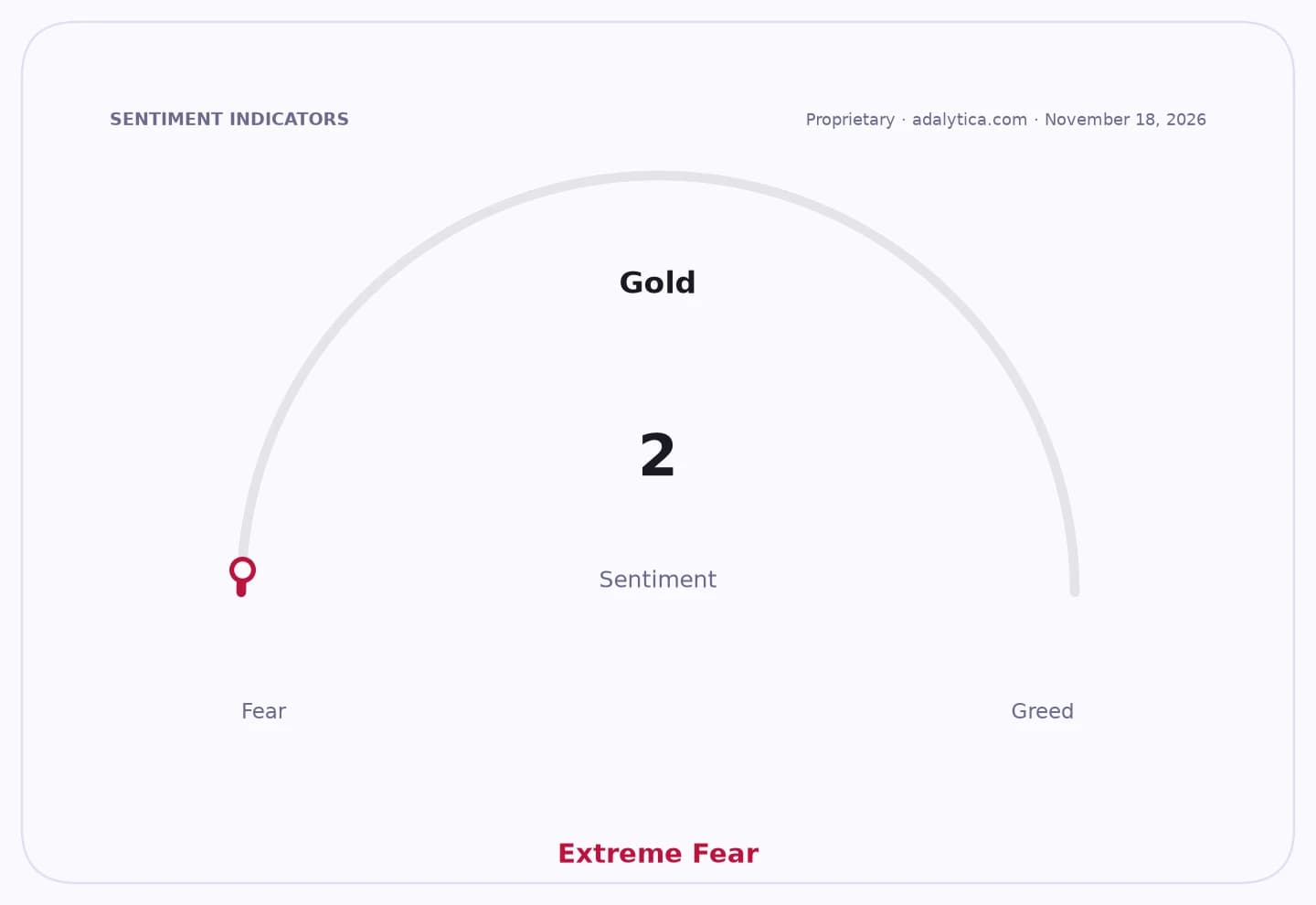
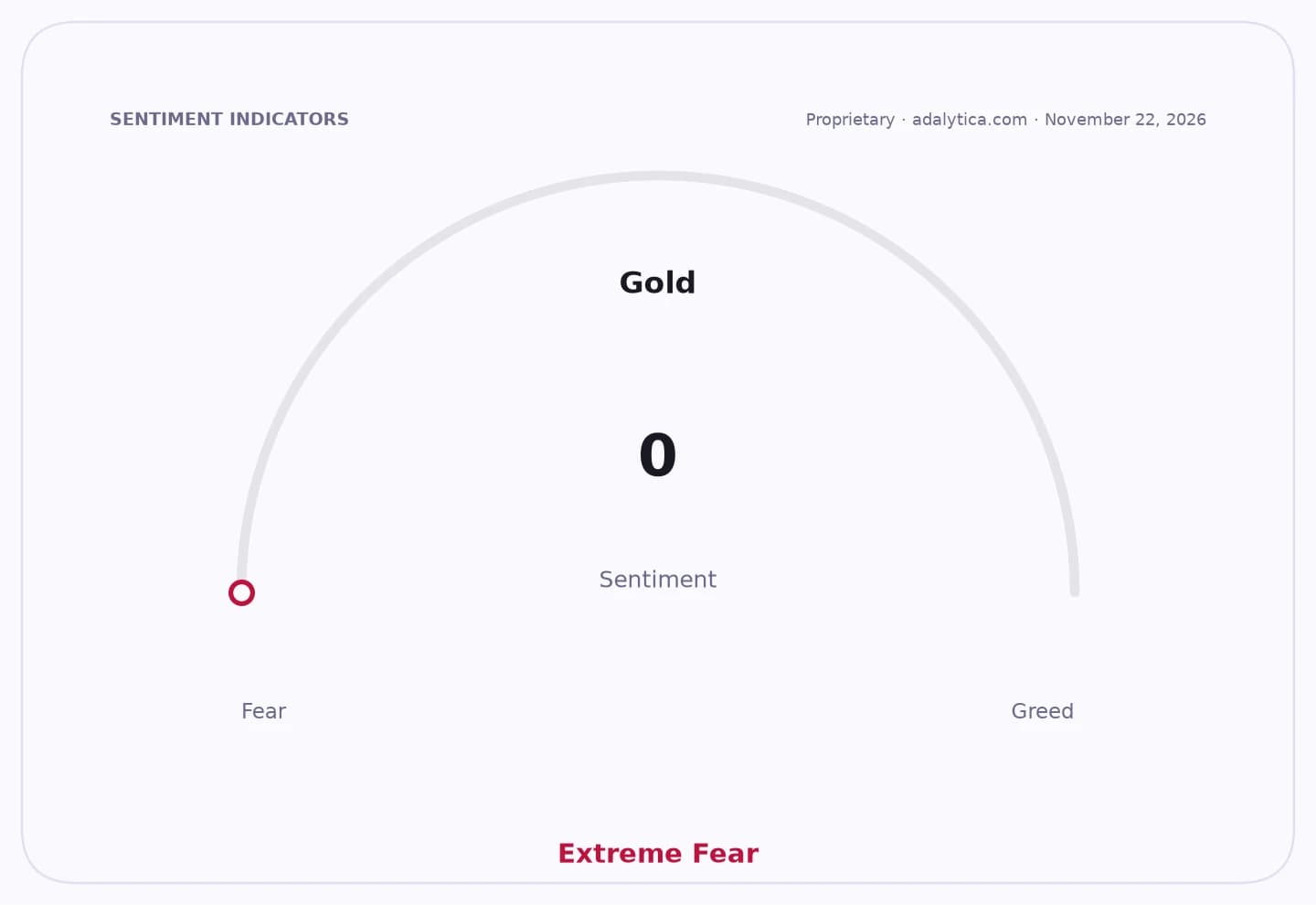
Gold
The problem is not simply that gold remains expensive. It is that local dealers have widened the gap between buying and selling prices to as much as 5 million to 5.5 million dong per tael on SJC bars and 4 million to 5 million dong on plain rings, making even a sharp intraday rebound insufficient to cover transaction costs. For households treating bullion as a short-term trade, that means a fresh purchase can start with a 3.7% to 4% loss before the market has moved at all.
Sentiment Indicators
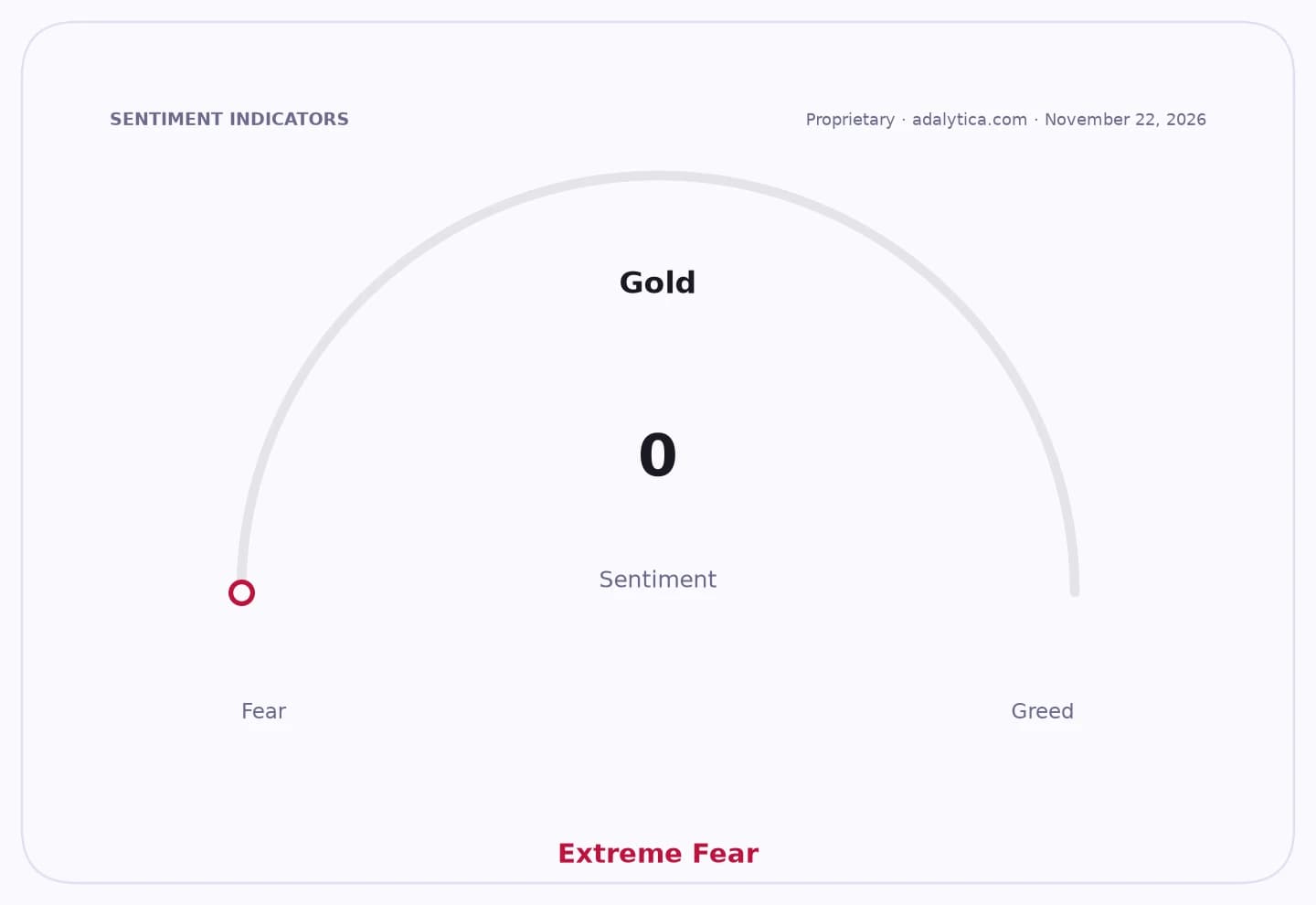
That has helped freeze demand just as gold has fallen back from its highs. Traders and households that chased the rally are now reluctant to average down after suffering steep mark-to-market losses, while would-be bargain hunters are waiting for clearer signs that the decline has ended. The result is a market that looks cheaper on the screen but remains psychologically and financially out of reach for many Vietnamese savers.
The economics are straightforward. A 5.5 million dong spread means a buyer needs gold to rise by that amount just to break even. Even if prices jump 3 million to 4 million dong in a day, the holder can still be underwater. Add the fact that domestic prices are still about 22 million to 23 million dong per tael above the world market, and investors face what local analysts describe as a double risk: exposure to a global gold downturn and a persistent home-market premium that can erode returns even if international prices stabilize.
That premium has been reinforced by a volatile global backdrop. International gold prices posted their steepest weekly fall in eight months, slipping to about $3,540 an ounce after touching $3,513.5, the lowest in 14 months. The drop came as Federal Reserve officials struck a more hawkish tone on rates and as a selloff in technology shares forced some funds to liquidate profitable gold positions to meet margin calls. Gold has since lost nearly 15% in a month, underscoring how quickly a crowded trade can unwind when yields and the dollar firm.
For investors, the message is that gold is no longer behaving like an easy defensive asset. Its appeal as a store of value remains intact — central banks are still buying, with demand from China, India and Brazil helping support the market — but the trade has become much less forgiving for short-term speculators. In Vietnam, that is showing up in thin foot traffic at bullion shops, where dealers say business is unusually quiet even in the year-end season, normally one of the busiest periods for jewelry and bullion sales.
The weakness in local demand is also visible in broader consumption data. The World Gold Council said Vietnamese jewelry demand fell 39% in the third quarter from a year earlier, while bar and coin demand dropped 23%. That suggests the pullback is not just a function of price, but of damaged sentiment after the diamond market turmoil and repeated losses among retail buyers.
For now, the key catalyst is whether the global slide stabilizes around the psychologically important $3,500-an-ounce level and whether domestic dealers narrow their spreads as activity improves into the holiday and Lunar New Year season. Until then, the market will remain dominated by sellers protecting margins and buyers protecting capital — a standoff that keeps gold on the watchlist, but out of reach.
| Entity | Gains | Losses |
|---|---|---|
| Gold dealers | ▲Wider trading margins | ▼Lower transaction volume |
| Retail buyers | ▲Lower headline prices | ▼Immediate paper losses |
| Existing gold holders | ▲Potential rebound value | ▼Mark-to-market declines |
| Global central bank buyers | ▲Better accumulation levels | ▼None from local spread dynamics |