Vietnam’s National Assembly is moving to tighten its tax code around abandoned and slow-to-use land, but the real market question is whether the proposed 0.2% levy will be strong enough to force idle assets back into productive use.
Vietnam land tax debate targets idle land use
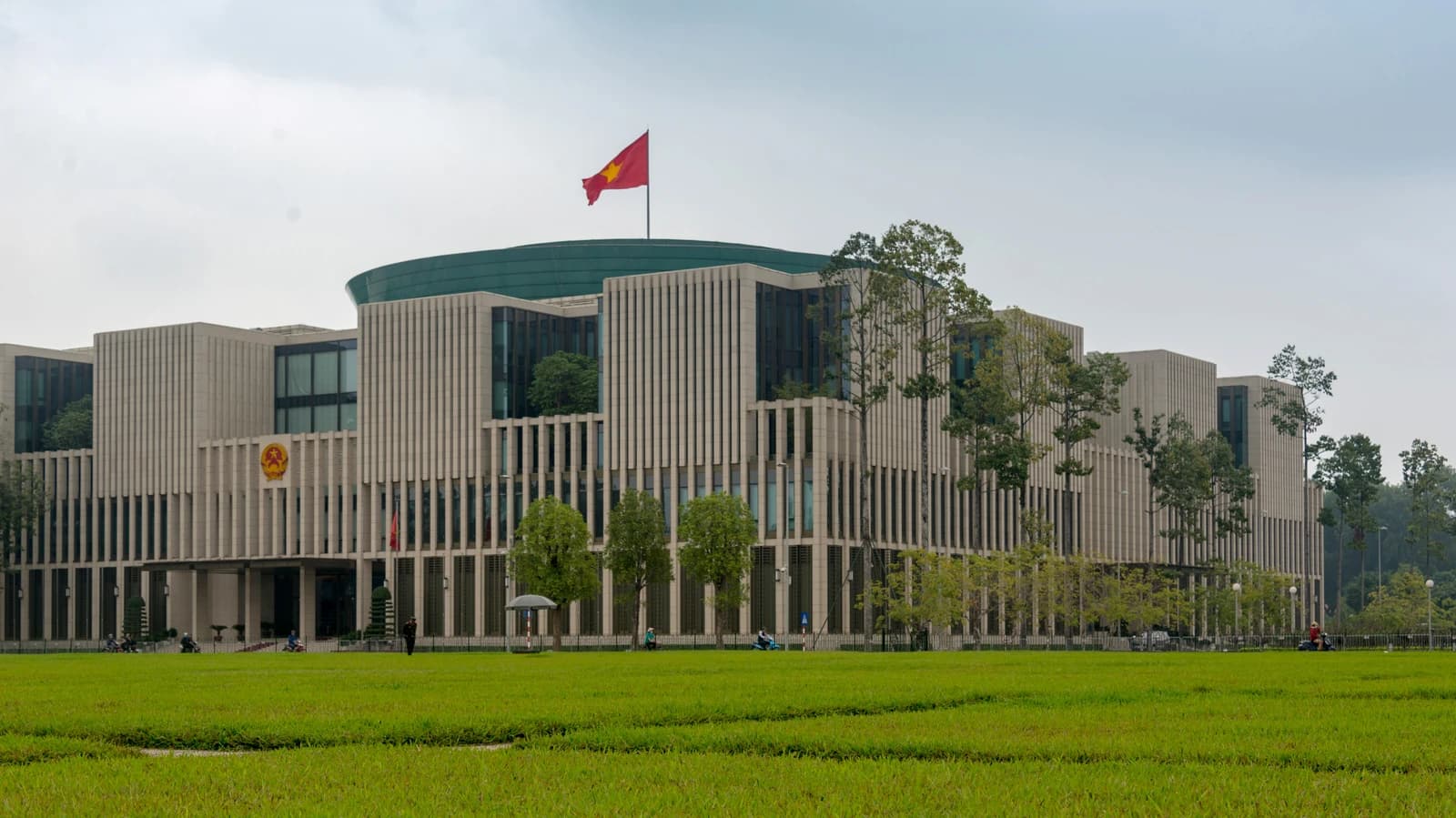
Lawmakers on Nov. 6 debated amendments to the laws on corporate income tax, non-agricultural land use tax and personal income tax, with the land tax proposal drawing the most attention. The government wants to apply a 0.2% rate to land left unused, or put into use too slowly, as part of a broader effort to curb speculation and land hoarding. That matters because land in Vietnam is a critical input for housing, industrial parks, logistics and agriculture — and idle plots tie up capital in a country trying to accelerate investment and raise productivity.
The debate now centers less on the principle than on execution. Deputies said the draft must clearly define what counts as “abandoned” land, how long a parcel can sit idle before the tax applies, and who decides. Several lawmakers warned that a blanket rule could mistakenly capture land being developed in stages, or land delayed by natural disasters, climate change or administrative bottlenecks. That distinction matters economically: a poorly written tax could punish legitimate projects, while a well-targeted one could push speculative landholders to build, sell or develop faster.
For investors, the policy has two competing implications. On one hand, a stricter regime could improve land turnover, support developers with genuine project pipelines and reduce the value of sitting on undeveloped sites. On the other, a vague enforcement framework raises the risk of legal disputes, higher compliance costs and delayed approvals — exactly the kind of uncertainty that weighs on property, infrastructure and industrial real estate valuations. The market will be watching whether lawmakers narrow the tax to only the portion of land that is actually idle, as some deputies proposed, rather than taxing entire projects that are only partially complete.
The investment takeaway is straightforward: Vietnam is trying to turn land from a speculative store of value into a more productive asset, but the law will only matter if the final wording is precise enough to enforce and tough enough to change behavior. A low-rate, loosely defined tax will be mostly symbolic; a sharper version could become a real catalyst for developers, industrial land users and the broader reallocation of capital across the economy.
| Entity | Gains | Losses |
|---|---|---|
| Productive developers | ▲Faster land turnover | ▼Idle land speculation |
| Land speculators | ▲Higher carrying costs | ▼Easy asset hoarding |
| Industrial and housing projects | ▲Better land access | ▼Project delays and uncertainty |
| Government revenue | ▲Higher compliance receipts | ▼Political pushback on enforcement |