Vietnam is moving toward a 7.8% increase in the minimum wage from Jan. 1, 2027, a policy shift that would lift the statutory floor for millions of workers and modestly outpace estimated living costs through the end of that year.
Vietnam minimum wage to rise 7.8% in 2027

The Labor Ministry said it will recommend the government issue a decree adopting the National Wage Council’s proposal after the panel agreed on the increase at a July 16 meeting. Under the draft, monthly minimum pay would rise by 310,000-390,000 dong, or 7.8% on average, while hourly minimums would climb to 27,400 dong in Region I from 25,500 dong under the current 2026 schedule.
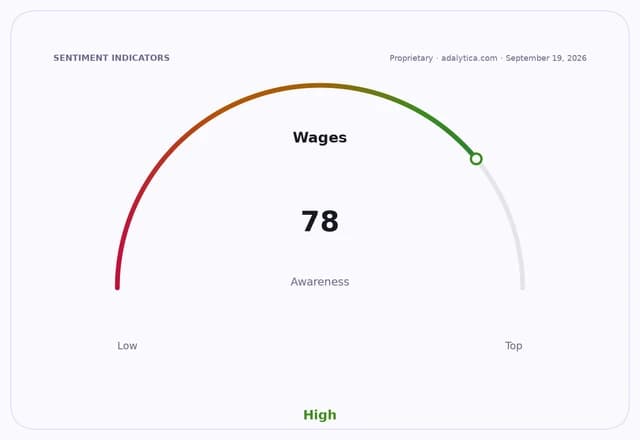
Sentiment IndicatorsⓘProprietary · adalytica.com · September 19, 2026
This is a snapshot — live sentiment, awareness and momentum for 130+ markets update continuously in the dashboard.Open AlphaPulse

That matters because the minimum wage is not just a labor policy marker in Vietnam’s manufacturing-heavy economy; it is also a benchmark for household spending power, factory labor costs and broader wage negotiations. Authorities said the proposed adjustment would be about 3.7% above the minimum living standard of workers by end-2027, suggesting the government is trying to preserve some cushion for low-income households without adding too much pressure on employers.
For workers, the move would offer a real but limited gain in living standards after a period of higher prices for essentials. The ministry said the wage floor is designed to protect vulnerable workers and serve as a basis for bargaining, while also factoring in consumer prices, economic growth, labor supply and demand, unemployment, productivity and companies’ ability to pay.
The draft sets monthly wages at 5.7 million dong in Region I, 5.08 million in Region II, 4.45 million in Region III and 4.04 million in Region IV. Those levels would be the new reference point from 2027 if the government accepts the recommendation.
Investors will watch the proposal for its impact on margins in labor-intensive sectors, especially exporters, domestic retailers and consumer-facing companies that rely on large workforces. Higher wages can support consumption, but they also raise payroll costs and may feed into pricing decisions, especially if inflation or hiring tightness persists.
The next catalyst is the government decree. If approved as drafted, the increase would reinforce Vietnam’s effort to balance social stability and competitiveness, with the final setting likely to shape wage expectations across factories, services and small businesses in 2027.
| Entity | Gains | Losses |
|---|---|---|
| Low-wage workers | ▲Higher take-home pay | ▼Limited relief if prices keep rising |
| Domestic consumers | ▲Better spending power | ▼Possible pass-through from higher labor costs |
| Manufacturers and exporters | ▲Clearer wage framework | ▼Higher payroll bills and margin pressure |
| Government | ▲Social stability and wage-policy credibility | ▼Risk of criticism from both labor and business |