Walmart looks like the better long-term dividend stock, even if Costco’s occasional special payouts are the more eye-catching headline.
Walmart Raises Fiscal 2027 Dividend to $0.99

That’s the real choice investors face: steady compounding from a retailer that has raised its regular dividend for decades, or a warehouse giant that keeps showering shareholders with one-time bonuses when cash piles up. For income investors, the answer depends on whether you want predictability or surprise. For most buy-and-hold portfolios, Walmart’s consistency wins.
Walmart just did what Dividend Kings are supposed to do. The company approved a fiscal 2027 annual dividend of $0.99 a share, up from $0.94 for fiscal 2026, with quarterly payments set at $0.2475. That may not look dramatic next to Costco’s special dividends, but over years and decades, dependable raises matter more than occasional fireworks. They tell you management is confident enough in cash generation to keep compounding shareholder returns through different consumer cycles.
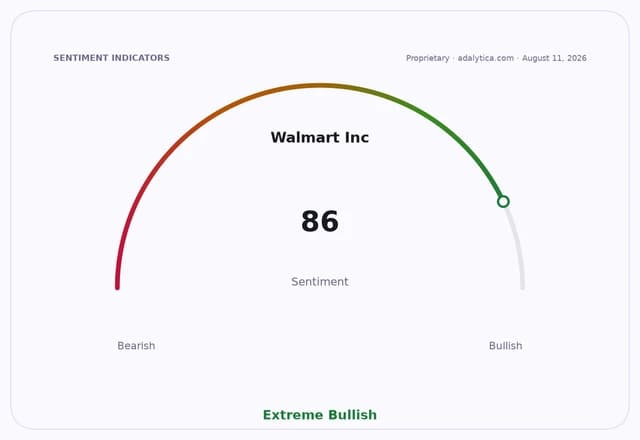
The business backdrop helps explain why. Walmart continues to benefit from its scale, grocery dominance and pricing power at a time when consumers are cautious. Adalytica’s consumer spending sentiment is sitting in “Extreme Fear,” while Walmart’s own earnings sentiment is flashing “Extreme Greed.” That combination usually favors the discounter with the broadest household reach. When shoppers trade down and look for value, Walmart tends to gain traffic, basket size and relevance.
The stock has reflected that resilience. Walmart shares recently climbed back above both their 50-day and 200-day moving averages, while the relative strength index moved into neutral-to-firm territory. That’s not a guarantee of more upside, but it does show investors are again willing to pay up for a defensive growth story. Costco, by contrast, has looked even stronger on price, with shares far above both major moving averages and momentum indicators still elevated. The market is saying both companies deserve premium valuations. The question is which premium comes with the better income profile.
Costco’s case is simple and compelling. Its membership model throws off enormous free cash flow, and when management chooses to return excess capital, the special dividend can be memorable. That makes Costco a wonderful wealth compounder for investors focused on total return. But special dividends are inherently irregular. You cannot build a retirement plan around them, and you should never assume they will show up on schedule.
Walmart’s advantage is that it does not need to be exciting to work. It just needs to keep selling essentials, defending market share and slowly increasing the payout every year. That is why the stock is more useful for investors who want a core holding they can keep for five, 10 or 20 years. In a diversified portfolio of roughly 50 stocks, a dependable compounder like Walmart can anchor the defensive side while you leave the more volatile payout stories to smaller positions.
There are trade-offs. Walmart’s dividend yield is typically modest, and Costco can deliver richer bursts when it decides to share excess cash. Costco also has a stronger history of rewarding patient owners with a superior premium multiple. But at today’s levels, investors should think less about the next special dividend and more about the next decade of cash flow. On that score, Walmart’s regular raises are easier to underwrite.
If you want a stock to own, not just trade around dividend headlines, Walmart has the cleaner case. Costco remains a fantastic company and a worthy long-term holding, but its special dividends are a bonus, not a plan. For investors building income that can last, Walmart is the steadier choice and arguably the smarter one to add to a watchlist or hold for the long term.
| Entity | Gains | Losses |
|---|---|---|
| Walmart investors | ▲steadier dividend growth | ▼less headline excitement |
| Costco investors | ▲occasional special payouts | ▼unpredictable income stream |
| Income-focused buyers | ▲durable cash returns | ▼one-time dividend dependence |
| Yield chasers | ▲Walmart’s consistency | ▼Costco timing risk |