Wonder’s push into AI-created sauces and drone delivery is more than a menu gimmick — it is a bet that software, automation and logistics can compress the cost of serving food and expand the economics of restaurant brands. For investors, that matters because the real opportunity is not one new dish, but a new operating model: a vertically integrated, tech-enabled food platform that can scale faster, deliver with less labor and defend margins in a brutal consumer environment.
Wonder Signals AI-Driven Food Logistics Shift
The market tends to discount food delivery as a low-moat, promo-driven business. That misses the point. If Wonder can use AI to iterate products faster and drones to lower the last-mile burden, it could create a higher-throughput system where the kitchen behaves more like a cloud-based production node than a traditional restaurant. That would be a meaningful shift in unit economics, especially if labor remains scarce and expensive while consumers continue demanding convenience and customization.
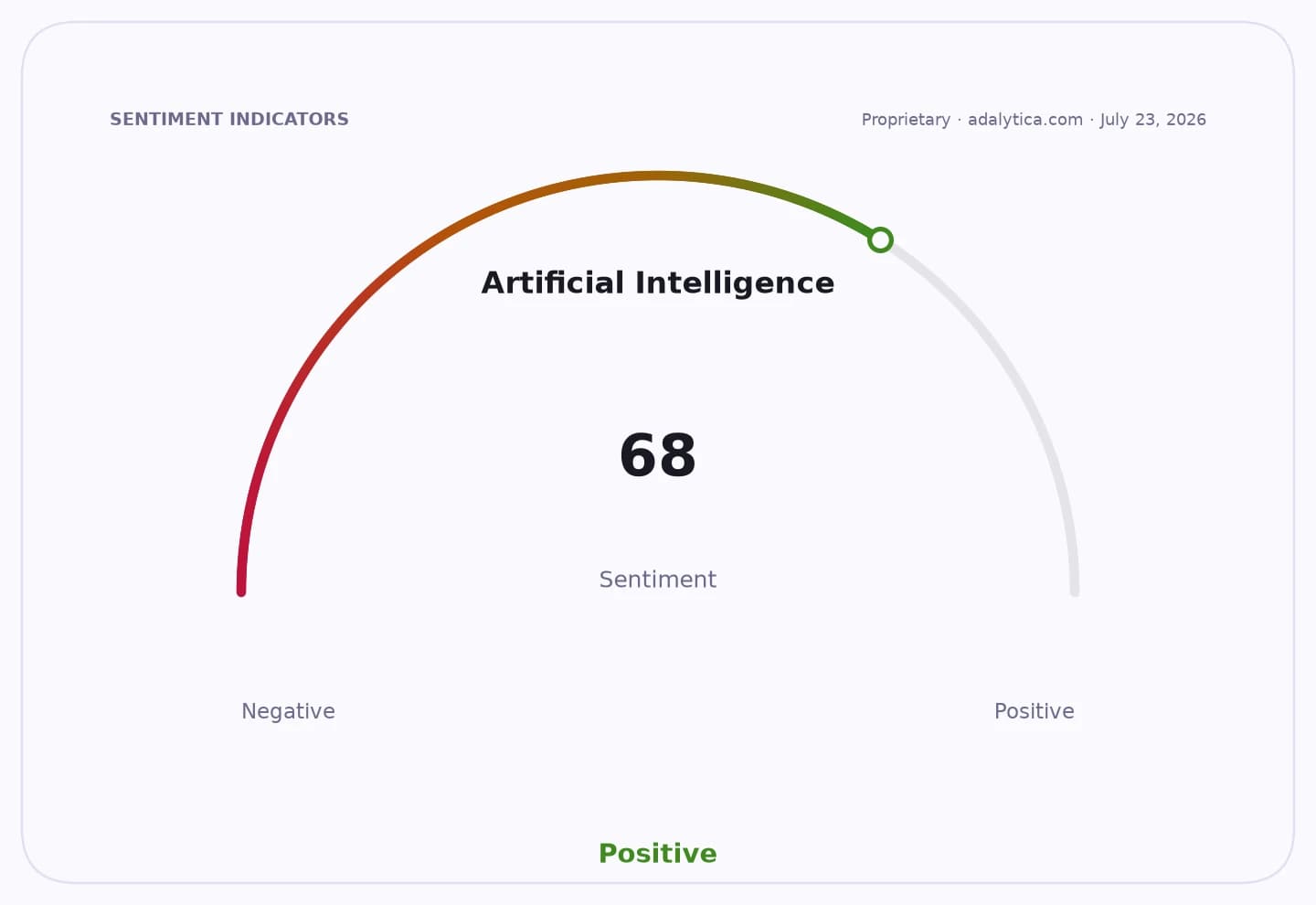
Sentiment IndicatorsⓘProprietary · adalytica.com · July 23, 2026
This is a snapshot — live sentiment, awareness and momentum for 130+ markets update continuously in the dashboard.Open AlphaPulse
The investment implication is broader than Wonder itself. A credible drone-delivery rollout would pull demand through the entire autonomy stack — flight control software, sensors, mapping, edge computing, battery systems and airspace management — while AI-generated product development points to a new layer of “recipe intelligence” that can shorten R&D cycles and improve personalization. The market underestimates how quickly these second-order winners can emerge when a consumer brand proves the economics work.
That is why the story resonates beyond restaurants. If the model gains traction, it becomes a template for other high-frequency, low-margin categories where automation can lift gross profit per order. It also gives investors a cleaner way to play the AI infrastructure theme outside the obvious hyperscalers: the picks-and-shovels names that enable autonomy, not just the apps that advertise it.
The stock tape already shows how violently capital can reprice on anything tied to AI and automation. Risk appetite around the theme remains elevated even as broader market signals cool, and that makes early positioning in enabling technologies especially important. The market is still searching for the next durable use case after the first wave of generative AI; food logistics may sound mundane, but that is exactly why it can be overlooked.
I believe the real takeaway is simple: Wonder is trying to turn convenience into a scalable infrastructure business, and that could be far more valuable than a conventional restaurant chain. If you want exposure to that shift, look past the headlines and toward the companies supplying the autonomy, cloud and logistics rails that make AI-driven commerce possible. The asymmetric opportunity is in the infrastructure, not the sauce.
| Entity | Gains | Losses |
|---|---|---|
| Wonder | ▲Faster scaling, better margins | ▼Execution risk |
| Drone/autonomy suppliers | ▲More demand for hardware/software | ▼Slow adopters |
| AI infrastructure firms | ▲New enterprise use cases | ▼Commodity tech vendors |
| Traditional restaurants | ▲— | ▼Competitive pressure, labor costs |