Yum Brands is taking on debt to buy Simple Mills for about $800 million to $900 million, a wager that packaged foods with faster growth can help offset the slower grind of its legacy restaurant brands.
Yum Brands to Buy Simple Mills for $800M-$900M
The deal matters because it shows how consumer companies are trying to buy growth rather than build it. Simple Mills, a better-for-you packaged food maker, has been growing at mid-teens rates and is reportedly valued at about 4 times revenue, a rich price that still looks cheaper than trying to generate the same growth organically in a cautious consumer environment.
Sentiment IndicatorsⓘProprietary · adalytica.com · September 4, 2026
This is a snapshot — live sentiment, awareness and momentum for 130+ markets update continuously in the dashboard.Open AlphaPulse
For Yum, the acquisition comes as the company continues to reshape its portfolio and free up capital. The move follows the recent sale of its global Pizza Hut business outside China, underscoring a broader shift toward asset recycling and a cleaner balance sheet even as management uses leverage to add a higher-growth consumer brand.
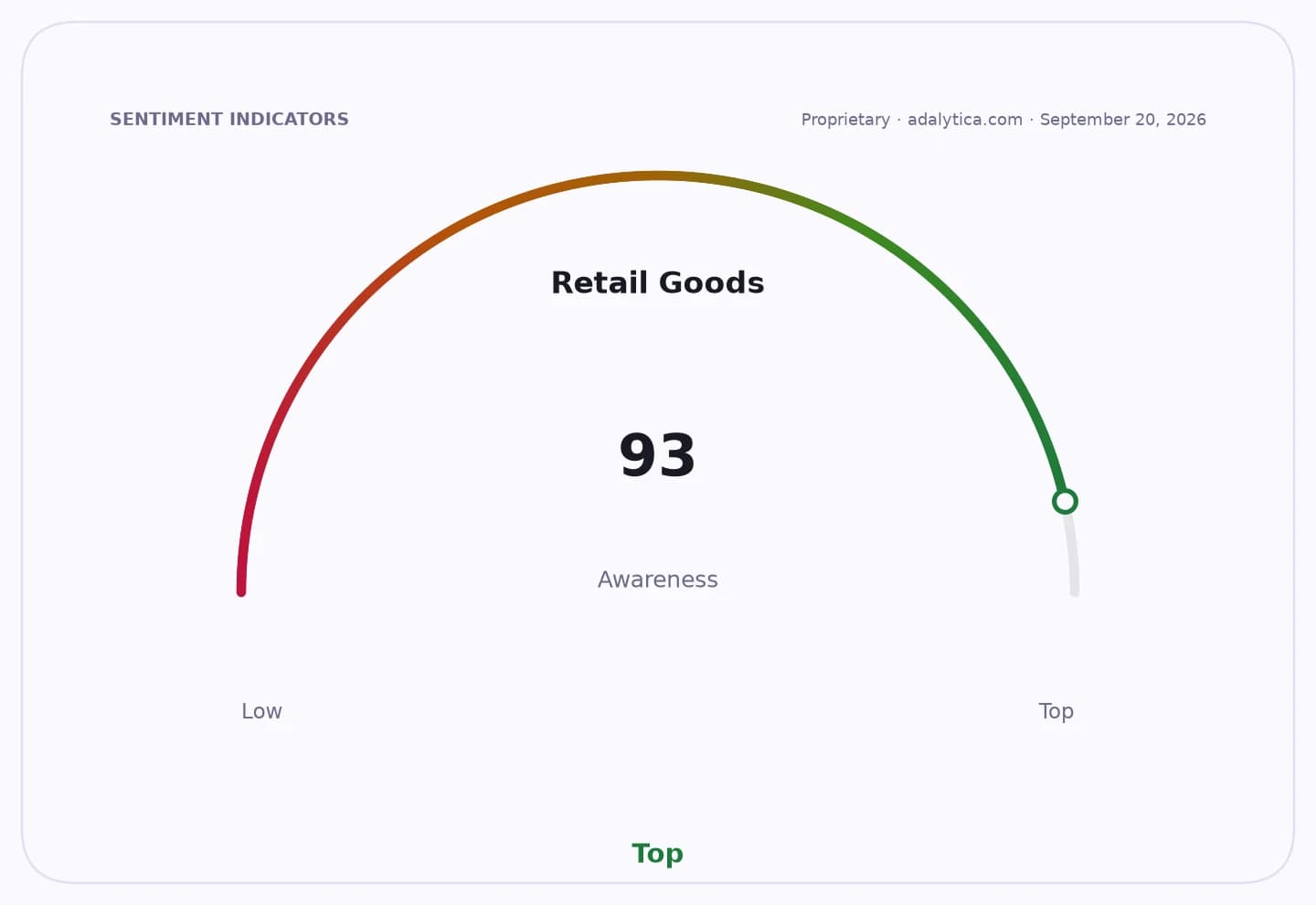
Investors will read the transaction as a test of whether borrowing to buy a premium-growth food company can improve the earnings mix without overextending the balance sheet. Debt-funded deals tend to draw closer scrutiny when consumer sentiment is weak, and Adalytica’s consumer spending gauge shows extreme fear, while retail-goods spending sentiment also sits in extreme fear territory, suggesting a wary backdrop for discretionary demand.
The stock has also been trading well above its 50-day moving average, with the shares recently around $151, leaving the market to decide whether the acquisition can justify a higher multiple or whether the company is paying peak prices for growth. With the deal still awaiting integration and any financing details to be fully digested, the next catalyst will be whether Yum can show that Simple Mills adds margin-accretive growth without dragging on leverage or returns.
| Entity | Gains | Losses |
|---|---|---|
| Yum Brands | ▲Faster-growth food exposure | ▼Higher leverage |
| Simple Mills | ▲Premium exit valuation | ▼Independence |
| Existing Yum shareholders | ▲Portfolio simplification | ▼Balance-sheet risk |
| Debt investors | ▲New lending opportunity | ▼Greater credit exposure |