Travel demand is still growing, but the mix of that demand is shifting toward experiences, sustainability and shorter-lead, higher-intent bookings — a trend that is likely to reward online platforms with broad inventory and penalize operators that rely on old mass-tourism patterns.
Active tourism favors flexible travel platforms
That matters because tourism is a major source of jobs, services revenue and local tax receipts, and the next leg of growth is increasingly being defined less by sheer volumes than by how travelers choose to spend. The launch of the Marche Active Tourism application in Italy underscores the direction of travel: regional authorities are pushing digital tools to capture walkers, cyclists and other “slow tourism” visitors who tend to spend locally and travel outside traditional peak patterns.
The economic case is straightforward. Specialized tourism can extend the season, spread demand across smaller businesses and reduce dependence on crowded urban and beach destinations. For municipalities and regional economies, that can mean steadier revenue and better use of infrastructure. For the sector, it signals a broader move toward product differentiation as travelers put more value on authenticity, wellness and lower-impact itineraries.
That shift lines up with what the market has been rewarding. Airbnb shares have climbed to about $145.98 from $111.54 in late November, while Expedia has recovered to $268.77 from a February trough near $187.70. Both stocks remain above their 200-day moving averages, a sign that investors still expect travel demand to hold up even as the market becomes more selective about which business models can convert demand into margin.
Airbnb appears better positioned if the next phase of travel is more fragmented and experience-driven. Its model is built around alternative accommodations and flexible stays, which fit domestic trips, family travel and longer, more personalized itineraries. Expedia, by contrast, has a broader package of lodging, air, car rentals and activities, giving it leverage to capture spend across multiple booking categories if tourism growth stays intact. The bear case for both is that consumers can still trade down quickly if macro conditions worsen, especially after a strong run in travel stocks.
Technical signals show that the rally has not been one-way. Airbnb’s 50-day moving average sits below its latest price, but the stock has pulled back from highs near 148 and its RSI has eased to around neutral levels after reaching overbought territory. Expedia has also cooled from earlier peaks, with momentum indicators flattening even as the stock stays well above both its 50-day and 200-day averages. In other words, the market still likes the sector, but it is no longer paying indiscriminately for growth.
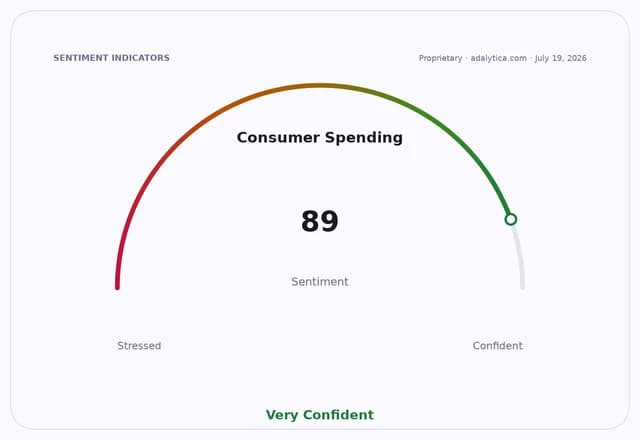
Consumer sentiment remains supportive for travel, with Adalytica’s Consumer Spending Sentiment sitting at 89, or “Extreme Greed,” even as broader S&P 500 trade signals show fear. That split is important: travelers may continue spending on leisure and experiences even if equity investors turn defensive. But it also raises the risk that tourism demand remains resilient while valuation multiples compress if markets reprice risk.
The bigger story is that tourism is becoming less about destination scale and more about destination quality. Regions that can package nature, culture, wellness and digital access are likely to gain share, while platforms that can aggregate that demand efficiently should keep winning investor attention. The next catalyst will be whether this shift translates into stronger booking growth, better pricing power and steadier margins through the second half of the year.
| Entity | Gains | Losses |
|---|---|---|
| Active-tourism regions | ▲Longer stays, local spend | ▼Mass-tourism dependence |
| Airbnb | ▲Flexible, experience-led demand | ▼Traditional hotel-heavy trips |
| Expedia | ▲Cross-sell across travel categories | ▼Narrow destination-focused operators |
| Local hotels/restaurants | ▲Off-peak traffic | ▼Crowd-dependent resorts |