Artificial intelligence is shifting from a back-office experiment to a core operating tool for oil and gas producers, with ADNOC’s new OpenAI partnership emerging as the clearest signal yet that the industry intends to automate more of its day-to-day decision-making.
ADNOC OpenAI partnership brings AI to oil operations
The strategic significance is less about a single software deployment than about where the next wave of efficiency gains may come from. Oil companies have already squeezed many of the easiest cost cuts out of drilling, completions and procurement. The next productivity frontier is in operations: maintenance planning, emissions monitoring, equipment reliability and plant optimization. If AI agents can coordinate those tasks across large asset networks, producers could reduce downtime, improve margins and extract more output from existing infrastructure without proportionate increases in headcount.
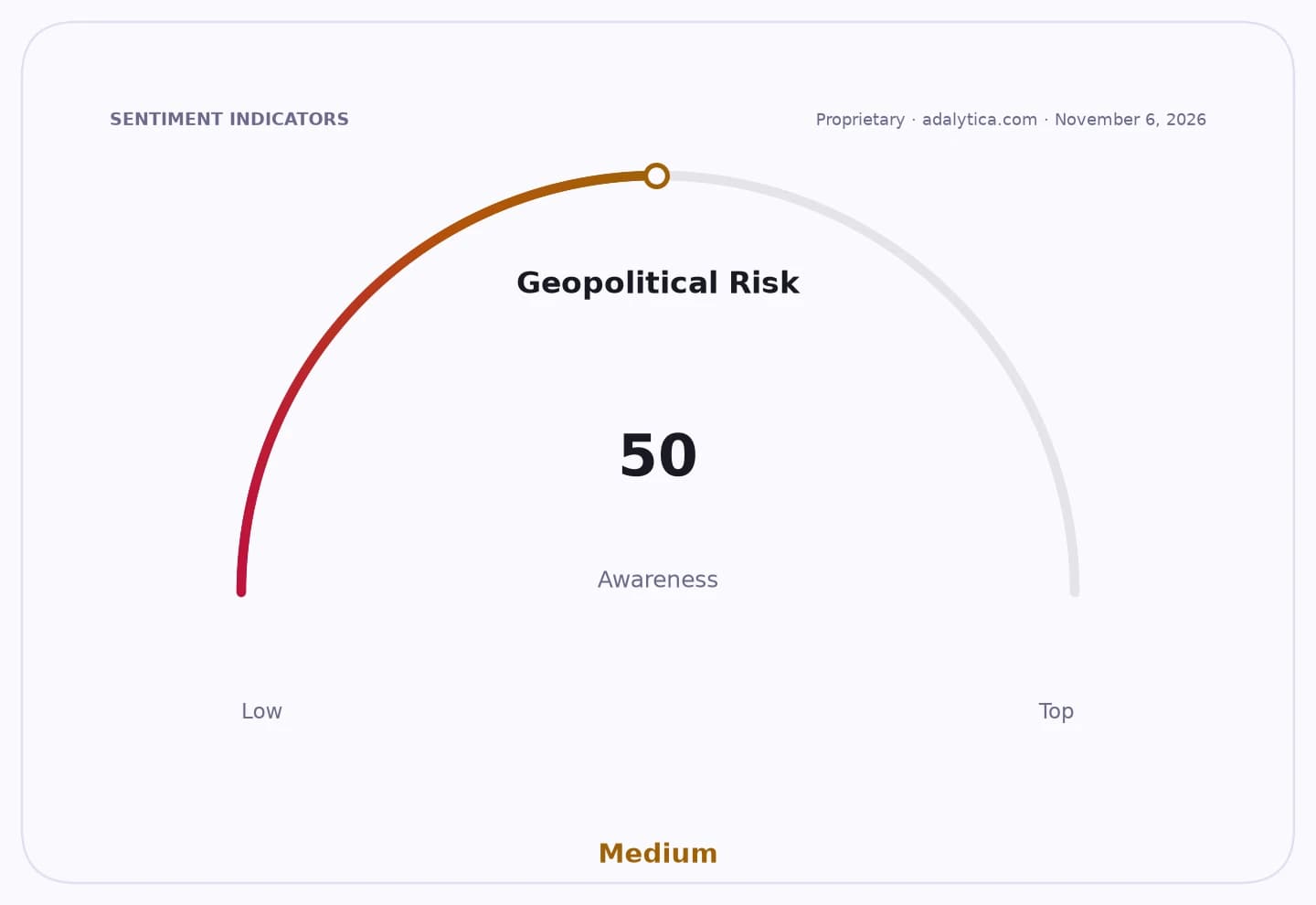
Sentiment Indicators
Leonardo Machado, vice president of growth and business development at Shape Digital, said on the sidelines of ADIPEC 2026 that AI agents are likely to become part of everyday oil and gas operations over the next five years. He said the technology could increasingly handle multiple tasks at once, leaving engineers and technical teams to focus more on analysis and judgment.
His comments came as ADNOC, G42 and OpenAI announced a deal under which the Abu Dhabi producer will become the first energy company to deploy OpenAI Frontier, a platform designed to coordinate AI agents across complex business operations. For the Middle East, the agreement is significant because it ties together capital, infrastructure and operational data in a sector that has been slower than consumer technology to move beyond pilots.
The potential economic payoff is straightforward. In a business where even small gains in uptime, fuel efficiency and process safety can translate into large sums, AI-supported workflows can raise the return on existing assets. Shape Digital said it has expanded its own technology stack so maintenance engineers and specialists can build applications and AI agents using company data, OpenAI models and its predictive tools. Machado stressed that such systems still depend on reliable sensor data and validated models, a reminder that the near-term winners are likely to be companies with clean data and disciplined operations, not those chasing automation for its own sake.
That point matters for investors because it suggests AI will favor the best-capitalized and most technologically mature operators first. National oil companies such as ADNOC can absorb the upfront investment and use their scale to standardize deployment across large portfolios. Service companies and industrial software vendors stand to benefit too, if they can package models that improve reliability, cut unplanned downtime and support compliance. The risk for slower adopters is that efficiency gaps widen as peers use AI to lower unit costs and improve output from mature fields and refineries.
Shape Digital is positioning itself around that theme. Headquartered in Houston with major operations in Brazil, the company said it is moving into Europe and may open an office in the Middle East next. It is also leaning on products aimed at emissions and energy efficiency, including a facility-optimization tool and a flare-management system launched two months ago that Machado said has cut flaring by about 12%.
The timing is notable as the sector balances a still-volatile oil market with pressure to spend more selectively. Recent price swings underscore how quickly sentiment can shift, reinforcing the appeal of software that can improve resilience even when commodity markets soften. At the same time, oil companies face growing scrutiny over methane and flaring, making digital tools that reduce emissions as commercially relevant as they are politically useful.
For investors, the broader narrative is that AI in oil and gas is moving from promise to procurement. The first large-scale deployments are likely to center on operations rather than exploration, with returns tied to cost savings, emissions reductions and asset utilization. The key question now is whether ADNOC’s move becomes a template for other producers, or remains an early showcase for a sector still testing how far AI agents can be trusted with critical industrial work.
| Entity | Gains | Losses |
|---|---|---|
| ADNOC | ▲Faster operations; lower costs | ▼Legacy manual workflows |
| Shape Digital | ▲New contracts; regional expansion | ▼Slower AI adoption by peers |
| OpenAI / G42 | ▲Industrial AI credibility | ▼Execution and rollout risks |
| Traditional operators | ▲Benchmark for automation gains | ▼Higher-cost, slower competitors |