A landmark court ruling on employee compensation rights is bringing a fresh legal and financial risk for payroll and human-capital firms, even as the biggest names in the sector are already sending mixed signals on the chart.
ADP and Paychex Face Legal Risk From Pay Rulings
For investors, the key issue is simple: when courts broaden what workers can claim, employers usually face higher compliance costs, more disputes over wages and benefits, and a bigger role for outside administrators that can document and process pay correctly. That is why any change in employment-contract rules matters not just to workers, but to ADP, Paychex and smaller pay-services providers that sit in the middle of the employer-employee relationship.
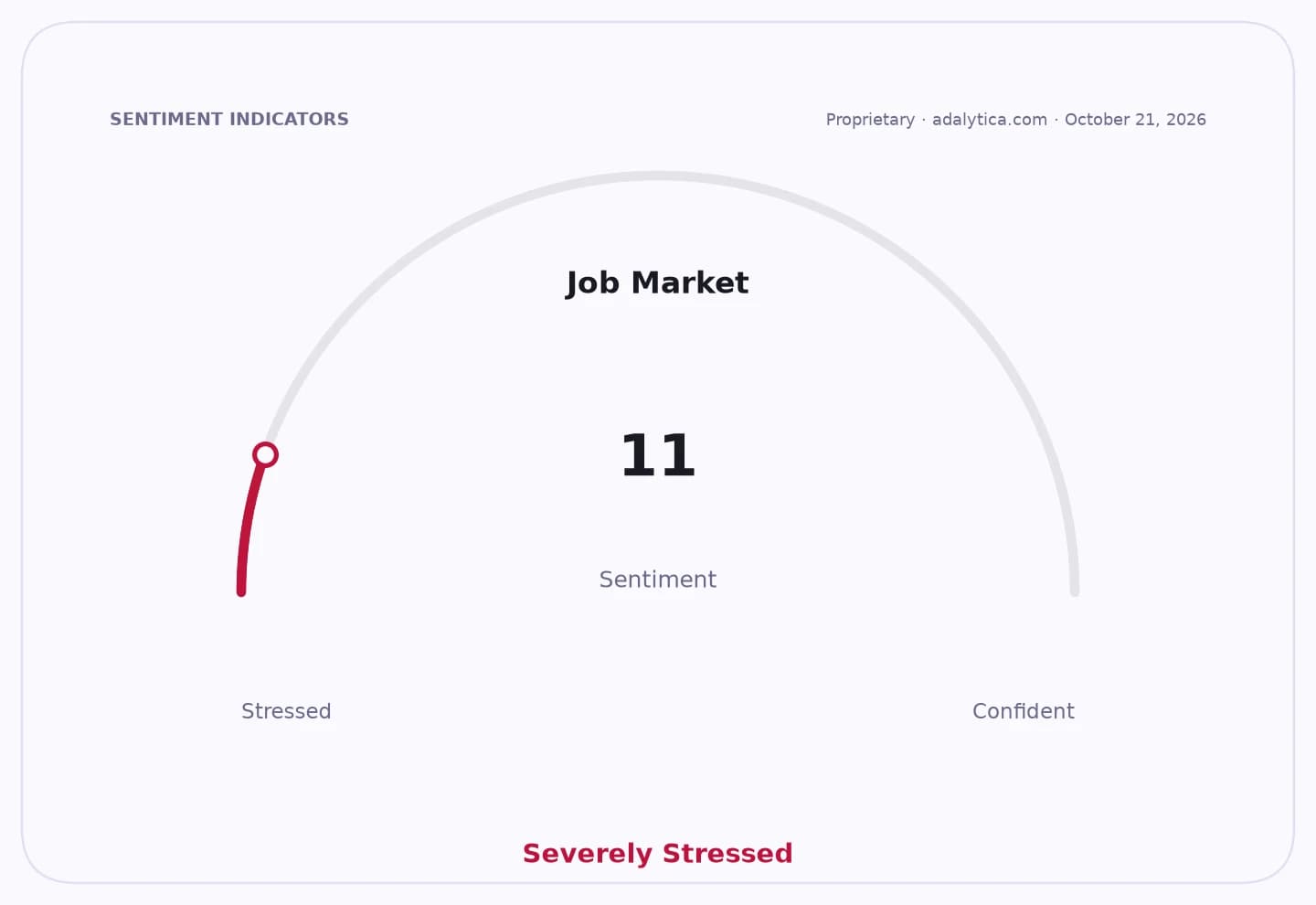
Sentiment Indicators
The backdrop is a broader push for clearer pay rules. New transparency requirements are forcing employers to spell out how jobs are valued, a shift that should help workers but can also make compensation structures more expensive and more difficult to defend. Add in ongoing legal fights over salary disputes and unfair labor practices, and you get a market in which contract language and payroll administration become more important than ever.
ADP, the largest of the group, has held up better than some peers. Its shares recently changed hands around $301.71, still above the 50-day moving average of $285.05 and the 200-day average of $242.44, suggesting the long-term trend remains intact even after a pullback from recent highs. Paychex, at about $112.63, also sits above its 50-day average of $110.01 and its 200-day average of $102.37. Those levels matter because they show investors have not abandoned the names, even if momentum has cooled.
By contrast, Paysafe has been a very different story. The stock fell to $9.79, well below its 50-day average of $13.31 and its 200-day average of $8.88, with the relative-strength reading deep in oversold territory. That kind of move often reflects company-specific pressure, but it also shows how quickly sentiment can turn against payment-adjacent businesses when investors start worrying about regulatory and legal friction.
The long-term investment case for ADP and Paychex still rests on a durable moat: employers need payroll, tax, benefits and compliance services whether the labor market is hot or cold. In fact, tighter employment rules can strengthen that moat, because more complexity usually means more outsourcing. The risk is that a wave of employee-friendly rulings can compress margins if compliance costs rise faster than pricing power.
For patient investors, that makes the sector worth watching rather than fearing. Over the next few years, the winners are likely to be the companies that can turn legal complexity into recurring software-like revenue, while the losers are the businesses that lack scale, data depth or balance-sheet strength. If you buy the thesis, think in years, not weeks. This is a space for steady compounding, not quick trades.
| Entity | Gains | Losses |
|---|---|---|
| Employees | ▲stronger pay claims | ▼weaker employer defenses |
| ADP and Paychex | ▲higher compliance demand | ▼margin pressure from regulation |
| Employers | ▲clearer rules | ▼higher payroll/legal costs |
| Paysafe | ▲none obvious | ▼investor confidence |